Friday, April 30, 2021

April 2021 Reading Round Up

Out of the 39 books that I read in April, here are a half dozen highlights. Let me know if you've read any of these, or if you discover something here that you'd like to read.


Blaze Island by Catherine Bush


A bracing blend of up-to-the-minute climate fiction and Shakespearean drama, the setting of this Canadian novel is based on Fogo Island, which is off the coast of Newfoundland. A father and his daughter have taken refuge on this island but destructive forces are at play. It opens with a breathtaking storm, the narrative is richly layered, the prose is evocative, and the ending is thought-provoking. 

“There are people out there who don‘t believe ice and snow are weather. We are entering times of dangerous weather and that weather is inside us as well as outside.”

…the icebergs glistened, every colour in the spectrum of blue and green: cobalt, turquoise, aquamarine, emerald. From one angle they looked like one thing, from another something else. As the icebergs turned, they revealed arches, hollows, ponds, fissures. It was hard to know how to describe them other than to compare them to other things: this one‘s a castle, no, no, a dragon.

Ciel by Sophie Labelle
Translated by David Homel


A joyful children's novel about 12-year-old Montrealer Ciel, who is a gender nonbinary trans person. They have a trans girl best friend and there's a trans boy character too: one of the great things about this book is that it shows different ways of being trans and different choices about how that information is shared with others. Canadian author Sophie Labelle is also trans.

When I came out of my mother's stomach, the doctor exclaimed, “It's a boy!” But he didn‘t take the trouble to ask me what I thought, which isn't very nice, especially since I've never really been a boy.

Under a White Sky: The Nature of the Future by Elizabeth Kolbert
Audiobook [6 hr] read by Rebecca Lowman


While not as depressing as her previous works about extinctions and the Anthropocene era, there are still some pretty grim facts in this audiobook
. It's “a book about people trying to solve problems created by people trying to solve problems.” Problems such as collapsing ecosystems and climate change might be solved using scary technological solutions like geoengineering aimed at reducing how much sunlight reaches Earth. At least scientists are working on it. By the way, this book dovetails nicely with the novel Blaze Island by Catherine Bush that I mentioned earlier.

Researchers who looked into using solar geoengineering to offset carbon dioxide levels of 560 ppm determined it would change the appearance of the sky: white would become the new blue.

People have fundamentally altered the atmosphere and, yes, this is likely to lead to all sorts of dreadful consequences. But people are ingenious. They come up with crazy, big ideas and sometimes these actually work.

Fathoms: The World in the Whale by Rebecca Giggs


“In their breadth of connectedness, do whales not show us how to be conscious of environments we ourselves cannot see, environments beyond our habitation where crisis is being staged?” A thorough, yet lyrical, look at all aspects of whales and their ocean home, and what humans can learn from them. Award-winning nature writing.

That whale lice, these scuttled smatterings, can document the migration of a single right whale over a million years ago is, you must admit, astounding.

How do you sit with this terrible sad news from the ocean, day after day? […] There is hope. A whale is a wonder not because it is the world‘s biggest animal but because it augments our moral capacity. A whale shows us it is possible to care for that which lies outside our immediate sphere of action, but within our sphere of influence—we care deeply about the whale because it is distant. Because it speaks to us of places we will not go. Because it magnifies the reach of our humanity and reminds us of our collective ability to control ourselves, and of our part in a planetary ecology. Because a whale is a reserve of awe and humility.

This is the incongruity of plastic: it can be so changeable and compliant, so plastic and expendable, yet we‘re told that it will endure beyond our lifetimes. Omnipresent and cheap, no substance less appears to warrant the aura of the eternal. Yet plastic will survive us. Escape us. Plastic is geologic in its original state. Polyvinyl comes from coal. The feedstock of polyethylene is crude oil. Other plastics derive from natural gas and its byproducts. All are fossil fuels. The ocean may be able to assimilate oil spills across a long time, but never plastic.

The Dictionary of Lost Words by Pip Williams
Audiobook [11 hr] read by Pippa Bennett-Warner


This historical novel begins in 1886, with the ongoing multi-volume project of the Oxford English Dictionary. Motherless Esme hangs out with her father and the other lexicographers as they work. Her affinity for words, especially those deemed unsuitable for inclusion in the OED, really captured my heart. There was a point where I thought the book might turn a bit sappy for my taste but the strong ending returned me to full admiration. 

A vulgar word, well-placed and said with just enough vigour, can express far more than its polite equivalent.

I picked up his book, The Getting of Wisdom. “An Australian novel,” Da had said, “about a bright young woman. Hard to believe a man wrote it.” [Ha! I smiled when I read that because, coincidentally, I just read The Getting of Wisdom a month ago. It's now considered an Australian classic and it was written by a woman named Ethel who used a male pseudonym: Henry Handel Richardson.]

The Absolute Book by Elizabeth Knox
Audiobook [18 hr] read by Anne-Marie Duff


Intricate, highly rewarding contemporary fantasy from New Zealand: this starts out like a crime thriller and then brings in layers of Celtic, Norse, Christian and Arthurian mythology, plus parallel worlds, plus sociopolitical and environmental justice issues. Prepare
to be immersed in a long tale with rebel demons, wicked angels, colonial faerie... cleverly relevantto today's concerns.  A fun ride!

They made us believe we were weaklings if we couldn't do everything for ourselves, by ourselves. We all say, “So, I failed,” when mostly we‘ve been failed. They made us afraid of one another, but of themselves they say, “There is no they.”

She could stay. She could start a library, build a small house and fill it with the books she remembered. A real house with ghost books. But when Taryn tried to remember books, the only one that came to mind was her own. Was her own book the only one she‘d ever really needed? 


Monday, April 26, 2021

Poetry Books for All Ages

April is Poetry Month, so here are a couple of recommendations that can be enjoyed by all ages:


The Lost Spells by Robert Macfarlane and Jackie Morris

Everything about this book is a joy: the small format, gorgeous endpapers, wordplay nature poetry, and, best of all, every page is ornamented with watercolour artwork by Jackie Morris. If you loved the first book by Macfarlane and Morris, The Lost Words, then you will surely enjoy this “little sister.”

I am your double,
your ghost, your other,
The spirit of wild,
the spirit of weather,
Red is my fur and
red is my art,
And red is the blood
of your animal heart.
----------
King of the chimney-stack,
the belfry bivouac,
bright-eyed steeplejack,
from church-tower to tarmac,
giving it the snicker-snack!

The Rime of the Ancient Mariner by Samuel Taylor Coleridge

I've loved this classic poem since I was a kid and lines like: “Water, water everywhere, but not a drop to drink" often come back to me. My neighbour recently lent me her copy that reproduces Gustave DorĂ©‘s lithographs in their original size (9 X 12 inches) and it‘s a treat. The drama and pathos are emphasized by the illustrations. 

The moving Moon went up the sky,
And nowhere did abide:
Softly she was going up,
And a star or two beside—

Monday, April 12, 2021

Spotlight on Indigenous Authors

There's something for every age and taste in this collection of books by Indigenous authors.

Hunter with Harpoon by Markoosie Patsauq
Translated by Valerie Henitiuk and Marc-Antoine Mahieu


50 years after the initial publication, this Canadian classic set in the far north has been newly translated directly from Inuktitut, in consultation with Patsauq. Patsauq originally translated his own syllabics into English, but that text was then edited to make it more of a children‘s story (which is how I remember it). T
old in shifting perspectives, this new edition, only about 65 pages long, has cinematic energy and a powerful dignity.

They wait a couple of days, but the dogs do not come back. So they start walking, with their belongings and the rest of the food on their backs. As they go along, Kamik draws close to Qisik and asks, “How long will it take to reach our land?”
“Twenty days, I think, if we‘re on the right path.”
“And if not?” Kamik asks again.
“Then we won‘t make it home,” replies Qisik.

This world is full of beautiful things, he thinks, but it is a world that leaves you very cold and hungry. Then he also sees the northern lights. He wonders what makes them appear and why right here. The world offers beautiful things to look at even as you are starving to death.

Return of the Trickster by Eden Robinson
Audiobook read by Kaniehtiio Horn


Can Jared stay sweet, sober and committed to nonviolence no matter what horrors he encounters? He‘s one of over 500 offspring of his trickster father, but he‘s still one-of-a-kind. Who else has internal organs who run from his own body? This thrilling conclusion to the Trickster trilogy is a joyride with vicious coy-wolves, helpful inter-dimensional fireflies, otter humans, a gentle sasquatch, and an evil ogress.
 Indigenous literature like none other.

Hot women, in his experience, did not follow him around, flirting. They were either family, or they wanted to kill him. Usually both.

“There‘s a completely gratuitous sasquatch scene.”
—Eden Robinson (Haisla/Heiltsuk), talking about Return of the Trickster in an interview with Shelagh Rogers on 'The Next Chapter'

Mamaskatch: A Cree Coming of Age by Darrel J McLeod


Darrel McLeod is a queer NĂªhiyaw from northern Alberta, writing about his loving yet painful relationship with his mother, Bertha. She was severely punished at residential school for speaking her language—by nuns who spoke in a garbled mix of English and French—so she didn‘t want her own children to learn NĂªhiyawĂªtĂ¢n. Racism, queer identity, cultural and family connections
all crafted in a spiral style and with avian messengers. Mamaskatch received a Governor General literary award in 2018.

The markers for I and you are attached as extra syllables to the verb forms. The second-person pronoun is always more important, so it comes first, whether it‘s the subject or the object. Unlike in English, I love you and you love me both start with the marker ki, for you. The gendered pronouns he and she don‘t exist in Cree. Mother has told me this more than once, laughing at herself for getting the two mixed up.

My interpretation of what I was learning was different from the usual student‘s. For example, Ernst Haeckel‘s theory that “ontogeny recapitulates phylogeny” simply confirmed what my great-grandfather had used to say—that we were all related, the two-legged, the four-legged, those that fly and those that swim.

Initially the principles of existentialism disturbed me, but with time they provided relief. What if there really was no heaven or hell, and I only had to live in the present and make the most of it—accept responsibility for my own happiness and well-being? I loved the notion that I could choose whether or not to believe in Christianity without living in constant angst of going to hell.

O my Jesus, forgive us our sins.
Save us from the fires of hell…

The words cut me to the core—there it was again, hell. Why was the Church so obsessed with hell—why did it need to instill terror into people‘s hearts?


Come Home, Indio by Jim Terry


Jim Terry‘s father was white and his mother Indigenous (Ho-Chunk). Both parents struggled with alcoholism. This moving memoir in comics format documents the artist‘s turbulent childhood and sense of alienation, leading to his own addiction to alcohol. He takes us with him to rock bottom, then to sobriety. Attending the protest at Standing Rock helped bring him home to himself. His brushwork art and rich blacks throughout is reminiscent of Will Eisner‘s work.


We Are Water Protectors by Carole Lindstrom and Michaela Goade

Two talented Indigenous women--Lindstrom (Anishinabe/Metis) and Goade (Tlingit/Haida)--created this absolutely gorgeous picture book with an important message: the need to protect our supply of fresh water, on behalf of all living beings. An inspiring call to action.

My people talk of a black snake that will destroy the land.

Ancestor Approved: Intertribal Stories for Kids, edited by Cynthia Leitich Smith
Audiobook read by Kenny Ramos and DeLanna Studi


A wonderful anthology of interconnected stories for kids age 8 and up, all written by
 different Indigenous authors, all having common elements: 
a) the protagonists travel to the intertribal Dance for Mother Earth powwow in Ann Arbor, Michigan
b) the stories include mention of a particular dog who's wearing a t-shirt. 
The dancing, regalia, food stalls, craft vendors—these are seen from different viewpoints. The kids, from tribal groups across the US and Canada, portray the vibrancy of indigeneity today. Excellent for family listening.

Love After the End: An Anthology of Two-Spirit and Indigiqueer Speculative Fiction, edited by Joshua Whitehead


Speculative fiction from queer Indigenous authors: these stories are fresh, varied and imaginative. I didn‘t like them equally but I found something to admire in each. I also now have new-to-me authors to watch. Editor Joshua Whitehead‘s introduction is my favourite piece, for its scholarly yet poignant wordplay. The rest are aimed at tween and teen readers, although of course they can be enjoyed by older readers too. The cover art by Kent Monkman (N
Ăªhiyaw) on the revised 2020 edition (Arsenal Pulp) is a perfect complement.

Who names an event apocalyptic and whom must an apocalypse affect in order for it to be thought of as “canon”? How do we pluralize apocalypse? Apocalypses as ellipses? Who is omitted from such a saving of space, whose material is relegated to the immaterial?
(from the introduction by Joshua Whitehead (Oji-NĂªhiyaw))

Here is my first instruction: when the apocalypse happens, make sure you bring your kookum. Mine is named Alicia. She doesn‘t have an Anishinaabe name because when she was born they were only starting to get them back. You‘re going to want your kookum when the apocalypse happens because kookums know everything. Mooshums do too but they can get bossy and think they‘re right all the time, like the council does.
-Kai Minosh Pyle (Mekadebinesikwe)

I ask, “How do we build a relationship with this new planet?”
She laughs. “I would assume like all consensual relationships: we ask them out.”
-jaye simpson (Oji-NĂªhiyaw/Saulteaux)

“I don‘t think you can call humans a failure. We built spaceships. We invented vaccines and …” She looked somewhere above my head, presumably scanning a vast imaginary landscape of possibilities. “… and spreadsheets.”
-Adam Garnet Jones (NĂªhiyaw/Metis/Danish)

The Sea in Winter by Christine Day


This quiet middle grade novel about letting go of unattainable dreams has many strengths, including a realistic portrayal of a contemporary Indigenous (Makah/Piscataway) family in Seattle, and a fierce but sad central character who is passionate about ballet. I‘m glad the author chose ballet over traditional dance, because it sidesteps stereotypes. The dedication at the front sums up the message: “To anyone who needs a reminder that pain is temporary.”

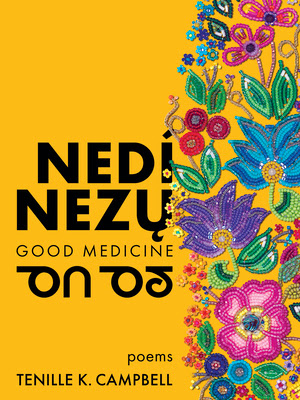
Nedi Nezu: Good Medicine by Tenille K Campbell


When I heard Tenille Campbell (Dene/Metis) read at a poetry event online, I knew I needed this collection. Her sensual poems celebrate lustiness and a large, brown body belonging to a woman who makes her own choices and remembers to look after herself. Words in Dene and 
NĂªhiyaw language reclaim Indigenous space on the page.

when you come to the door
black garbage bag in hand
full of clothes and mismatched socks
underwear she bought you
t-shirts your mom got you
I realize
loving you
would mean loving me less

I fought too hard
to be this version of me
and I‘m not raising
a grown-ass man
again

Wednesday, March 31, 2021

March 2021 Reading Round-Up

As usual, I've got assorted literary treats to share with you this month. Two of these are by Canadians, three by Americans, and one each by a Byelorussian, an Italian, a Frenchwoman, a Brit and an Australian. Two are Nobel prizewinning authors. All but two of these are fiction, including three audiobooks and one in graphic novel format.

To keep this post to a manageable size, I've set aside some of my favourites for separate posts. Watch for upcoming spotlights on poetry, kids' books, and works by Indigenous authors.


You Are Eating an Orange, You Are Naked by Sheung-King


An elegant, playful novel that captures the inner thoughts of a Cantonese Canadian and his dialogue with a Japanese Canadian as he falls in love with her, never sure if his feelings are reciprocated. The two travel from Macau to Hong Kong to Toronto to Prague. Surreal and sensual, it‘s told in second person, floating in and out of vivid reveries and sharing of childhood memories, interleaved with retellings of traditional stories, plus footnotes.

You manage to finish half of The Unbearable Lightness of Being over the course of a large coffee. I, on the other hand, over the course of drinking my coffee, manage to reply to an email regarding my tax return.

“Vivaldi‘s music is like a teenage boy masturbating.”
“What?”
“Yeah. Not only are the transitions obvious, Vivaldi, especially, spends so much time on the bridge. It‘s like he‘s about to cum but is holding back—just a little bit longer, just a bit—and then, bam—loud finish, orgasm, done, and the audience claps. I think masturbating is healthy. I just don‘t like music that resembles male orgasms.”

You take out two tall cans of Suntory Premium Malt. The beer cans are gold with blue labels.
“What else is in your bag?” I ask.
You take out a small makeup pouch, a copy of Mieko Kawakami‘s Breasts and Eggs, Purity by Jonathan Franzen, a pair of headphones and cucumber sandwiches.
I pick up your copy of Purity. “This doesn‘t seem like the kind of book you‘d normally read,” I say.
“It‘s awful,” you say. “A guy who used to be in my creative writing class gave it to me, saying that I remind him of the main character. Isn't that gross?"
I nod.
"I don't think I'll be talking to him ever again. What kind of douche gives people books like this? It's misogynistic, and everything he writes is about white people."

“You‘re like a cucumber sandwich.”
“What?”
“Do you know why I like cucumber sandwiches?”
“Tell me.”
“If there‘s just the right amount of butter, and the cucumbers are sliced to just the right degree of thinness, and the bread is just soft enough, a cucumber sandwich can be quite sophisticated without being fancy. You‘re not quite there yet, but I think you have the potential of becoming a cucumber sandwich one day.”
"I'm flattered."
"I don't want anything fancy or extravagant. If I wanted that, I'd just marry a rich guy. It's easy. I much prefer cucumber sandwiches. And you tell me stories. You're like a storytelling cucumber sandwich."

To Know You're Alive by Dakota McFadzean


These unsettling short stories in comics format make visible the vague fears we have about existence, especially in our childhood years. Canadian cartoonist Dakota McFadzean‘s expressive art is printed in black, white and salmon pink. The pink skies and trees--and pink skin growths, monsters and aliens--accentuate the eeriness.

Oak Flat: A Fight for Sacred Land in the American West by Lauren Redniss


Lauren Redniss has a distinctive style in her works of visual nonfiction: delicate line drawings with saturated colour. Here, she takes a nuanced approach to the issues underlying a controversial copper mine by interviewing three generations in a white settler family and three generations in an Apache family in Arizona. People‘s lives take centre stage in this story of historic injustice plus spiritual, environmental & economic concerns. 

Mike McKee has advice for opponents of the Resolution mine [a lot of whom are former miners]. “I tell them, “Hey, it‘s gonna be 20 years before it opens up. You‘ll be dead, so you don‘t have to worry about it.”

By the summer of 1886, the United States had mobilized approximately one quarter of the army‘s soldiers, some 5,000 troops, as well as Mexican fighters and Apache scouts fighting on the government‘s side, to pursue the remaining Apache fighters: 17 men.

[One group of Apache people were forced to settle on a reservation in the Arizona desert, where temperatures can reach 120F.] “Conditions in San Carlos were so merciless that the army strictly limited periods of deployment. But Natives were prohibited from leaving. Congress‘s 1876 appropriations act stipulated that ‘Indians shall not be allowed to leave their proper reservations.‘ In San Carlos, enforcement was rigorous. Apache who left were routinely hunted down & killed.”

Wendsler Nosie attended high school in Globe, Arizona, the town closest to the San Carlos Reservation. Globe was once inside reservation boundaries, but the US seized the area by executive order in 1876 after silver was discovered.
Wendsler Nosie: “In 1974 in the town of Globe, they still had signs, ‘Dogs & Indians Keep Out.‘ We still had to order outside of restaurants.”

Voices from Chernobyl: The Oral History of a Nuclear Disaster by Svetlana Alexievich
Translated by Keith Gessen


April 26, 2021 will mark the 35th anniversary of the nuclear power plant disaster in Chernobyl. Nobel prizewinning journalist Svetlana Alexievich has curated a profoundly moving chorus of voices, of people talking about their experiences after the disaster. It portrays a particular time in post-Soviet history, a time not only of political and social change, but also of shifting inner landscapes, of how people viewed themselves. Heartbreaking, humane and utterly compelling.

We take the salami, we take an egg—we make a roentgen image—this isn‘t food, it‘s a radioactive byproduct.

When people saw that the milk was from Rogachev, and stopped buying it, there suddenly appeared cans of milk without labels. I don‘t think it was because they ran out of paper.

There was a Ukrainian woman at the market selling big red apples. “Come get your apples! Chernobyl apples!” Someone told her not to advertise that, no one will buy them. “Don‘t worry!” she says. “They buy them anyway. Some need them for their mother-in-law, some for their boss.” 

"I'm not afraid of anyone--not the dead, not the animals, no one. My son comes in from the city, he gets mad at me. 'Why are you sitting here! What if some looter tries to kill you?' But what would he want from me? There's some pillows. In a simple house, pillows are your main furniture. If a thief tries to come in, the minute he peeks his head through the window, I'll chop it off with the axe. That's how we do it here. Maybe htere is no God, or maybe there's someone else, but there's someone up there. And I'm alive." 

The Lying Life of Adults by Elena Ferrante
Translated by Ann Goldstein


An interior novel that somehow is also a page turner. Giovanna‘s coming of age in Naples is a visceral experience and I loved every bit of it. This book and Voices from Chernobyl were buddy reads with my friend Kathy in Vancouver. Buddy reading is a great way to get even more out of a book by sharing reactions, discussing thoughts, and parsing meaning.

What happened, in the world of adults, in the heads of very reasonable people, in their bodies loaded with knowledge? What reduced them to the most untrustworthy animals, worse than reptiles?

I‘d thought I couldn‘t live without him, but time was passing, I continued to live.

He took off his shoes, pants and underpants. He kept on his linen jacket, shirt, tie, and, right below, the erect member that stuck out past legs and bare feet like a quarrelsome tenant who‘s been disturbed.

“Poetry is made up of words, exactly like the conversation we‘re having. If the poet takes our banal words and frees them from the bounds of our talk, you see that from within their banality they manifest an unexpected energy. God manifests himself in the same way.”
“The poet isn‘t God, he‘s simply someone like us who knows how to create poems.”

Les Gratitudes by Delphine de Vigan
(An English translation by George Miller is available)

Aging, aphasia, acknowledging loss, and being thankful for what we‘ve received: this quiet, finely crafted French novel hit me at the perfect moment. Pandemic times have left me acutely aware of our continuing need for physical human contact, as well as emotional and intellectual intimacy, all of which is touched upon, though not the main story. I read this in French, but it‘s been translated into English (among other languages) and it deserves a wide audience.

The Animals in That Country by Laura Jean McKay


A bizarre road trip through Australia during a zooflu pandemic—a virus that enables humans to understand animals. Jean is at the wheel—she‘s a hard-drinking granny looking for her son and granddaughter. Sue—half dog, half dingo—is riding shotgun. Author Laura Jean McKay‘s skill in using language to create a disorienting sense of otherness astounded me. It is a probing look into our relationship with other creatures on this planet. Winner of the Victorian Prize for Literature and currently longlisted for other awards.

"In this country the animals / have the faces of / animals." The epigraph is from Margaret Atwood's poetry collection, The Animals in That Country.

The road curls inland toward the city. Sue wants us to turn off at a little arsehole of a coastal town that crouches around a bay like a kid who won‘t share lollies.

Maybe some of those petrol fumes get to me because when I look up at the birds they seem to say, clear as if it was written in the sky,
Let it be.
Let it be.
Like they‘re the fucking crow Beatles.

Andy‘s voice breaks. “I heard … heard the pregnant mice say that they‘ll … what do you call it? … self-terminate because things aren‘t right. They can do that. Did you know they can do that?”

Klara and the Sun by Kazuo Ishiguro
Audiobook read by Sura Siu


Kazuo Ishiguro's writing skills are not in question--he is a Nobel laureate--and t
he power of this understated novel crept up on me. The voice is immediately engaging: we see the world from the viewpoint of Klara, an extremely observant Artificial Friend--robot--who‘s destined to be a companion for an adolescent. The politics and social unrest of a possible future can be glimpsed by readers, but they are not Klara‘s concerns. Her job is to understand the human heart. Klara's character is a haunting combo of naĂ¯vetĂ© and wisdom.

A few weeks ago, reading Noreena Hertz's Lonely Century, I learned about the contemporary use of compassionate AI in the real world. For example, as companions and health monitors for the elderly; or as a listening ear and sexual companion for single men. It left me entirely receptive to a question raised by Ishiguro‘s novel: is our loneliness a precious aspect of our humanity?

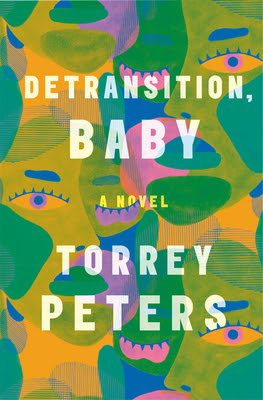
Detransition, Baby by Torrey Peters
Audiobook read by Renata Friedman


As with Klara and the Sun, this was initially a slow simmer. It took a little while before I warmed up beyond enjoying the writing and finding the characters interesting, to feeling emotionally invested. Once in, however, I was ALL in. These trans women feel so real, facing their desires, flaws and mistakes head-on. Written by a trans woman, this novel is a stunning exploration of queer white womanhood, friendship and chosen families. 

She had previously been under the impression that she had failed majorly for most of her life, but, in fact, she had simply confused failure with being a transsexual.

The car travels slowly, block by block through traffic. Tourists and a few groups of teenagers frogger their way across the streets.

Many people think a transwoman‘s deepest desire is to live in her true gender, but actually, it is to always stand in good lighting.

No One Is Talking About This by Patricia Lockwood
Audiobook read by Kristen Sieh


The wordplay in this stream-of-consciousness novel made my heart sing. It begins with our bonkers addiction to social media, accessed through the portal of handheld devices, then morphs into online social justice and political awareness, and eventually it's a wake-up call: a return to the importance of being physically present when our loved ones need us. Invigorating and poignant. 

But then, almost as a serious laugh, a strength entered her voice and she stood like a tree with a spirit in it. And she opened a portal where her mouth was and spoke better than she ever had before. And as she rushed like blood back and forth in the real artery, she saw that ancestors weren‘t just behind, they were the ones who were to come.

The cursor blinked where her mind was. She put one true word after another and put the words in the portal. All at once they were not true, not as true as she could have made them.

Because when a dog runs to you and nudges against your hand for love, and you say automatically, “I know, I know,” what else are you talking about, except the world.

Beau‘s mother called his feeding tubes his cheeseburgers. It was important to do things like that. If you didn‘t call your baby‘s feeding tubes his cheeseburgers, then somehow the feeding tubes won.