Showing posts with label Edmonton author. Show all posts

Tuesday, November 30, 2021

November 2021 Best Books Round-Up

November stats: 41 books; and 26 of them were outstanding. I get fussier as I age so I will only read those books I think I will love. As a result, I read so many great books in November that I decided to break up my monthly round-up into three parts. The first part was yesterday, all audiobooks. Tomorrow will be all LGBTQ. And today is for the rest!

Everything Affects Everyone by Shawna Lemay

Be kind to yourself. Read this compassionate novel by multitalented Edmonton poet and photographer Shawna Lemay. Read it slowly. Within it, six women have conversations and contemplations about art, and about how best to live. Before the first page, its philosophical and experimental bent is revealed by the epigraphs, which are by the likes of Clarice Lispector, Hélène Cixous, and Rainer Maria Rilke. Later, Alan Watts is quoted on the distinction between belief and faith. I learned that the word angel comes from the word for messenger. I learned that angels eat Fruit Loops and whipped cream. I also learned it was impossible to rush through this book, because I kept stopping to savour the language and the ideas.

Everything will be okay. This is what I tell myself, and I think about what a good, sweet word is “okay.”

I want to know what characters are thinking and how they attempt to speak what‘s in their soul, honestly and simply. Or, alternatively, how they circle around things, how they attempt to conceal, or how they fail to express what they mean to convey.

The way we come to a conversation matters. The openness, the trust. Is every conversation a type of annunciation? Each person is an angel giving the other person, who is also an angel, a message. In that moment we are each responsible for the other. If one of the people in the conversation were to faint or to cry, for example, it would be up to the other person to act.

The angel bows to Mary and announces her fate. And some of what‘s happening in the image continues to speak to me. The deep bow of respect. The acknowledgment of beauty of another human being, the strength and endurance. The potential. Acknowledging the light in another being. Bowing to that light.

All of those artists painted angels, or found angels, and who‘s to say they didn‘t see or feel them? For me, it wasn‘t a question of belief in angels, but it was about a willingness to see what is there, and to witness the world with a deeper awareness. But also, to be open to the unseen world.

It is the questioning around the story that gives the story its dimension. But the story is there only as a kind of basic pretext.

There is an ongoingness that I wish to convey. The traditional narrative arc is wonderful, but it is not the only mode in which to talk about how things occur, how life rolls out, how life comes at us and is so boring and delightful at once, so unpredictable and so obvious, so weird and so lovely and hidden and open.

The air and the atmosphere are a miracle. We don‘t have to look around for examples of the miraculous; we need merely to breathe in and out, or move our hands through the air, the wind.

I like reading diaries better than novels, and better than watching movies. Diaries are life, you see. And life can be rather dull. Rather ordinary. If I have learned one thing, it is that the ordinary is more closely aligned with bliss and to splendour than to what might be deemed spectacular.

I know how to make myself appear completely ordinary so that I might observe others. What I observe is that not a single person on this earth is ordinary.

I was thinking about something so beautiful that I entered the silence of flowers.

The Years by Annie Ernaux
Translated by Alison L Strayer

I felt like I was swimming through time in company with French author Annie Ernaux, who intertwines personal and societal experiences in this memoir/cultural history spanning seven decades. The voice shifts between “she” for the author and “we” for the collective, managing to be both intimate and expansive. Not every detail (ie French politics) resonated, but I identified strongly with the changing landscape of women‘s lives and the rise of consumerism.

By their clothing, we could distinguish little girls from young girls, young girls from young ladies, young women from women, mothers from grandmothers, labourers from tradesmen and bureaucrats. Wealthy people said of shopgirls and typists who were too well dressed, “They wear their entire fortune on their backs.”

With the Walkman, for the first time music entered the body. We could live inside music, walled off from the world.

The USSR disappeared and became the Russian Federation with Boris Yeltsin as president. Leningrad was St Petersburg again, much more convenient for finding one‘s way around the novels of Dostoevsky.

Only teachers were allowed to ask questions. If we did not understand a word or explanation, the fault was ours.

But for the first time, we envisioned our lives as a march toward freedom, which changed a great many things. A feeling common to women was on its way out, that of natural inferiority.

Of all the information we received daily, the most interesting, the kind that mattered most, concerned the next day‘s weather. The rain-or-shine monitors in the RER stations displayed predictive, almanac-style knowledge that provided us with a daily reason to rejoice or lament, thanks to the surprising and yet invariable factor of weather, whose modification by human activity profoundly shocked us. 

Under the spell of media simplifications, people believed in the technological delicacy of bombs, “clean war,” “smart weapons,” and “surgical strikes”: “a civilized war,” wrote Libération.

Under Giscard d‘Etaing we would live in an “advanced liberal society.” Nothing was political or social anymore. It was simply modern or not. Everything had to do with modernity. People confused “liberal” with “free” and believed that a society so named would be the one to grant them the greatest possible number of rights and objects.

Television sets were turned in for newer models. The world looked more appealing on the colour display, interiors more enviable. Gone was the chilly distance of black-and-white, that severe, almost tragic negative of daily life.

The word “struggle” was discredited as a throwback to Marxism, become an object of ridicule. As for “defending rights,” the first that came to mind were those of the consumer.

Invisible North: The Search for Answers on a Troubled Reserve by Alexandra Shimo
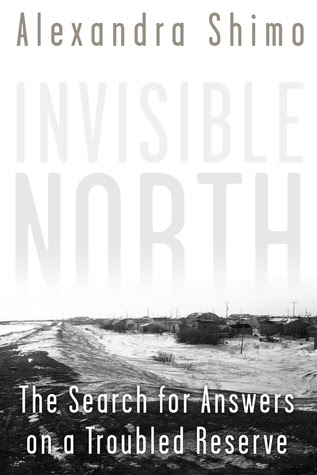
Lesbian journalist Alex Shimo had permission from the band chief to live on the reserve and document the story of unsafe water at Kashechewan in northern Ontario. But too much didn‘t make sense. Was it a hoax? Yet the shocking living conditions, the dire poverty—Shimo could see there was an important story to share with non-indigenous Canadians, but she struggled to maintain her mental equilibrium there. Words can hardly express how profoundly moved I was by this book.

This is where Canadian history differs from that of other developed countries, such as the United States and New Zealand, which also committed mass displacement of their Indigenous populations, but mostly stopped after the 19th century. As a result, Canadian First Nations have less land compared to those in other developed countries. For example, in the United States, Native Americans account for 2 percent of the population and reserves account for 2.3 percent of the total land. In New Zealand, Maoris account for 14.6 percent of the population and own 5.5 percent of the country. By contrast, Canadian Aboriginals make up 4.3 percent of Canada's total population, while reserves account for 0.2 percent of the nation. This, although Canada is an underpopulated, sprawling country near the size of a continent, with a land mass larger than the size of the United States and a population one-tenth the size.

Manikanetish by Naomi Fontaine
Translated by Luise von Flotow

Yammie left her Innu reserve, Uashat, on Quebec‘s North Shore, when she was a child. She returns 15 years later as a high school teacher. This quiet yet powerful novel documents a year of her experiences, connecting with her troubled but remarkable students, who face nearly insurmountable challenges. Meanwhile, she sorts out her own feelings of belonging to the place. This book pairs well with Shimo's Invisible North, because of the teenagers and the school situation in both.

An old, very wrinkled woman wearing the traditional Innu red-and-black felt bonnet. Not bothering to look directly at the camera. I was told later on that the missionaries were the ones who made Innu women wear the bonnets and keep their hair in braids rolled up on the sides of their heads and pinned at their temples. Because, with their long hair caressing their backs au naturel, they were beautiful. Attractive. Savage. Too beautiful for men of God and their oath of celibacy. They made them ugly.

Journal of a Travelling Girl by Nadine Neema

This remarkable chapter book for children (Grades 4-6) honours the traditional ways and stories of the Tłįcho people as well as a landmark historical moment in Canada: the signing of the Tłįcho land and self-government agreement in 2005. The action—external and internal—takes place through the eyes of 11-yr-old Julia while on an important canoe trip. Simple line drawings by Archie Beaverho accompany and enrich the text.

At the start of one of the portages, we saw a bird‘s nest that was so perfect it looked like a precious piece of art that someone had made for Easter. Inside, there were eight or nine eggs. It was just sitting there by itself in the long swampy grass. Grandma told us they were duck eggs. I couldn‘t believe that was made by a duck.

The Night Walk by Marie Dorleans
Translated by Polly Lawson

Many families turned to the solace of time spent in nature during the pandemic. Whether or not this activity was actually possible for readers of this endearing picture book, its portrayal of a quiet nighttime adventure is very inviting. There‘s also a natural propulsion: an unknown but important destination. A perfect laptime book: enjoy it slowly, studying the detailed pencil illustrations and seeking out the various nocturnal creatures. The art is understated, yet magical. Which is a feat, considering that the whole of the action takes place in the dark, and the story remains realistic, not drawing on any fantasy elements.


We threaded through the whispering forest. The earth was damp, the bark smelled comforting. Dead branches snapped under our feet, and ferns swayed quietly as we passed.

Mel Fell by Corey R Tabor


One of the many great things about this children‘s picture book about an intrepid young kingfisher is the orientation: the pages are designed to be viewed vertically instead of horizontally, and at one point in the story, the reader is instructed to flip it around with the opposite end up. Great manipulation! And it's also an inspiring story about bravery and community spirit. The appealing art, created with pencil and acrylic, is bright yet simple. 

Love from A to Z by SK Ali

I was not thrilled that my YA bookclub chose this title, since I am not a fan of romance. I‘d read Toronto author SK Ali‘s Saints and Misfits previously and it was okay, but I have little patience these days for books that I am not passionate about. I confess that I was pre-hating this book. I decided to just read enough of it to be able to join in the discussion. Then, I got sucked into the story. Wow, was I ever wrong about this book!

Believable characters. That's why I loved this YA romance even though I normally despise romance. Zayneb takes action in the face of bullshit and injustice. Adam is quiet and considerate. Islamic faith is satisfyingly woven into the narrative in an ownvoices way. I wept at a stranger‘s kindness, then at the description of MS symptoms, but didn‘t feel like the author was toying with my emotions. I guess “believable” is the key word here. I cared.

Everyone has a different definition of what “doing your best” means. For Mom and Dad, it means not rocking any boats.
For me it means fixing things that are wrong.

The Look of the Book: Jackets, Covers and Art at the Edges of Literature by Peter Mendelsund and David J Alworth

I have always been interested in book covers—I use them to judge contents like most readers do—but after reading this, I‘m hyperaware. Graphic designer Peter Mendelsund and scholar David Alworth collaborated on this heavily-illustrated investigation into the cover art on literary fiction. The way cover design first grabs our attention; how it frames and even shapes our reading experience; and the tricks or techniques used to translate verbal art into visual form. Love!

Like a bag of potato chips or a television commercial, book covers have an obvious mandate, which is to sell a commodity, except in the case of literature the commodity is also art.

Announcing the text and creating a conduit between imaginary and real space are two key tasks of the book cover. They are what the book cover does, first and foremost, but they are not all that it does. The cover‘s job is not over when you begin reading the pages. A good book cover has that time-release quality: it changes with you as you read.

If a book contains a map, it is likely either military history or fantasy—or Faulkner, which is both. Certain paratextual details, in other words, are indicators of genre: they tell you what kind of book you hold in your hands.

“A great book cover is, for me, like a great Spanish edition. The designer takes the manuscript and deftly translates it into a language I understand but am unable to speak with any clarity. ‘How on earth did you do that?‘ I think when I‘m given the finished product. To take 70,000 words and turn them into a single image. How is that not a miracle?”
—David Sedaris

Author Teju Cole insists that we push back against the “epidemic of relatability” that has besieged book culture. “It‘s like everybody wants to be ‘fun,‘ but not all books are ‘fun.‘”


Saturday, October 30, 2021

Indigenous Books Bonanza

This month I've read so many noteworthy books by Indigenous authors that I decided to highlight them in a separate post instead of including them in my monthly round-up.

The Strangers by Katherena Vermette

A companion novel to Vermette's The Break. It's been a month since I read this, and the characters are still with me, representing three generations of Métis women in Winnipeg. Their reality is intergenerational trauma, poverty, addiction and incarceration. On top of that, living in a place and time—Canada, now—that does not value Indigenous women, clearly takes its toll. They don‘t want pity from the reader. They face the world on their own terms. Above all, this is a powerful story of resistance.

Then the world went to shit, and everybody started wearing masks and face shields, but really Phoenix‘s life wasn‘t all that different. She‘d been social distancing her whole life.

I was doing a story for English. It was a slipstream, a girl who could travel through history and meet a bunch of strangers who turned out to be her ancestors. Her family. [I like what Vermette did here, referencing her 'Pemmican Wars' graphic novel series that begins with A Girl Called Echo.]

Nishga by Jordan Abel

What does it mean to be Indigenous but to grow up in a city, severed from Indigenous community, knowledge and land? Are you still Indigenous if you have mixed heritage and don‘t know the language of your ancestors? How does one deal with intergenerational trauma from residential schools? In this visually striking and moving memoir created from found texts, transcripts, photographs, his father's art and his own concrete poetry, Jordan Abel grapples with these questions.

I work with found text because that was my first real connection to Indigeneity, and, as an intergenerational survivor of Residential Schools, I create art that attempts to reflect my life experience, including my severance from Indigenous knowledge and land.

When someone tells us their story, that story becomes a part of us.

During the question period, a professor raised his hand and spoke for several minutes before coming to his question: “What is new about this?” He didn‘t really care about how I might respond. He just wanted me to know that he didn‘t think my work had any value. If he asked me that now, I would say: “Nothing. This is an old, sad, painful story that hurts just as much yesterday as it does today. There's nothing new about it but it's still not going anywhere."

I remember meeting my Dad for the first time and asking him twenty-three years worth of questions. I can‘t remember most of what I asked him. I can‘t remember most of his answers. He wasn‘t what I had expected. I had always assumed that I had no expectations. But it turned out that wasn‘t true at all. I was disappointed that the hole in my life was still there after we met. I always thought it would go away. But I guess it's something that I will carry with me everywhere now.

Gather: Richard Van Camp on the Joy of Storytelling by Richard Van Camp

“Edanet‘e? Hello! How are you, Cousin? I‘ve missed you.” With this friendly opening, Richard Van Camp shares the joys of storytelling in a collection that includes his own tales about growing up Tlicho in the NWT, his current life with a wife and family in Edmonton, plus a few stories from Elders like Tomson Highway, plus lots and lots of encouraging tips on how to engage an audience and be a great storyteller yourself.

Please know that when you stand up to share a story, people are automatically rooting for you. People want to visit. People need to visit! We are social animals, just like wolves!

I am lucky to tour as an author and storyteller and I find that when I‘m marketed as a writer visiting a community, we can sometimes pack a room, but when I‘m marketed as a storyteller, it‘s standing room only. I think this is because we are all lonesome for stories; we are all lonesome for connection and community. It‘s stories that unite us and remind us of our place in the world as brothers and sisters and it‘s an honour to be known as a great storyteller.

The sense that we are part of cultural genocide has never left me, and this is why I write. This is why I share stories. This is why I record my Elders: so I can help others who are looking for their cultures too. [This resonates with what Jordan Abel writes about in his memoir Nishga; his search for cultural connection began in libraries.]

it was never going to be okay by jaye simpson

jaye simpson—nonbinary trans, Oji-Cree plus Scottish and French ancestry—grew up in foster care. Their autobiographical poems express anger at the harm inflicted on them as a child, and later as a sex worker, while their noncapitilized use of “i” gentles their treatment of self, pointing towards healing and joy. Powerful imagery and emotions, plus a sense of mythological history contrasted against brief individual lives.

call me sea glass:
because i once was sharp
broken tossed in
tumultuous tides
thrashed on barnacle- & coral-clad rock,
pitched on log after drunken sunset
witnessed by shifting bonfire light.

they hardly ever remember
i used to cut.

--------

i am illusion enough for now / shapeshifters are monstrous / in their own / infinite possibilities / & how mundane the beholder.

--------

i want touch that isn‘t born of fetishization or desperation, i want touch born of healthy intentions, sure and full of consent. i do not want touch purely because of my fatness, nor my transness. i want touch because someone wants to hold me and because i am me.

On the Trapline by David A Robertson and Julie Flett


A word in Swampy Cree language sums up each piece of text in this gentle picture book set in present day: a story about a Cree Elder who takes his grandson to visit far northern Manitoba where his trapline was located.  The
 reality of vast distances is clear: getting to this place requires a flight in a small plane and then travelling onward in a motorboat. It's an introspective celebration of connection to land and history, by a pair of award-winning co-creators with Swampy Cree heritage. Julie Flett‘s artwork is made with pastels in earthy colours, to peaceful effect. A short glossary and pronunciation guide is included at the back.

An example from the text: "Wapahtam means 'he sees it.'" David Robertson, in an interview with CBC‘s Shelagh Rogers, said: “What I love about Cree is that one word can mean so much. Cree is such a beautiful language.”

Mii maanda ezhi-gkendmaanh / This Is How I Know by Brittany Luby and Joshua Mangeshig Pawis-Steckley


Concepts of seasons and colours are presented in this charming dual-language
—Anishinaabemowin and English—picture book created by an Anishinaabe team from Ontario. Ojibwe artist Joshua Pawis-Steckley includes elements of Woodlands style in his depiction of the animals. Some Indigenous children will find a familiar northern landscape and language, while other young readers will learn about a way of life different from their own. Any child might enjoy spending time searching for the creatures on each double-page spread. It's also a good book for generating conversation about how young readers recognize the signs of the seasons in their own environment.

When Loon opens her red eyes / to call across the water / and green Luna Moth hides / among birch leaves.
When yellow Bumblebee collects purple / fireweed with me / and we spy brown Screech Owl / asleep in the tree.
When blueberries drop readily / and the sand is hot enough to sting.
When insects billow black from the trees / and the sun slips into an orange dream.
This is how I know summer.

Walking in Two Worlds by Wab Kinew
Audiobook [8 hr] read by Joelle Peters

Anishinaabe journalist and political leader Wab Kinew has created a wonderfully nuanced teen character in Bugz, which is short for Bagonegiizhigok. (Wab, by the way, is short for Wabanakwut.) Bugz is a star in an online multiplayer game, but struggles with her self-image in the real world. The two worlds of the title could be Indigenous/mainstream; real/virtual; or inner/outer self. Exciting gamer-centred YA about being authentic.

21 Things You May Not Know About the Indian Act: Helping Canadians Make Reconciliation with Indigenous Peoples a Reality by Bob Joseph

The title says it all. The contents are eye-opening and succinct. Bob Joseph is a well-spoken member of the Gwawaenuk Nation (Kwakwaka'wakw).

My personal quest is to change the world, one person at a time. The continued interest in the article [from which this book sprung] indicated to me that a book expanding the 21 things would provide a service to Canadians, and others, who are ready to learn about the Indian Act and its ramifications. This book is for people who want to walk with informed minds and hearts along the path to reconciliation.

Indian in the Cabinet: Speaking Truth to Power by Jody Wilson-Raybould
Audiobook [12 hr] read by the author

Jody Wilson-Raybould of the We Wai Kai Nation (Kwakwaka'wakw) famously served as Canada‘s first Indigenous Minister of Justice and Attorney General. In her excellent memoir, she writes about her ethical principles surrounding the SNC Lavalin scandal that resulted in her getting booted from the Liberal caucus, as well as other underhanded pressures—approve this pipeline and then maybe we will pay attention to your social justice concerns!—from the Prime Minister‘s Office. 

The Liberal government exiled us to the margins of the House of Commons. I made my journey from the front bench on the government side to the farthest back corner on the opposition side.

In My Own Moccasins: A Memoir of Resilience by Helen Knott
Audiobook [9 hr] read by the author

Helen Knott says she was an adult before she learned that not every Indigenous girl experiences sexual violence. She says this memoir is especially aimed at women like her who have struggled with addiction as a way of coping with trauma. It‘s a story not only of survival but of triumph and accomplishment. Knott is of Dane-Zaa, Nehiyaw, Métis and European descent and grew up in northern BC.

Monday, November 30, 2020

November 2020 Reading Round-Up

November has been a fantastic reading month! Here are some highlights:

Beowulf: A New Translation by Maria Dahvana Headley
Audiobook [4 hr] read by JD Jackson and the author


“Holy hell, Beowulf, how‘d it go out there?” He “battled like a brawler” with monsters, that‘s how. This hero is “hashtag: blessed.” I find great pleasure in reading multiple interpretations of classic works, especially when the language play is as thrilling as in this new translation. Headley‘s nods to other versions, including this reference to Tolkien‘s Smaug: her dragon has “piles of preciouses.”

After reading the print edition, I listened to the audiobook. I couldn‘t get enough! JD Jackson‘s golden voice is absolutely perfect for the bar stool boasting in this new translation.

Meanwhile, Beowulf gave zero shits.
He dressed himself in glittering gear
his mail-shirt finely forged, links locked
and loaded. He‘d meet this murdering mother
under mere, and amend her existence.

Beowulf is a living text in a dead language, the kind of thing meant to be shouted over a crowd of drunk celebrants. Even though it was probably written down in the quiet confines of a scriptorium, Beowulf is not a quiet poem. It‘s a dazzling, furious, funny, vicious, desperate, hungry, beautiful, mutinous, maudlin, supernatural, rapturous shout.
—from the author‘s introduction

Maria Dahvana Headley‘s reason why we need to keep analyzing texts like Beowulf: “We might, if we analyzed our own long-standing stories, use them to translate ourselves into a society in which the hero doesn‘t require monster killing, border closing, and hoard clinging, but instead requires a more challenging task: taking responsibility for one another.”

Dearly: Poems by Margaret Atwood

It was serendipity that I experienced Dearly and the new translation of Beowulf at about the same time. They pair well, because Headley and Atwood incorporate a similar muscular flair and sly humour. So good!

Shine on, orange messengers!
Repel the darkness,
tell Death: No rush.
At least there‘s some kind of brightness.

(From: Carving the Jacks)

Through the night they nudged,
unfurling like moist fans, living sponges,
like radar dishes, listening.

(From: September Mushrooms)

A Little Called Pauline by Gertrude Stein and Bianca Stone


Gertrude Stein‘s puzzling poem, the title of this picture book, is from Tender Buttons. The words make more sense to me when I see them as a story told through Bianca Stone‘s whimsical illustrations. The single mother and daughter relationship is richly portrayed, and I also love the sense of queer community that we can see on the occasion of a party for little Pauline‘s birthday. Lots of white space gives the text emphasis. Delicious for all ages. 

Gertrude Stein was a really amazing, wild poet. She liked to use sentences in new ways that looked different than other people‘s. ‘Why not try saying something silly while saying something serious?‘ she must have thought. ‘Let‘s get people to think about words differently because they have to when they read my poems!‘
-from the illustrator‘s afterword

A little lace makes boils. This is not true.

Truth Be Told: My Journey Through Life and the Law by Beverley McLachlin

The endpapers show Beverley McLachlin‘s path from growing up in a log cabin in the Alberta
foothills to being the longest serving Chief Justice on the Supreme Court of Canada. She proved her Grade 8 teacher wrong; the woman told her she had no useful abilities for the working world. An inspiring memoir that looks not only at a remarkable life, but the many important judicial decisions in the wake of the Canadian Charter of Rights and Freedoms.

The Pincher Creek Municipal Library saved my life. Or so it seems to me now. Would I have survived without it? Probably. Would I have grown up to be the person I am without it? Most certainly not. In the pages of those books, I learned new ways of writing and thinking and feeling and being. And I discovered new worlds far away from my provincial little town in the foothills of southern Alberta.

In my first year on the Supreme Court of BC, an elderly judge offered me a few tips on how to succeed. One of them related to judgement writing. “Fudge it up,” my mentor advised. “The Court of Appeal won‘t be able to overturn you because they won‘t be able to figure out what you said.”
I was too polite to contradict him, but I have never followed his advice. Litigants and the public were entitled to a judgment they could understand.

If I Knew Then by Jann Arden
Audiobook [3 hr] read by the author


A funny, inspiring memoir about how good it is to get older. I especially recommend listening to Jann Arden narrate the audio edition of her story because she has perfect comedic timing. She speaks of coming out, overcoming alcohol addiction, and the deaths of her parents, all with a positive attitude towards the future.

For such a long time, I didn‘t think getting older was going to be all that useful, to be honest. The glamour and the joy of youth is pounded into us at every turn, so that we end up dreading the one thing that holds a hell of a lot of power in real life: wisdom.

And yes, it IS possible to bloom extremely late in life. I am blooming as I sit here. I can feel myself blooming. You can never stop blooming, people. It‘s the best part of being a human being.

The Erratics: A Memoir by Vicki Laveau-Harvie
Audiobook [6 hr] read by the author


An amazing, darkly funny memoir about two sisters in their seventies who, after being estranged from their nonagenarian parents for decades, return home to deal with a dire situation. Their mother is more than difficult: she‘s mentally ill, a manipulative and charming liar who‘s been starving their father and waking him every half hour at night. When she‘s hospitalized with a broken hip, the daughters take action. Their efforts are complicated by a number of factors, including the fact that neither woman has any legal authority in regards to their parents, plus there's geographic distance. The parents have a rural home near Okotoks, one sister lives with her wife in Vancouver, and the author lives in Sydney, Australia.

When winter comes, summer is the memory that keeps people going. The remembrance of a long slanting dusk, peonies massed along the path, blossoms as big as balloons, crimson satin petals deepening to the black of dried blood in the waning light.

In winter the cold will kill you. Nothing personal. Your lungs will freeze as Christmas lights, tracing the outline of white frame houses, wink cheerfully through air so clear and hard it shatters.

The Best of Me by David Sedaris
Audiobook [13 hr] read by the author


An excellent selection of previously published pieces, some hilarious, some touching, all of them read with the author‘s perfect comedic timing. I especially enjoyed the stories about his family: he makes it clear how much he enjoys the company of his remaining siblings. His last interaction with his sister Tiffany is heartbreaking. Even though I had encountered most of the stories before, it‘s like listening to good songs again.

Their house had real hardcover books in it, and you often saw them lying open on the sofa, the words still warm from being read.

A Children's Bible by Lydia Millet
Audiobook [6 hr] read by Xe Sands

This starts out as a disaffected group of teenagers who are disdainful of their parents‘ bad behaviour. Then, it takes a turn towards biblical apocalypse when a hurricane hits the coastal mansion where they‘ve all been vacationing. Then, the Book of Revelation becomes even more evidently an inspiration. This is a wild ride! 

For our parents, religious education wasn‘t a priority. Driving out of the city for the summer, taking a break from Minecraft on his tablet, Jack had gazed out the car window, pointed at the top of Bethany Baptist church, and asked our mother what the long plus sign meant.

Is there a tick crawling on me? Right this minute, burrowing into my skin? And then I thought: Wait. Forget the tick. Why are we always complaining? We get to be alive.

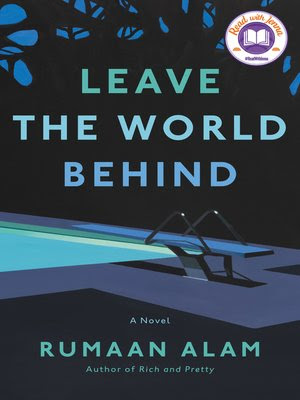
Leave the World Behind by Rumaan Alam
Audiobook [7 hr] read by Marin Ireland


Blame it on the mood of this point in our history: there are eschatological similarities between this novel and the previous one, A Children's Bible. Happily, they enrich each other rather than detract. Leave the World Behind is suspenseful without being edge-of-your-seat. When it looks like the world is ending, what‘s most important to you? This character-based novel explores that question as well as issues of class and race. Brief glimpses into what is and will be happening elsewhere add just enough context for the listener, while following the people who end up sharing a house but are cut off from what‘s going on in the wider world.

“I remember thinking at first: oh this is so odd. People in spangled costumes; they dance for a few minutes and scurry off the stage and then they do it again. I thought it was a story, but a ballet is just a bunch of short things loosely organized around a theme that doesn‘t make much sense to begin with.”
Like life, Clay didn‘t say.

The End of Everything (Astrophysically Speaking) by Katie Mack
Audiobook [6 hr] read by Gabra Zackman and the author

Taking a long view (say, 7 billion years) is a comfort to me, a way to get beyond current anxieties about the state of the world. Bring on phantom dark energy, the multiverse landscape abd women scientists. I can‘t entirely grasp the theoretical concepts outlined by Katie Mack, but I‘m inspired by her creative thinking and her passion. And I really love her sense of humour.

But red shift is also connected to cosmic time. The expansion of the universe makes a lot of things weird in astronomy, and one of them is that we use what is essentially a colour, written as a number, to denote speed, distance, and the age the universe was at the time when the thing was shining. Physics is wild.

Human thermal radiation comes out at the low frequency of infrared light because we‘re much cooler than open flames, unless things are going very badly for us.

There‘s really no theory out there in which dark energy can destroy our planet before our own sun does the job. But vacuum decay is another matter.

Network Effect by Martha Wells
Audiobook [13 hr] read by Kevin R Free

And speaking of outer space, it was such a treat to be inside Murderbot‘s head again, that security unit creature who is part mechanical, part biological. Murderbot hates being touched but will do ANYTHING to protect those who‘ve earned its loyalty. Fifth in a series, it‘s a standalone, but why miss out on the earlier episodes? If you're looking for intelligent escape and entertainment, I highly recommend these. The first four are novellas and this one is longer. All five audiobooks are read by Kevin R Free. Space adventure with lots of action and social justice too. 

Crosshairs by Catherine Hernandez


The global rise in fascism in the real world makes this near-future dystopia particularly frightening and relevant. “Others”—people with black or brown skin, trans and disabled folk, etc—lose citizenship rights in Canada. Will the majority of the population just sit back and do nothing? A fast-paced climate change novel that reminds me of Cherie Dimaline‘s The Marrow Thieves.

When I do not act, I am complicit!
When I know wrong is happening, I act!
When the oppressed tell me I'm wrong, I open my heart and change!
When change is led by the oppressed, I move aside and uplift!

[The anthem of white allies]

The Beguiling by Zsuzsi Gartner


Dark, very funny and very weird. I was immediately swept up in this bizarre tale of a mother in Vancouver who can‘t cope with motherhood, and to whom strangers keep confessing their deepest secrets. All of their stories eventually link together—I found myself flipping back to previous pages to ascertain details—and I felt the weight of grief by the end. 

The Beguiling and Crosshairs were both eligible for the Giller prize, so I'm considering these to be part of my Shadow Giller project, even though the Giller has already been awarded. The Beguiling was a finalist for the Writers' Trust Fiction Prize this year.

“Give me my epidural!” I hollered. “I want my fucking epidural!” But it was a rapid-fire labour & too late for even a pathetic little extra-strength Tylenol.
“I‘m going to roar like a lion,” I announced in an oddly calm & determined voice to the sweaty & excited faces around me. And I did. So ferociously the women in the fertility clinic in the next wing of the hospital fled en masse. All the impala of the Serengeti ran for cover. The MGM lion would have shit himself. The baby did shit herself in the womb, have I mentioned that? An advance deposit, I guess.

There were things that had flown out of my mouth on the trip home that don‘t bear repeating. The flight attendant actually asked Julian, as he sat placating the baby on his lap, “Is this woman bothering you?” He replied, “This woman is my wife.” Were sadder words ever spoken by a man?

“Not everything is Julian‘s fault. Actually”—this was drawn out to its full four syllables, each one punctuated by a bullet with my initials scored on its casing—“nothing is Julian‘s fault.”
62 pounds of porcelain-skinned, coruscating disdain, sparking like a Catherine wheel and who could really blame her? People say adolescent girls tend to turn on their mothers. But could I really be considered her mother? (I am the eggmom, they are the eggmoms, I am the walrus, goo goo g'joob.)

[…] may have been the best thing that ever happened to me. It triggered the confessions that added a dimension to my life otherwise undreamt of in philosophy. And it freed me, in the sense of freedom meaning nothing left to lose, although I would not have traded all my tomorrows for even a single yesterday or all the la-las and da-das in the world.

He barked at anything that moved, including dust motes, targeting them with his quivering eyes as if each one were a personal enemy. Poor little creature had all the signs of PTSD. He had seen the enemy and the enemy was us.

Sharks in the Time of Saviors by Kawai Strong Washburn


This novel about a poverty-stricken Hawaiian and Filipino family looks at interpersonal dynamics and responses to tragedy, via the rotating distinctive voices of all five members. It is grounded in an understanding of the colonial economic forces underlying poverty. There‘s also a fantastical element connected to traditional Hawaiian spiritual beliefs; it gives this novel a feeling of expansion and triumph over hardship.

If someone were to ask me what money means this would be what I would say: The world feels like it will stay under you no matter what you do.

“So life‘s still good at home?” I said. “You and Mom still doing your thing?”
“What, you mean like sex?” he asked. “Yeah, we still oofing. In fact, just last night we was —“
“Dad—“
“No, serious, just last night we went for happy hour at Osmani Bar and I was like, ‘Babe, no one gonna see nothing in the parking lot and—‘“
“Dad! I‘ll hang up the phone. I swear to God.”
He laughed and laughed. “Only joke! Sheesh, everyone‘s all uptight over there.”

I‘ve learned that laughter is the first wall he puts up against the hurt of the world. The walking he‘s doing now is what comes after that wall is smashed apart.

On Lighthouses by Jazmina Barrera, translated by Christina MacSweeney


A microhistory of lighthouses, mixed with memoir, travel, science and literature: this little book is a gem. Mexican author Jazmina Barrera‘s introspection on why she is so passionate about lighthouses adds to the appeal.

The Fresnel lens brought about the greatest revolution in lighthouse history. The stepped surface allows for a large aperture and short focal length; the lens occupies less space and uses fewer raw materials. It is, in addition, beautiful, like those monstrous animals that glow in the depths of the ocean.

Bruce Chatwin stopped collecting art because the pieces anchored him to one place and he wanted to travel, but he discovered that travel was another form of tyranny since “as you go along, you literally collect places.”

84, Charing Cross Road by Helene Hanff
Audiobook [2 hr] read by a full cast: Barbara Rosenblat; John Franklyn-Robbins; Jill Tanner; Shristina Moore; Simon Prebble; Barbara Caruso; and Davina Porter


This collection of correspondence between a New York writer and a London bookseller in the mid-twentieth century is delightfully presented as a multicast audiobook
 production.

We are all hoping for better times after the election. If Churchill and company get in, as I think and hope they will, it will cheer everyone up immensely.

Over the Rooftops, Under the Moon by JonArno Lawson and Nahid Kazemi


Ethereal mixed media illustrations by Iranian illustrator Nahid Kazemi match the philosophical tone of Canadian JonArno Lawson's poetic text about solitude, community and interconnectivity. It‘s truly a picture book for all ages because adults and children alike are apt to absorb new insights into life‘s big questions. Enigmatic, exuberant, and somewhat unsettling.
Color arrives, sometimes when you least expect it.

Small in the City by Sydney Smith


Ink and watercolour artwork matches the somber mood in this story about a child looking for a lost cat. Sydney Smith has previously won awards for picture books he‘s worked on with other people. This is his first where he‘s gone solo. The results are spectacular, with perfect pacing and moody art. This gorgeous picture book is on several noteworthy best-of lists and has garnered a Governor General award, a TD Canadian Children‘s Book award and the inaugural Sheila Barry Best Canadian Picture Book award.

“Even the term “children‘s book” can be limiting. We all have limited ideas surrounding what it is to be a child and it‘s hard to dive deep when you are jumping from such a low height. Instead, we should be asking what is to be human, including children. And then just write for yourself.”
—Sydney Smith, from an interview here: Art of the Picture Book


Being Frog by April Pulley Sayre


Natural science and poetry in picture book format. Simple rhyming text and gorgeous photography add up to a perfect introduction for young children to Rana clamitans, the green frog. The author‘s note at the end contains more information and points to further resources.

In many children‘s books, a frog is a character. It has human thoughts and habits. It is basically a human in a frog suit. I love these imaginary frogs, but I also like real ones. Real frogs are not humans. But they are not toys, either. They are animals. They are alive. They are beings.
—from the Author‘s Note

Killer Style: How Fashion Has Injured, Maimed and Murdered Through History by Alison Matthews David and Serah-Marie McMahon


Scary—and highly entertaining—examples of the dangers inherent in fashions: mercury used to make 18th-century hats; exploding celluloid hair combs; lethal makeup and hair dye; women strangled by scarves caught in machinery; flammable pjs and ballet costumes; poisonous fabric coloured green with arsenic; radium wrinkle cures; skirts and shoes that hobble movement; the dangerous working conditions in the garment industry... it‘s horrifying and fascinating. All ages.

Archaeologists discovered that early humans used rust to redden their hair in the Stone Age. Thousands of years later, ancient Romans made black hair dye by soaking leeches in red wine for 40 days. And to cover up grays? They prepared a mixture of boiled walnut shells and charred earthworms.