Wednesday, March 10, 2021

Spotlight on Black Authors

Yes, Black History Month has come and gone, but anytime is a good time to celebrate Black authors. In today's round-up, you will find books, audiobooks, graphic novels and a picture book. The primary audience for these books ranges from kindergarten to middle school, to teen, to adult. No matter your age, if a book interests you, then go ahead and read it! There's fiction, poetry, history, biography, memoir and short stories, starting off with two Canadian titles.

Gutter Child by Jael Richardson


Dystopian coming-of-age in an alternate Earth, with injustices that mirror and amplify our own, including a caste system based on skin colour, and the colonial oppression of Indigenous people. A moving novel with vivid characters and setting, plus a strong plot. Perfect for fans of Malorie Blackman.

“Gutter folk are poor in position, but don‘t nobody do family like us,” she says. “And we don‘t have to be family to be family, if you know what I‘m saying. Wherever we are, we find family.”

A forewarning note from the author: "This book is a work of fiction that explores a perilous world rooted in injustice. As in life, the effects of injustice impact many of the characters. Take care with your heart and your mind as you read. Pause and rest as required. These are difficult times."

Burning Sugar by Cicely Belle Blain


A beautiful collection of fierce, tender poetry that shows how travel, art and childhood layer into the complex life experience of a queer Black femme Canadian poet.

Cicely Belle Blain will be guest writer at the NTNU conference "The Poetics and Ethics of 'Learning With'," on Wednesday March 31, 2021. It will be in webinar format. More information is here.

you don‘t know loneliness until you are the only black gay kid for a million miles

I‘m waiting for new suns
New dawns, new days, new light
that casts shadows only to keep us cool
that makes melanin, loves melanin
New moons, maybe
for new nights
new dreams

I‘ve never given birth / but my stretch marks show this body holds the weight of a thousand lives

the hardest thing about decolonization:
even the air we breathe has been colonized

I‘m back now
the brightest nebula of self-love I‘ve ever been
I rise early to watch faint orange stardust on the
horizon

Four Hundred Souls: A Community History of African America, 1619-2019 edited by Ibram X Kendi and Keisha N Blain
Audiobook read by various (many, many: it's a veritable who's who in audio narration)


A vital anthology by 90 Black writers—scholars, activists, journalists, novelists & poets—who have each taken on a 5-year segment in this “Community History of African America” covering 400 years: 1619-2019. The ensemble creation is diverse, spirited and potent. I highly recommend the audiobook edition with its varied cast and special effects between pieces!

While some nations vow to never forget, our American battle has always been about what we allow ourselves to remember.
-Wesley Lowery, The Stono Rebellion

Big Black: Stand at Attica by Frank 'Big Black' Smith, Jared Reinmuth, and Ameziane


An excellent comics format history about a particular example of standing up for justice in America: the Attica prison uprising in 1971. Jared Reinmuth wrote this together with Frank “Big Black” Smith, who was a calm central figure among the inmates at that time. Governor Rockefeller sent in troopers who killed 39 people with 2,000 rounds of expanding bullets. French artist Améziane captures the heartbreaking drama and aftermath in somber tones with lots of deep black. 


My mama always said, “Don‘t trouble trouble till trouble troubles you.”

With the introduction of the archaic Rockefeller drug laws, and for-profit prisons, mass incarceration has exploded. In 1971, New York State laid claim to 12 prisons and 12,500 prisoners. In 2000, when the case was settled, that number had ballooned to 72 prisons and 72,500 prisoners, ravaging poor communities of color and making the Attica prison uprising a story for today. —Daniel Myers, Esq. Attica Brothers Legal Team, 1974-2000

Class Act by Jerry Craft (New Kid #2)


A smart, funny graphic novel that picks up where Jerry Craft‘s award-winning New Kid left off: Drew is back at Riverdale Academy, one of only a few Black students. Friendships, social class disparities, romance, shadeism, and the micro aggressions of racism are just some of the issues Drew juggles in 8th grade. An added layer of enjoyment comes in the form of the double-page spread at the start of each chapter: they are puns referencing other middle grade graphic novels.


Concrete Rose by Angie Thomas (The Hate U Give #0)
Audiobook read by Dion Graham
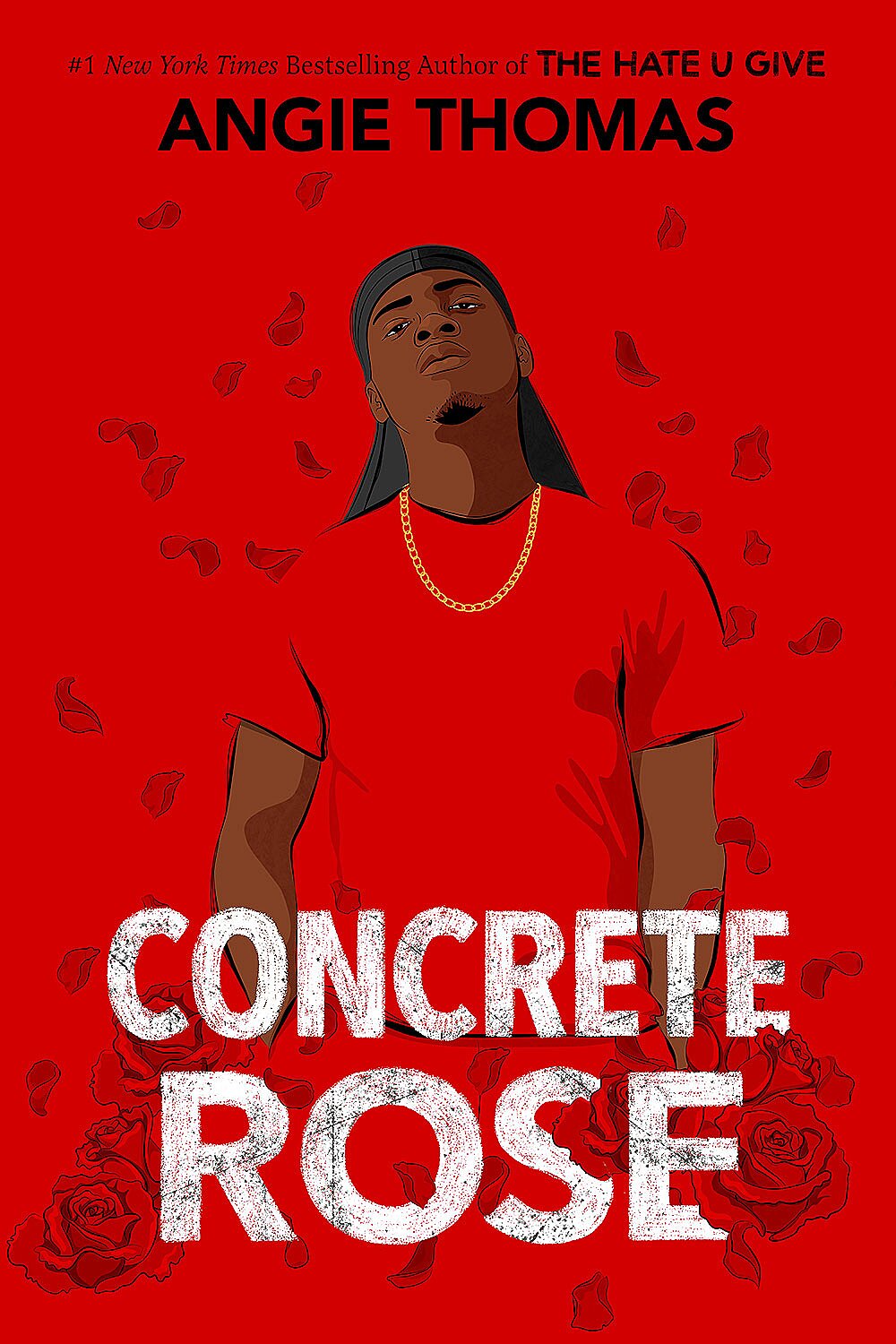

I expected this would be high quality, based on Angie Thomas‘ previous books. It‘s a prequel, though, so I also expected some been-there-done-that reaction on my part. I planned to listen to 30 minutes before bed. Instead, I listened to 3 hours and even then had to be stern with myself to get some sleep. The next day, I was eager to return to it. It‘s that good. Gripping storytelling and believable characters, plus the excellent audio narration by Dion Graham.

Don‘t let the cuteness fool you. Babies straight up thugs. Don‘t give a damn what you going through.

The Secret Lives of Church Ladies by Deesha Philyaw
Audiobook read by Janina Edwards


The Black women, teens and girls in these short stories aren‘t all church goers, but they are all affected their upbringing within church lady culture. They struggle against societal norms and deal with racism and shadism. My favourites are 'Snowfall,' about a disconnected and lonely lesbian couple who‘ve moved to a northern climate; and 'Jael,' who may live up to her Biblical namesake. 'Peach Cobbler,' too… how can I pick? All nine stories are great! Note: it's in Hoopla at the public library.

You can‘t save me because I‘m not in peril.

In the south, the weather does not hurt you down to your bones, or force you to wake up a half hour earlier to remedy what has been done to your steps, your sidewalk, your driveway, and your car as you slept.

Unfortunately the zeal of the newly converted is bewildering to the children of the newly converted. One Saturday night you've got every blanket in your house draped over your head to drown out the sound of your mother's headboard banging against the bedroom wall as she hollers her soon-to-be-ex-best friend's husband's name. And the next Saturday night, she's snatching the softened deck of playing cards out of your hands because "Games of chance are from the devil."

Exquisite: The Poetry and Life of Gwendolyn Brooks
by Suzanne Slade and Cozbi Cabrera


Gwendolyn Brooks, the first Black person to win the Pulitzer Prize, began writing from a young age. This picture book biography shows how persistence and passion can be rewarded, even if jobs are hard to come by and poetry can‘t be counted on to pay your bills. Cozbi Cabrera‘s joyous artwork in acrylic paint has an airy sense of movement. An exquisite book for all ages.

“I was at my happiest, sitting out on the back porch, to sit there and look out at the western sky
with all those beautiful changing clouds
and just to dream about the future,
which was going to be ecstatically exquisite,
like those clouds.”


She poured her poems into notebooks—
filled them to the very tops.
Her room became a swelling sea of poems.

Outside,
exquisite clouds exploded in the sunset sky,
because Gwendolyn had won
the greatest prize in poetry!

Surviving the White Gaze: A Memoir by Rebecca Carroll
Audiobook read by the author


Rebecca Carroll takes a clear-eyed look back on her childhood and young adulthood in this moving memoir about growing up biracial in her white adoptive family, and being the only dark-skinned person in her New England community. Immersion in white culture didn‘t protect her from experiencing stark racism. Experiences like being told by one teacher that Black girls aren't pretty, and by another that Black students aren't smart. 

Carroll was in her tweens when she met her manipulative white birth mother. The woman was pretty messed up. She did things like take Carroll out to nightclubs when she was only 11 years old, scolded her for drawing attention to herself, and told her that having a Black biological father and nappy hair did not make her Black. But society saw Carroll differently, and in this memoir she explores how she went about forging her own sense of identity.

The Hired Man by Aminatta Forna


“I guessed that Laura was one of those people who preferred the music of a lie to the discordance of truth.”
 

When a British family buys an abandoned house in the Croatian countryside in 2007, secrets long suppressed are drawn into the light. The taut prose, vivid characters and superb pacing make a gripping read in this story about the repercussions of civil war.

Fabjan had hired a new girl for the summer, who smiled at all the customers, which here is as disconcerting as if she walked through the streets singing.

Better mind your own business, chief, says my father (in those days he always called me chief). He gave me a shove. Don‘t forget, chief, never ask a question you don‘t have to, that way you‘ll live a lot longer.

How the One-Armed Sister Sweeps Her House by Cherie Jones
Audiobook read by Danielle Vitalis


“Of course she did not leave him. What woman leaves a man for something she is likely to suffer at the hands of any other?”
 

We see the ugly underbelly of the touristy beaches of Barbados in this gut-wrenching tale of multigenerational family violence, poverty and crime. A visceral, haunting experience. This novel was recently longlisted for the Women's Prize for Fiction.

“A clean house is a clear head” was what Wilma always said.

[…] the men on the street used to watch her like she was the last drop of water in the land of thirsty.

Sunday, February 28, 2021

February 2021 Reading Round-Up

I've read so many great books this month that I'm going to split my highlights into several parts. Watch for an upcoming spotlight on Black authors, and a special St. Patrick's Day post featuring Irish authors. 

Today's mix includes: three stories that centre on an adult with a disability; three by or about Indigenous women; three in comics format; three audiobooks; three in translation; and four by Canadians.

We Are Not Free by Traci Chee

I started reading this book on February 19, 2021. On that same date in 1942, President Roosevelt signed the order that allowed the forced removal of over 100,000 Japanese Americans to concentration camps. (Japanese Canadians were similarly interned as "enemy aliens.") 
We Are Not Free is a poignant, lively, eye-opening novel in the voices of 14 teens from San Francisco, who are living in prison camps during World War II. It's an outstanding and heartbreaking portrayal of injustice and resilience. The rise, during 2020, in hate crimes against Asian Americans and Asian Canadians is a sad indication that the message of this novel remains relevant. It's YA for everybody.

“Wait,” I say. “You met Eleanor Roosevelt?”
“Yeah. She was saying we had to be in camps because we hadn‘t been integrated into the rest of American society like the Germans and the Italians, and I told her we hadn‘t integrated because we weren‘t allowed to buy or move anywhere except into neighborhoods that were already Japanese, so whose fault was it that we couldn‘t integrate?”
"In PM Magazine, Dr Seuss, the kids‘ book author, has been drawing us
with pig noses and wiry moustaches, queuing up for boxes of TNT.
There are all sorts of cartoons like that. Sometimes we look like pigs,
sometimes monkeys, sometimes rats. 
We never look like us."

It Began with a Page: How Gyo Fujikawa Drew the Way 
by Kyo Maclear and Julie Morstad

A stunning picture book biography of Japanese American artist Gyo Fujikawa (1908-1998), who was an iconoclast with a passion for social justice. 
Fujikawa‘s first author-illustrated book, Babies, portrayed children of all skin colours. It took several years for her to convince her publisher to take it on, but she was adamant. It was published in 1963 and sold nearly 2,000,000 copies. 
Canadians Kyo Maclear and Julie Morstad read Fujikawa‘s books when they were children and both say she inspired their own work in creating children‘s books that portray diversity.  


The Centaur's Wife by Amanda Leduc

Amanda Leduc is a Canadian writer and disability activist. In her second novel, a woman with cerebral palsy falls in love with a centaur. There‘s magic in the soil of a planet fed up with human greed; a heroic lesbian couple helping the survivors of an apocalyptic meteor shower; a young woman who had been waiting for a lung transplant; and a fox who wants to be a mother. It‘s a surprising, carefully crafted, poignant and fabulist story of love and grief, seeded with brief original fairy tales. 

“Stories are never just stories,” her father had said. “There‘s always a kernel of truth hidden deep within the words.”

She drew herself, a wide-eyed 12-year-old, one leg shorter than the other, her feet twisted and bent. Her mouth open in a silent scream.
She drew herself now. Her father‘s eyes, her father‘s smile. The uneven legs and lopsided shoulders that were entirely her own.

The mountain told him that humans lived the way that comets shot across the night sky—bright and burning, falling, gone. If you blinked, they disappeared.

Alone by Chabouté
Translated by Ivanka Hahnenberger

A graphic novel masterpiece about isolation, imagination, and letting go of fear. A disfigured hermit lives alone in a lighthouse with a dictionary and a goldfish as company. More alone than any covid lockdown. The cinematic style of French cartoonist Chabouté evokes the sounds of waves and gulls as well as the sense of remoteness. There are few words: this story is all about emotions. 

Buffy Sainte-Marie: The Authorized Biography by Andrea Warner
Audiobook read by the author and Buffy Sainte-Marie

Buffy's life story is amazing. Born on the Piapot reserve in Saskatchewan, she was adopted by an American family. Buffy faced many obstacles but she was determined to create and perform. Much of this biography is about her music, giving us a peek into the alchemy that underpins her artistry. Her lyrics come from her heart and they address social injustices with such power that her music was blacklisted by the US government (Lyndon Johnson and Nixon eras). The audiobook
 is narrated with obvious admiration and respect by Andrea Warner, with short interludes read by Buffy herself. Introduction by Joni Mitchell.

I have two main prayers: one is “thanks!” and the other is “wow!”

At one point in this biography I began a sentence with the words “Tearing down,” and in the editing process Buffy crossed them out and provided this alternative: “Creating, in spite of and beyond.” That simple reframing blew my mind. I actually felt a seismic shift in my brain. My own language has a tendency to be rooted in destruction. […] while her language is rooted in possibility, a desire to grow, explore and persuade.
-from the Afterword

The Yield by Tara June Winch

Indigenous peoples in Australia have had similar traumatic experiences with colonialism as in Canada, including stolen generations, racist violence and suppression of cultures. Using three perspectives—bisexual August‘s contemporary storyline; her grandfather‘s dictionary of Wiradjuri language and ancestral memory; and the account of a 19th-century Lutheran missionary—healing and cultural reclamation subtly unfolds in the “space between things.”

Marks or tracks, impressions of passing objects—MURRU
This is the tracks the snakes, the goanna, the birds, and us make as we crisscross the world. We all leave murru behind, so leave a gentle one.

What's a tin mine look like?
Big hole.
Is it bad?
‘Member Wizard of Oz?
Yeah.
‘Member Tin Man?
Yeah.
Well there's a reason he doesn't have a heart, darl.
What's that mean?
That tin don't love anyone or anything back.

The Night Watchman by Louise Erdrich

When I finished this layered historical novel set in the 1950s, I felt suffused by a warm emotional afterglow. Multiple characters and interlocking storylines give a sense of community and the many intractable problems faced by people of the Turtle Mountain Chippewa reserve. The most pressing issue is that they face termination in the eyes of the US government. My heart opened and welcomed in a whole bunch of wonderful characters.

Every so often the government remembered about Indians. And when they did, they always tried to ‘solve‘ Indians, thought Thomas. They solve us by getting rid of us.

The cold sap was a spring tonic. When you drank it, you shared the genius of the woods.

Sometimes now, a word failed to come to him when he was speaking, and in those times he substituted a descriptive phrase for the word, comically, and got a laugh. Just the other day he'd forgotten the word for car trunk, and said, “automobile cave with a hinge,” which was taken for wit.

Red Rosa: A Graphic Biography of Rosa Luxemburg 
by Kate Evans

“I want to affect people like a clap of thunder.” In this highly researched and visually appealing graphic biography, we get to know the remarkable Rosa Luxemburg. A Polish Jew with a crippled leg, she was a dynamo who received her PhD in 1897 in Zurich. She devoted her brilliant mind to social activism on behalf of workers. Her revolutionary theory addressed unemployment, lethal working conditions, starvation wages, evictions and more.

The distinctive feature of capitalism is the precariousness of the worker.

Clara: I know all mothers fret, but I do wish Kostya would do something with his life.
Rosa: Give him time. I‘m sure he‘ll find his feet. He‘s doing better than our glorious Party leaders. Far better to be a dreamer than to aim to shoot down the dreams of others.
Don‘t forget, as busy as you may be, to quickly raise your head
and cast a glance at those great silver clouds and
that silent blue ocean in which they are swimming.

The Adventures of China Iron by Gabriela Cabezon Camara
Translated by Fiona Mackintosh and Iona Macintyre

China Iron, mother of two by the time she's 14, embarks on a joyous Pippi Longstocking-ish picaresque journey through 19th-century Argentina, discovering the nature of Spanish colonialism, British imperialism, and her own pansexual self along the way. At journey's end is a way of harmonious connection with her beloved land: the ways and knowledge of the Indigenous peoples.

I took off my dress and the petticoats and put on the Englishman‘s breeches and shirt. I put on his neckerchief and asked Liz to take the scissors and cut my hair short. My plait fell to the ground and there I was, a young lad. Good boy, she said to me, then pulled my face towards her and kissed me on the mouth.

She was my North and I was the quivering needle on a compass: my whole body was pulled towards her, dwarfed by the strength of my desires. It was under the sway of that force that I began to feel, and now I think perhaps it‘s always that way, that you feel the world through others, through your bond with others.

It doesn‘t seem right, there are hardly any birds in the pampas and the few we have are low-flying or can‘t fly at all. You get flamingos like clouds of shrill pink on the horizon. You get ñandús that run faster than horses, their strong elastic legs scything the ground and raising the dust. The ñandús connect pampa and sky.

I, having lived wholly inside the dust, having been little more than one of the many forms that dust took there, having been contained in that atmosphere—the earth of the pampa is also the sky—started to feel it, to notice it, to hate it when it made my teeth gritty, when it stuck to my sweat, when it weighed down my hat. We declared war on the dust, all the while knowing that we were fighting a losing battle: we come from dust.

The smell of near-black tea leaves torn from the green mountains of India that would travel to Britain without losing their moisture, and without losing the sharp perfume born of the tears Buddha shed for the world‘s suffering, suffering that also travels in tea: we drink green mountains and rain, and we also drink what the Queen drinks. We drink the Queen, we drink work, we drink the broken back of the man bent double as he cuts the leaves […]


The Godmother by Hannelore Cayre
Translated by Stephanie Smee

A struggling single mother in her 50s is caught between the university expenses for her daughters and the care home costs for her mother in this darkly tongue-in-cheek tale of criminals in contemporary France.

She had asked to be cremated with her ashes scattered in a department store. The girls and I carried out her final wishes, selecting the Galeries Lafayette. I chose to scatter my share through the boutiques of her favourite designers. If you happened to find a bit of grey dust or some strange little bits of matter at the bottom of your Dior, Nina Ricci or Balenciaga suit pockets from the Spring-Summer 2017 collection—that was my mother.

And while I had plenty of faults, he had one big one: he believed in God. Philippe, this man who was integrity personified, intelligent, cultured and witty… believed in God! It just seems so unlikely that anybody could give any credibility to such a load of rubbish. He could have confided in me a belief that our fate as humans was predetermined by a dish of celestial noodles and I wouldn‘t have found it less ridiculous.

My father, good colonial that he was, had taught me at the same age he himself had learned, that‘s to say, at the age of 10. I still remembered the recoil ripping into my shoulder as he made me shoot, over and over, until I could absorb the shock with my body. So when my parents went out to a restaurant, they could leave me alone between the motorway and the forest with the revolver on the bedside table and not waste a moment worrying about whether I might be scared—after all, what babysitter could be as good as a .357 Magnum?

Burnt Sugar by Avni Doshi
Audiobook read by Vineeta Rishi

A prickly, unsettling story about love and hatred between a mother and daughter in contemporary India. The making of art, the unmaking of mental illness. Buried secrets. Riveting.


I told her that staying doesn‘t have the appeal, the mystery, of escape. To stay is to be staid, to be resigned, to believe this is all there will ever be. Aren‘t we creatures made for searching, investigation, dominion? Aren‘t we built to believe there can always be something better?

Everything Sad Is Untrue (A True Story) by Daniel Nayeri
Audiobook read by the author


A warm, touching and very funny autobiographical novel about the author‘s experiences as an Iranian refugee in middle school in Oklahoma. He tells this as a class project in the style of 1001 Nights, incorporating ancient lore with family history and stories about poop. The audiobook would be a great choice for family listening.

All Persians are liars and lying is a sin.
That's what the kids in Mrs. Miller's class think, but I'm the only Persian they've ever met, so I don't know where they got that idea.
My mom says it's true, but only because everyone has sinned and needs God to save them. My dad says it isn't. Persians aren't liars. They're poets, which is worse.

Here is a list of the foods from Iran that they have never heard of here: all of it. All the food. Jared Rhodes didn‘t even know what a date was.

The shame of refugees is that we always have to explain ourselves. It makes our stories patchworks, not beautiful rugs.


Slaughterhouse Five by Kurt Vonnegut, adapted into graphic novel format by Ryan North and Albert Monteys

A powerful graphic novel
adaptation of Kurt Vonnegut‘s anti-war classic. Billy Pilgrim‘s mind came unstuck during his time as a soldier in WWII. He was a POW in Dresden when Allied forces killed over 25,000 civilians in one night, flattening the city. Being abducted by aliens who explain the nature of time… slipping forwards and backwards to important scenes from Pilgrim‘s life: it works so well in images!
When I saw those freshly-shaved faces, it was a shock. “My God, my God,”
I said to myself — it's the Children‘s Crusade.”