I adored Gods Behaving Badly, Marie Phillips' playful novel of Greek gods living in contemporary London, so it was with much anticipation that I began reading her latest, The Table of Less Valued Knights. And yes, it is funny. After a few chapters, however, I found myself reluctant to pick it up again. Humour is appealing, but I need substance, too. I decided to give it one more chance before returning it to the library. And then everything fell into place.
It's a brilliant social satire. Misogyny, gender inequality and sexual violence are all included; plenty of substance there! Gay and transgender issues are also integral to the story.
The action begins at King Arthur's court in Camelot, with a bunch of knights chomping at the bit for quests. Sir Dorian was the fastest one to leap at the chance to search for Queen Martha, kidnapped on her wedding night. Sir Humphrey, who had been demoted from the prestigious Round Table to the Table of Less Valued Knights, is the only one left in the room late in the evening when another quest opportunity presents itself. Lady Elaine needs help to find her abducted fiance.
Later, Humphrey has second thoughts about having volunteered for the job. "I'm not even supposed to leave Camelot, let alone be gazumping [Sir Dorian's] quest." Gazumping! I love the way Phillips threw that word in there. It's fitting, because the knights treat the quests like hot properties, and a good example of the novel's style, incorporating contemporary sensibilities and terminology into Arthurian fantasy.
More examples of style:
"He waited. Time passed. In another man doubts would have set in. In Edwin, doubts presented themselves, decided that this was not a hospitable environment, and left again."
"Elaine's home village, close to the tuft border, had seen better days, although even in those better days it probably still looked as if it had been put together using an avalanche and some string."
"The next hamlet they came to [...] was a tiny place, even more deprived than Elaine's village had been. Humphrey had seen houses of cards more robust."
Sometimes the farce stretches a bit too far:
Martha "headed for the nearest village, a rather bleak place where the houses were still black with soot from the last time marauders had tried to burn it down, which, had they succeeded, would probably have been an improvement. The inn was called the Dipsomaniac Camel, and she supposed that the sign might have been of a camel, but she had never seen a camel, and neither, she was fairly certain, had the sign painter."
Comedy is tricky, and Phillips manages to be lavish with it while controlling multiple story threads that come together in a satisfying conclusion.
The sexism inherent in Arthurian tales - damsels are the ones in distress; gallant knights come to their rescue - is turned on its head in The Table of Less Valued Knights. Women prove very much capable of looking out for themselves. Laurie Penny, in Unspeakable Things, writes, "Men have sex; women are sex." This attitude is strongly embodied in a couple of characters who receive their comeuppance (it is a fantasy novel, after all). It's presented with such a light touch that it took me a while to appreciate the feminist strength of this novel.
The Table of Less Valued Knights was longlisted for the 2015 Bailey's Women's Prize for Fiction.
teen novels, comics, children's books, adult fiction, nonfiction... you name it!
Saturday, May 16, 2015
Monday, May 11, 2015
Sita's Ramayana by Samhita Arni and Moyna Chitrakar
Sita's Ramayana is a fantastic retelling of a classic Sanskrit epic. If you've never read any version of the Ramayana, this is a fine place to start. If you're already familiar with the tale, there are significant twists in this Bengali version, beginning with the fact that it's told from a woman's point of view.
The images are adapted from Moyna Chitrakar's wordless scroll paintings, with text by Samhita Arni.
The story opens with sorrowful Sita, eye makeup running down her cheeks, asking the forest to shelter her. "Let me live here. The world of men has banished me." Then the narrative backs up 14 years, to the point where Prince Rama has been exiled from his kingdom, accompanied by his wife Sita, and his brother Lakshmana.
Sita gets kidnapped by Ravana, a demon with ten heads, and Rama gets help from an army of animals to get her back from the island of Lanka. War means death and destruction, and Sita has empathy for both sides.
"The cries of the women of Lanka lamenting Kumbhakarna's fall filled my ears, even though he fought on the side of my enemy. I could not help but feel his death was tragic, for he had advised Ravana wisely, and gone, knowingly, to meet his death."
"their people had met death on the battlefield - for what? For one man's unlawful desire. Men had been killed, widowed, and children orphaned. It was such a high price to pay."
Rama is the human incarnation of Lord Vishnu. He excels at everything he does. He is essentially virtuous, obedient to his father and loyal to his wife. But he sometimes acts dishonourably (using treachery to kill), is obstinate (won't go back on a promise even when it no longer makes sense), and he also doubts his wife's fidelity. This makes him more interesting as a hero.
In my previous encounters with Rama, he's had blue skin (like Vishnu) so I found it a bit disconcerting that Chitrakar uses a sort of greenish-brown for his colour. Meanwhile, some of the other characters are blue, notably Ravana and his family, even though Ravana is more typically green. Chitrakar portrays Hanuman - monkey god and son of the wind - as black (like the other monkeys) instead of his usual white. These differences made me pay more attention, so I liked them.
When Hanuman is sent on a Hercules-type mission to get a distant medicinal herb, he stuns the rest of his army upon return:
"You brought the entire hill?" says one monkey.
"Well, I couldn't find the plant you told me to find, and I was running out of time, so I brought the whole hill to you instead."
The irregular page layouts feature large panels that emphasize ornamental details in the paintings, as well as taking advantage of the angles and curves of Chitrakar's overall graphic design.
Ancient stories are repeated and retold because they continue to resonate. Like other classic tales from around the world - Greek, Roman and Norse mythology, Gilgamesh, Beowulf, King Arthur, European fairytales, etc. - the Ramayana has influenced authors of contemporary literature. Salman Rushdie's Midnight's Children is just one example.
Pair Sita's Ramayana with Sanjay Patel's hip and funky Ramayana: Divine Loophole.
The images are adapted from Moyna Chitrakar's wordless scroll paintings, with text by Samhita Arni.
The story opens with sorrowful Sita, eye makeup running down her cheeks, asking the forest to shelter her. "Let me live here. The world of men has banished me." Then the narrative backs up 14 years, to the point where Prince Rama has been exiled from his kingdom, accompanied by his wife Sita, and his brother Lakshmana.
![]() |
| Sita was abducted, rescued, and then doubted. She returns to the forest sad and alone. |
"The cries of the women of Lanka lamenting Kumbhakarna's fall filled my ears, even though he fought on the side of my enemy. I could not help but feel his death was tragic, for he had advised Ravana wisely, and gone, knowingly, to meet his death."
"their people had met death on the battlefield - for what? For one man's unlawful desire. Men had been killed, widowed, and children orphaned. It was such a high price to pay."
Rama is the human incarnation of Lord Vishnu. He excels at everything he does. He is essentially virtuous, obedient to his father and loyal to his wife. But he sometimes acts dishonourably (using treachery to kill), is obstinate (won't go back on a promise even when it no longer makes sense), and he also doubts his wife's fidelity. This makes him more interesting as a hero.
![]() |
| Rama (left), Sita (center) and Lakshmana (right) |
![]() |
| Ravana, beloved of his family... but not so much by others. |
When Hanuman is sent on a Hercules-type mission to get a distant medicinal herb, he stuns the rest of his army upon return:
"You brought the entire hill?" says one monkey.
"Well, I couldn't find the plant you told me to find, and I was running out of time, so I brought the whole hill to you instead."
The irregular page layouts feature large panels that emphasize ornamental details in the paintings, as well as taking advantage of the angles and curves of Chitrakar's overall graphic design.
![]() |
| Eye-catching use of blue, red and yellow. Check out the crazy eyes on the elephant! |
![]() |
| This is possibly the most bad-ass squirrel I've ever encountered. |
Pair Sita's Ramayana with Sanjay Patel's hip and funky Ramayana: Divine Loophole.
Thursday, May 7, 2015
The Secret Life of Squirrels by Nancy Rose
Jessica Olin wrote a fun post about squirrels on her Letters to a Young Librarian blog, prompting me to share my own love for these little beasts with a photo taken at Abkhazi garden in Victoria, BC:
...and a link to my archives for a review of Squirrels of North America nature guide by Tamara Eder.
...and give a preview of my next review, which will be of Sita's Ramayana by Samhita Arni and Moyna Chitrakar, a tale with some scary fierce squirrels that join other animals and Rama in a battle against a demon king with ten heads.
...and to write about a wonderful children's picture book: The Secret Life of Squirrels by Nancy Rose.
Through the window at her home in Nova Scotia, Nancy Rose photographs squirrels exploring dioramas that she has created. I cannot tell you how adorable these images are. You must see for yourself at The Secret Life of Squirrels website.
The photos have been assembled together with text into a charming narrative about Mr. Peanuts, an atypical squirrel. Instead of gathering nuts and climbing trees, Mr. Peanuts cooks on a tiny grill, plays piano, and reads. "He especially likes to read aloud. (You may have heard him chattering in your backyard.)"
Mr. Peanuts invites his cousin to visit. His preparations include vacuuming, laundry and baking. When Cousin Squirrel arrives, they play games, go out for ice cream, and "scare each other with ghost stories, including 'The Old Haunted Tree' and 'The One-Eyed Owl.' You can't tell yourself a ghost story, thinks Mr. Peanuts. You need a friend."
The Secret Life of Squirrels is great for all ages. The simple story has a familiar scenario - preparing the house for a visitor, having fun with a friend - and it's easy for very young children to follow. The photographs are as cute as they are fascinating. Examining them for the details of how they were created is part of their attraction. Children who like crafting things will enjoy figuring out how they might make similar scenes. Lots of adults like miniature worlds too, and will appreciate the hours of patience necessary for Rose to get the perfect shot with live squirrel models.
Readalikes: Here Comes the Garbage Barge (Jonah Winter); Meerkat Mail (Emily Gravett); Town Mouse, Country Mouse (Jan Brett).
...and a link to my archives for a review of Squirrels of North America nature guide by Tamara Eder.
...and give a preview of my next review, which will be of Sita's Ramayana by Samhita Arni and Moyna Chitrakar, a tale with some scary fierce squirrels that join other animals and Rama in a battle against a demon king with ten heads.
![]() |
| Detail from Sita's Ramayana. Art by Moyna Chitrakar, Text by Samhita Arni. |
Through the window at her home in Nova Scotia, Nancy Rose photographs squirrels exploring dioramas that she has created. I cannot tell you how adorable these images are. You must see for yourself at The Secret Life of Squirrels website.
The photos have been assembled together with text into a charming narrative about Mr. Peanuts, an atypical squirrel. Instead of gathering nuts and climbing trees, Mr. Peanuts cooks on a tiny grill, plays piano, and reads. "He especially likes to read aloud. (You may have heard him chattering in your backyard.)"
Mr. Peanuts invites his cousin to visit. His preparations include vacuuming, laundry and baking. When Cousin Squirrel arrives, they play games, go out for ice cream, and "scare each other with ghost stories, including 'The Old Haunted Tree' and 'The One-Eyed Owl.' You can't tell yourself a ghost story, thinks Mr. Peanuts. You need a friend."
The Secret Life of Squirrels is great for all ages. The simple story has a familiar scenario - preparing the house for a visitor, having fun with a friend - and it's easy for very young children to follow. The photographs are as cute as they are fascinating. Examining them for the details of how they were created is part of their attraction. Children who like crafting things will enjoy figuring out how they might make similar scenes. Lots of adults like miniature worlds too, and will appreciate the hours of patience necessary for Rose to get the perfect shot with live squirrel models.
Readalikes: Here Comes the Garbage Barge (Jonah Winter); Meerkat Mail (Emily Gravett); Town Mouse, Country Mouse (Jan Brett).
Monday, May 4, 2015
The Buried Giant by Kazuo Ishiguro
There are so many reasons that I loved Kazuo Ishiguro's The Buried Giant.
During a long period of peace brought about by King Arthur, the people of Britain have been bewitched by a mist of forgetfulness. Axl and Beatrice are an elderly couple who struggle to remember details of their shared lives, yet their love for each other remains strong. They embark on a journey to visit their son in another village and encounter many surprises along the way.
The language cast its own spell on me. There's a meditative rhythm to the prose, with lots of dialogue that moves the story along at a steady pace. The dialogue has a distinctly archaic feel, even while using only common words. Everyone is politely formal with each other, including husband and wife:
"Who knows what goes on with Saxons," said Axl. "We may be better seeking shelter elsewhere tonight."
"The dark will be soon on us, Axl, and those spears are not intended for us. Besides, there's a woman in this village I was wanting to visit, one who knows her medicines beyond anyone in our own."
Axl waited for her to say something further, and when she went on peering into the distance, he asked: "And why would you be after medicines, princess?"
"A small discomfort I feel from time to time. This woman might know of something to soothe it."
"What sort of discomfort, princess? Where does it trouble you?"
"It's nothing. It's only because we're needing to shelter here I'm thinking of it at all."
"But where does it lie, princess? This pain?"
"Oh..." Without turning to him, she pressed a hand to her side, just below the ribcage, then laughed. "It's nothing to speak of. You can see, it hasn't slowed me walking here today."
"It hasn't slowed you one bit, princess, and I've been the one having to beg we stop and rest."
"That's what I'm saying, Axl. So it's nothing to worry about."
"It hasn't slowed you down at all. In fact princess, you must be as strong as any woman half your age. Still, if there's someone here to help with your pain, what's the harm in going to her?"
"That's all I was saying Axl. I've brought a little tin to trade for medicines."
"Who wants these little pains? We all have them, and we'd all be rid of them if we could. By all means, let's go to this woman if she's here, and those guards let us pass."
The relationship between Axl and Beatrice is characterized by their steadfast loyalty and gentleness, yet complexities remain. If the mist of forgetfulness is lifted, will that bode well or ill for them? And what about mortality, must it be faced alone?
The Buried Giant is an atmospheric and immersive reading experience.
Readalikes set in historical early Britain: 7th-century - Hild (Nicola Griffith); 9th-century - The Edge on the Sword (Rebecca Tingle); 5th-century - The Skystone (Jack Whyte) and The Lantern Bearers (Rosemary Sutcliff). I'm not sure of the exact time period of Harvest (Jim Crace) - maybe 16th-century - but it has a similar clear and meditative style of prose. See also Sir Gawain and the Green Knight: A New Verse Translation by W.S. Merwin, and/or an amusing retelling of Sir Gawain's legend that is suitable for all ages - The Adventures of Sir Gawain the True (Gerald Morris).
- Legend of King Arthur viewed from a fresh angle
- World building: early Britain complete with ogres, pixies and dragons
- Death as a narrator
- A journey on foot
- Distinctive language
- Love story about two elderly people - I've enjoyed others lately: Etta and Otto and Russell and James (Emma Hooper), and And the Birds Rained Down (Jocelyne Saucier).
During a long period of peace brought about by King Arthur, the people of Britain have been bewitched by a mist of forgetfulness. Axl and Beatrice are an elderly couple who struggle to remember details of their shared lives, yet their love for each other remains strong. They embark on a journey to visit their son in another village and encounter many surprises along the way.
The language cast its own spell on me. There's a meditative rhythm to the prose, with lots of dialogue that moves the story along at a steady pace. The dialogue has a distinctly archaic feel, even while using only common words. Everyone is politely formal with each other, including husband and wife:
"Who knows what goes on with Saxons," said Axl. "We may be better seeking shelter elsewhere tonight."
"The dark will be soon on us, Axl, and those spears are not intended for us. Besides, there's a woman in this village I was wanting to visit, one who knows her medicines beyond anyone in our own."
Axl waited for her to say something further, and when she went on peering into the distance, he asked: "And why would you be after medicines, princess?"
"A small discomfort I feel from time to time. This woman might know of something to soothe it."
"What sort of discomfort, princess? Where does it trouble you?"
"It's nothing. It's only because we're needing to shelter here I'm thinking of it at all."
"But where does it lie, princess? This pain?"
"Oh..." Without turning to him, she pressed a hand to her side, just below the ribcage, then laughed. "It's nothing to speak of. You can see, it hasn't slowed me walking here today."
"It hasn't slowed you one bit, princess, and I've been the one having to beg we stop and rest."
"That's what I'm saying, Axl. So it's nothing to worry about."
"It hasn't slowed you down at all. In fact princess, you must be as strong as any woman half your age. Still, if there's someone here to help with your pain, what's the harm in going to her?"
"That's all I was saying Axl. I've brought a little tin to trade for medicines."
"Who wants these little pains? We all have them, and we'd all be rid of them if we could. By all means, let's go to this woman if she's here, and those guards let us pass."
The relationship between Axl and Beatrice is characterized by their steadfast loyalty and gentleness, yet complexities remain. If the mist of forgetfulness is lifted, will that bode well or ill for them? And what about mortality, must it be faced alone?
The Buried Giant is an atmospheric and immersive reading experience.
Readalikes set in historical early Britain: 7th-century - Hild (Nicola Griffith); 9th-century - The Edge on the Sword (Rebecca Tingle); 5th-century - The Skystone (Jack Whyte) and The Lantern Bearers (Rosemary Sutcliff). I'm not sure of the exact time period of Harvest (Jim Crace) - maybe 16th-century - but it has a similar clear and meditative style of prose. See also Sir Gawain and the Green Knight: A New Verse Translation by W.S. Merwin, and/or an amusing retelling of Sir Gawain's legend that is suitable for all ages - The Adventures of Sir Gawain the True (Gerald Morris).
Sunday, May 3, 2015
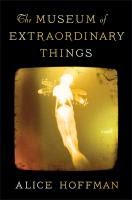
The Museum of Extraordinary Things by Alice Hoffman
Outsiders finding their place in society: that's a theme I love. There are misfits of all kinds in Alice Hoffman's The Museum of Extraordinary Things.
The two central characters are Ezekiel, who was a child when he and his father escaped a pogrom in Russia and made their way to New York City, and Coralie, who has webbed fingers. Coralie's father has made her a part of his freak show exhibit on Coney Island. The main story takes place in 1911.
The narrative alternates between Coralie and Ezekiel, who sheds his Jewish identity and goes by the name Eddie when he becomes a photographer. Each time the narrative shifts, it begins with 15-20 pages in first person, like a journal entry, then switches to third person. In the US edition that I read (Scribner 2014), all of the journal entry text is in italics. Dense pages and pages of it. So hard on the eyes. I sighed every time I got to another section like that.
Fortunately, the plot is compelling. Other hooks for me include the Triangle Shirtwaist Factory fire, the struggles of early labour organizers, mention of Alfred Stieglitz, and details about early photographic techniques.
The following passage intrigued me because I agree with the first part, but not the part about the ability of a camera to capture truth. A photo cannot provide context, and a photographer chooses what to include in the frame.
"Eddie had come to understand that what a man saw and what actually existed in the natural world often were contradictory. The human eye was not capable of true sight, for it was constrained by its own humanness, clouded by regret, and opinion, and faith. Whatever was witnessed in the real world was unknowable in real time. It was the eye of the camera that captured the world as it truly was. For this reason photography was not only Eddie's profession, it was his calling."
Coralie was already a sympathetic character, and then I loved her more when I discovered that she and I had similar reactions to Jane Eyre:
"If the wolfman had not disappeared from my life I would have made certain to question him further about Jane Eyre, the book he held so dear to his heart. I suppose I was studying love, and in my studies of this subject I could never understand the brutal love of Rochester. I did grasp why Rochester revealed his humanity only after he had been blinded and disfigured; like the beasts around us who reveal their natures because they have no access to artifice, he at last had no choice but to be truly himself. I wondered why he didn't then realize how cruelly he'd treated the first Mrs. Rochester. Surely if he comprehended all he'd done to her, he would have locked himself in a tower to repent for the rest of his days rather than taking the sweet Jane as his wife.
As for Jane, I considered her to be a fool, but what young woman has not been a fool under certain circumstances?"
Another bookish connection comes in the form of a garment factory worker named Hannah, who kept a spool of blue thread in her pocket for luck. It made me wonder if there is a particular backstory or symbolism related to this object, because Anne Tyler's latest novel (which I have yet to read) is called A Spool of Blue Thread.
The Museum of Extraordinary Things stretches credibility too often, especially in the resolution. I was annoyed by inconsistencies like when Bonavita, an animal trainer with only one arm, clapped his hands to direct a lion. Still, its good qualities outweigh its faults. It prompted a wide-ranging discussion at my book club.
A perfect companion read is a haunting historical graphic novel featuring a mermaid in the Hudson River: Sailor Twain (Mark Siegel).
Labels:
art/music/photography,
historical fiction,
Jewish,
MPV,
NYC
Thursday, April 30, 2015
Mort(e) by Robert Repino
Enormous ants mastermind a plot to rid the Earth of humans in this apocalyptic tale. All nonhuman animals become sentient. People's pets rise up against their former masters. Will nonhumans do better at civilization?
I really enjoyed the Blackstone audiobook Mort(e) by Robert Repino [11 hrs 8 min]. It's perfectly narrated by Pinchot Bronson. (Remember Balki from Perfect Strangers?) Bronson has a versatile, animated delivery that mesmerized me.
Imagine a text-only mash-up of Duncan the Wonder Dog (Adam Hines), Ant Colony (Michael Deforge), Terra Formars (Yu Sasuga), Animal Farm (Orwell) and Cat Out of Hell (Lynn Truss). Whew! It's original, suspenseful, existential and thought-provoking.
Wednesday, April 29, 2015
Bitter Greens by Kate Forsyth
Historical fiction about real women, and fairytale retellings: two kinds of books that are in my wheelhouse. Bitter Greens by Australian author Kate Forsyth is both. Yay! It's a retelling of Rapunzel, set in 16th-century Italy, and a richly-detailed fictional account of the life of Charlotte-Rose de Caumont de la Force, set in the French court of Louis XIV. Charlotte-Rose was the king's cousin, she was banished to a nunnery, and she is the author of the original Rapunzel/ Petrosinella story.
There are three central characters: Charlotte-Rose, Margherita (Rapunzel/ Petrosinella), and Silena (the witch). I listened to the audiobook [Blackstone: 19 hrs 26 min] and can still hear narrator Kate Reading's voice as the witch saying: "Petrosinella, Petrosinella, let down your hair, so I may climb the golden stair."
There are parts that dragged a bit; sometimes from the weight of historical detail, a little too much about sexual dalliances, or too much dithering when I would have have preferred action. In a paper book, I can skim through stuff that doesn't interest me, but with audio it isn't so easy. Fortunately, I really like listening to Kate Reading's voice and her narration helps pull me through when I start to feel mired in a long story.
I also came up against something else: my personal resistance to surrender. Readers filter narrative through our own experiences, so I always take note when I can feel resistance happening. It's an opportunity to learn about myself. In this case, when characters chose a submissive path, I was unhappy. It made me check whether this reaction had to do with the characters being true to themselves or my own stuff.
Aside from the small things that I've mentioned, I enjoyed this book a lot and recommend it. As an element of total serendipity, I encountered bitter greens in three books within three weeks of each other. Grace Mccleen's The Land of Decoration features a religious zealot who believes bitter greens are a necessary part of his family's diet. I also read a whole book on the topic: Bitter by Jennifer McLagan. Another bit of serendipity: the old nun who befriends Charlotte-Rose is named Seraphina, and I happen to be rereading Seraphina by Rachel Hartman at the moment.
It's early spring in Edmonton, so my garden is supplying me with dandelion greens, young chicory leaves and hops shoots. Bring on the bitter!
![]() |
| Hops shoots taste like asparagus. Just eat the tender top part. |
It's early spring in Edmonton, so my garden is supplying me with dandelion greens, young chicory leaves and hops shoots. Bring on the bitter!
Readalikes: The Moon and the Sun by Vonda McIntyre (for the court of the Sun King with a touch of fantastical elements); Zel by Donna Jo Napoli (another successful retelling of Rapunzel); and Wicked by Gregory Maguire (for the viewpoint of a misunderstood witch). Other great historical fiction/fairytale combinations include Tinder (Sally Gardner) and The Snow Child (Eowyn Ivey).
Subscribe to:
Posts (Atom)