Sunday, January 4, 2015

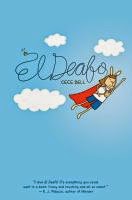
El Deafo by Cece Bell

El Deafo is a charming graphic novel based on comics artist Cece Bell's own childhood experiences of becoming profoundly deaf after an illness when she was four. In Bell's full colour art, humans are depicted in an animorphic style with pink triangular noses and large, rabbit-like ears.

It's the 1970s and Cece attends school with wires in her ears that are connected to an enormous phonic contraption strapped to her chest. Her teachers wear a corresponding microphone that amplifies sound so well that Cece can hear what's going on wherever the teacher happens to be... like the staff lounge... or the bathroom. It's like having a super power!

Humour and Cece's sweet, indomitable spirit balance the challenges that she faces growing up with a disability. For readers of all ages, from Grade 3 to adults.

Readalikes: Smile (Raina Telgemeier); and Ariol (Emmanuel Guibert).

Friday, January 2, 2015

Library Pockets on New Books

I was fortunate to receive some wonderful new books at Christmas. Two of them have library date due card pockets decorating the covers.

The Strange Library by Murakami is the Harvill edition from the UK. I discovered that the illustrations in the US edition are entirely different when I read this article in the New Yorker. I'll write more about Murakami's delightfully odd novella in the future.

I haven't yet done more than dip in and out of Toronto poet Jay MillAr's Timely Irreverence (Nightwood Editions), but here's a bit in honour of today's big snowfall:

"Winter opens frenetic doors, the stuffs of poems / spill out--we're snowed in again"

Now, off to work I go.

Thursday, January 1, 2015

Crunching Numbers: Overview of My Reading Stats 2014

A lot of people find it hard to believe that I read over 250 books a year. Do I skim? No. Sometimes I'll skim through a book to familiarize myself with something that's popular, as part of my job, but I don't count that as a book that I've read. Then how do I do it? I spend 3 or 4 hours each day reading and listening to audiobooks. On days when I'm not working at the library, I sometimes read for 8 hours. So, yeah, it's excessive.

Total books read in 2014 = 277 (I haven't counted picture books.)

What kind of books did I read?

Adult fiction (a mix of realistic fiction, speculative fiction, historical, and thriller/suspense + others)164 (59%)
     - includes 16 (6%) short story collections
     - includes 10 (4%) poetry collections (I don't know why I didn't make a separate pie slice for them but I'm not going to start over.)
Adult non-fiction (mostly memoir, biography, science & history) = 56 (20%)
YA = 41 (15%)
Children's fiction & non-fiction (not picture books) = 16 (6%)

Who wrote these books?
Canadians = 62 (22 %)
Edmonton authors = 5 (2%)
Americans = 116 (42%)
British/Irish/Scottish = 48 (17%)
Japanese = 6 (2%)
Other countries = 45 (16%)
Also:
     Read in translation = 17 (6%)
     Read in French language = 3 (1%)

Women (as sole creators) = 115 (42%)
Men (as sole creators) = 98 (35%)
Queer authors/queer content = 50 (18%)
Aboriginal & People of Colour (as sole creators) = 51 (18%)
(Note that there is overlap in the author categories above, as in a single author who could be a female queer Canadian POC.)


In what format were these works?

Regular print books = 119 (43%)
Audiobooks = 84 (30%)
Graphic novels = 64 (23%)
eBooks = 10 (4%)


Compared to last year's stats, not much has changed, except in format. This year I listened to more audiobooks (84 vs 67) and read more graphic novels (64 vs 34). My eyes give me more trouble as I age, so I'm a little more likely to listen to audiobooks while I relax instead of picking up a paper book. In the past, audiobooks were reserved for activities that precluded holding a book.

Credit for my intake of graphic novels nearly doubling probably goes to the Oh Comics podcast (and the Panels website). While I prefer standalone graphic novels, I got hooked on trades because of great stuff like Saga, Rat Queens, Sex Criminals, Afterlife with Archie, Kevin Keller, The Fuse, The Wicked and the Divine, FBP, Suicide Risk, Pretty Deadly, and Lazarus. (I'm excited about volume 1 of Lumberjanes coming out in April 2015. I don't count reading individual comics as "books," no matter how many times I go through them. But they totally count when they are bound together. It's not logical, so don't ask me to explain.)

Last year I noted that I wanted to read more local authors in 2014, but that didn't happen. Nine of the books I read last year were by Edmontonians and only five this year. I did read a few more books by Canadians than I did last year, yet American authors still make up the largest slice of the pie.

The #WeNeedDiverseBooks campaign prompted me to focus on this aspect when I was compiling stats today. Although I didn't consciously select my reading based on this criteria, I'm pleased to see lots of works by PoC.

Creating pie charts was fun. Now, time to start my reading for 2015!
Wednesday, December 31, 2014

The Back of the Turtle by Thomas King

Thomas King is at the very top of his game in The Back of the Turtle. It's warm and witty and a cracking good story about family ties. It's got environmental disaster, greed, guilt and redemption. There are elements of First Nations and Christian mythology, plus nods to the Western literary canon.

The action takes place in a remote coastal area of British Columbia, as well as in Toronto. The Alberta tar sands are in there too. King moves smoothly between narrative threads, backstory and present day. His playful style is a joy to read:

  "The morning traffic was heavy, and the limousine was reduced to drifting along with the schools of cars and lumbering pods of delivery vans and transport trucks, everyone jammed together fin to gill, in a sea of diesel fumes and exhaust."

My favourite character is Nicolas Crisp, with his idiosyncratic manner of speech:

  "Ye know trailers from trawlers?"
  "No."
  "Nothing much to know. Simple they are, not like a house. Now there's a pox. A house, ye see, don't want to move. Once she's built, she figures to stay put. A trailer's more compliant. Ye doesn't likes where ye have come ashore? Well, just drop the hitch on the ball and away ye go. Trailer's the better companion. Happy on the road or off. All love for ye and your caprices and no complaining."

King drops in sly hints about the true identities of Crisp and his addled nephew, Sonny. There's one, in fact, in the passage above. I won't say more, to not spoil the fun.

Dorian Asher, CEO of an agribusiness corporation, is the bad guy. But he is also one who speaks the truth: "the occasional spill is the price we pay for cheap energy." Dorian brings to mind Oscar Wilde's Dorian Gray, not only for his name, but also because he's a hedonist and a man without a conscience.

There were so many times that I made connections to other books, and I love when that happens. There's an ocean barge carrying toxic waste, unable to find a port that will allow it to dock; it's loosely based on a true event, which also inspired Jonah Winter and Red Nose Studio to create the all-ages picture book Here Comes the Garbage Barge.

King seamlessly incorporates scientific and historical information, like the time in 1950 when an American pilot jettisoned a nuclear bomb over Quebec. One of the scariest genetically modified organisms, Klebsiella planticola bacteria, is central to the plot. It gives me shivers just thinking about its destructive potential. (Go ahead and google it.)

I've encountered readers who are hesitant to read Thomas King's work for fear that too much will go over their heads. Looking back on what I've written so far, I hope I don't reinforce that misconception. The Back of the Turtle is totally enjoyable and accessible. It's heartbreaking and heart healing. I've saved writing about it for the last day of the year because its one of my top reads of 2014.

__________________________________________________________________________

Nobody writes quite like King, but the closest readalikes are possibly Monkey Beach (Eden Robinson) and Boy Snow Bird (Helen Oyeyemi).

More from Thomas King: The Inconvenient Indian: A Curious Account of Native People in North America - nonfiction that I wish everyone would read.

Tuesday, December 30, 2014

Baby's in Black: Astrid Kirchherr, Stuart Sutcliffe, and The Beatles by Arne Bellstorf

Baby's in Black is set in 1960-62, when The Beatles were honing their musical skills by playing long sets every night in a dive bar in the red light district of Hamburg, Germany. It's a slice of pop culture history, created in graphic novel format by German artist Arne Bellstorf.

At that time, The Beatles were comprised of John, Paul, George, Pete Best (on drums) and Stu Sucliffe (on bass). A couple of young German friends, Klaus Voortman and Astrid Kirchherr, started going almost nightly to hear them. They eventually got to know the band members very well. Astrid took photos of them (and would go on to be one of The Beatles premier photographers). Astrid and Stu fell in love; this is mostly a story about them.

I love the energy and immediacy of this biography. There's plenty of Beatles trivia too, like George being sent home to England by the German authorities because he was underage (17). And the reason why the band is called the Beat Brothers on their very first recording (backing Tony Sheridan on "My Bonnie").

Here's a bit of dialogue from when the band is first invited to sit with Astrid and Klaus during a break in the music:

John Lennon - "Where did you get them black turtlenecks?"
Klaus - "I bought this one at the flea market in Paris."
John - "And did you get your hair cut there?"
Klaus - "No. Astrid cut my hair."

Later, Astrid cuts Stu's hair too. Apparently, the rest of The Beatles copied the hairstyle afterwards, although that's not told in Baby's in Black. Black, by the way, is Astrid's favourite colour.

Bellstorf's art is in velvety blacks with scribbled graphite shadings. Sometimes the marks go outside the panel borders--an appropriate touch for this free-spirited group of young people who are metaphorically colouring outside the lines. Deep black clothes and accented eyes capture the mod vibe, and smudgy graphite is perfect for the pervasive cigarette smoke.

Listen to some early Beatles, let your hips shake, and your experience of stepping back in time will be complete.

Friday, December 26, 2014

The Scatter Here Is Too Great by Bilal Tanweer

Bilal Tanweer's interconnected short stories set in contemporary Pakistan made my Bestest Books so Far list, midway through 2014. I read the whole book again today and I love it even more.

The Scatter Here Is Too Great is about loneliness and community, our inner lives and our exterior interactions. It's about the way "stories give us reasons to connect ourselves to the world," and the way creating art can heal our wounds.

The narrative centers around a few of the people who are affected by a bomb blast at an intersection in Karachi, although most of them have sorrows that are completely apart from this tragedy. For example, a father knocked down by the explosion is thinking of his estranged son:

"You desperately wish to see your son and tell him you are fine. You want to hold his hand like the time when he was a ceaselessly crying newborn and you were alone in the hospital room sitting next to his cot feeling a kind of raging joy, an awe, as if you were looking at Life itself, a presence of something divinely new, as if you had just begun a life outside yourself, and nothing, not even death, could damage all your dying rotting parts that you felt each day."

Another man grieves for his long-dead father, who once told him:

"A city is all about how you look at it. We must learn to see it in many ways so that when one of the ways of looking hurts us, we can take refuge in another way of looking. You must always love the city."

The characters are tenderly portrayed, flawed and so very believable, seen from a variety of vantage points. Seen through Tanweer's eyes, even garbage is beautiful:

"The sea at 11:00 A.M. was one Karachi dream that came true each day. It was one part of the city that remained as it ever was: a vast desert of water meeting a uniform spread of gray sand that shimmered with litter in sunlight: plastic bags lolled their heads in the constant wind, half-buried glass bottles stuck their radiant necks out of the sand, varieties of seaweed lay wasted like old mop cloths, and the sea breeze was forever at work scrubbing sand on everything that interrupted its movement."

It's a powerful book with a big heart that made my own heart feel bigger.

Readalikes: Behind the Beautiful Forevers (Katherine Boo); Five Star Billionaire (Tash Aw); In Other Rooms, Other Wonders (Daniyal Mueenuddin); Love Enough (Dionne Brand); and Between the Assassinations (Aravind Adiga).

Thursday, December 25, 2014

Krampus the Yule Lord by Brom

Old magic is afoot on Christmas morning in West Virginia.

Santa Claus had better watch out. Krampus is coming to town, and he is set on revenge.

"Santa Claus... How vile your name upon my tongue. Like acid, hard to utter without spitting."

Santa Claus is not the saint he appears to be. Krampus is not the devil he appears to be.

Also, Brom's Krampus the Yule Lord is not really as grim as the book's cover might lead you to believe. The horned creature with his pointy tongue might have put me off if I hadn't loved one of Brom's earlier novels, The Child Thief (a retelling of Peter Pan).

Yes, Krampus is a dark fantasy. Battles between gods are no picnic, and there are violent scenes involving modern day sociopaths, crooks and meth addicts. At its core, however, this reworking of Norse and Christian mythologies contains a deep love and faith in the natural world. It is possible that good will triumph over evil.

Brom's illustrations add just the right gothic touch. Check out some of them online here, being sure to scroll down to Santa Claus.

Krampus is a great yuletide story for any day of the year.

Readalikes: American Gods (Neil Gaiman); Ragnarok (A.S. Byatt); Weaveworld (Clive Barker).