Showing posts with label cookery/food. Show all posts

Monday, April 6, 2020

In the Kitchen during Social Isolation: Vin d'Orange Extravaganza

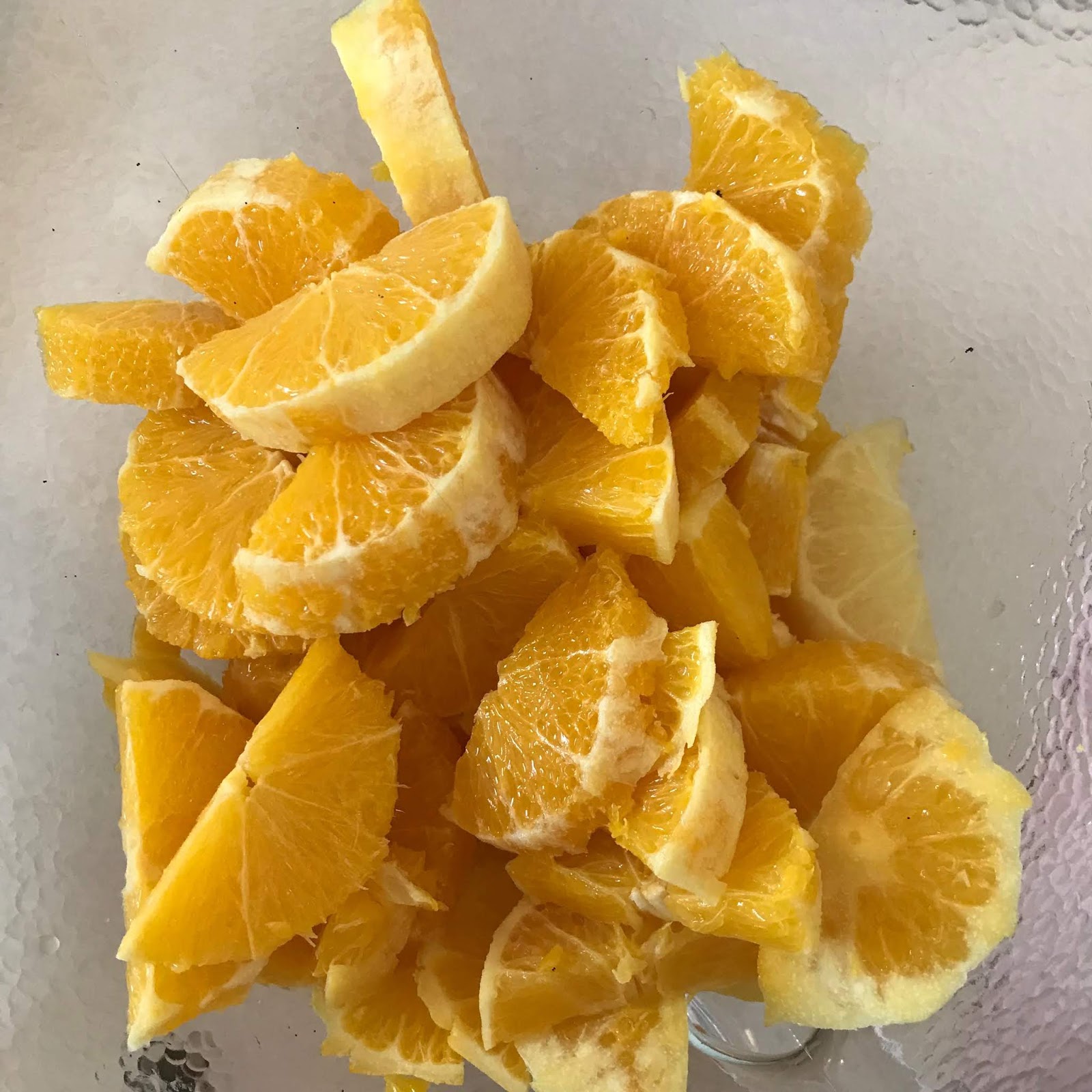
Like many of you, I haven't been able to settle down with books lately. I have been busy in the kitchen, instead. These are my adventures making vin d'orange--a fortified citrus-flavoured beverage that is lovely straight up and also in cocktails--and how I used the leftover wine-soaked oranges after the batch was finished.

Back in early February, I started a batch of vin d'orange. Alice Waters has recipes in two of her books: The Art of Simple Food II and My Pantry. David Leibovitz also has instructions online. A few days ago, I strained the oranges and poured the wine through a coffee filter to make it as clear as possible. That took an entire day, because drip... drip... drip.

What to do with the orange peels? Candy them! Last year, when I made my very first batch of vin d'orange, I consulted candied peel recipes in the aforementioned Alice Waters cookbooks. The books were published only three years apart, but the recipes are quite different. Since I had borrowed the books from the library last year, and now the libraries are all closed, I followed instructions I found online here: Food Network but I skipped the blanching step. The peel had already lost most of its bitterness by being soaked in white wine for two months. It turned out gorgeous and delicious. I use candied peel to decorate cakes, or in baked goods, or else I just eat it like candy. It's also nice chopped up and sprinkled on almond butter on toast--sort of like marmalade.


Next, I had a pile of wine-soaked orange flesh to deal with and I decided to make orange and date muffins. My trusty Mennonite muffin book--Muffins and Quick Breads with Schmecks Appeal by Edna Staebler--gave me a starting point, but I changed her recipe quite a bit. They turned out so well that I've since made two more batches (and gave most of them away to my neighbours).


Still to use up: the orange syrup created when I candied the orange peels. Also, all that vin d'orange! It's sunshine in a glass. For cocktail recipe ideas, I look for anything that calls for Lillet. Cheers!

Monday, November 26, 2018

Magnolia Table by Joanna Gaines

Magnolia Table first came to my attention when I saw it on some cookbook awards longlist (can't remember which) back in the spring, then waited on a long list of library holds to finally get my hands on it this month. I wasn't aware of the existence of HGTV's Fixer Upper, which features Joanna Gaines and her husband Chip. They also own Magnolia Market, a shopping complex that includes a home decor store and restaurant in Waco, Texas.

After all that waiting, this cookbook was a disappointment: beautiful design, with gorgeous photos on thick matte paper stock, but the recipes aren't anything special. The ingredients in many are a throwback to the 70s—using Velveeta, cardboard tubes of refrigerated dough, cans of creamed soup, and flavour packets by Knorr. I don't like the taste of these things.

I'm surprised that there are so many reviews praising the recipes, and in particular for such ordinary things as baking powder biscuits (Jojo's Biscuits are made with eggs) and chocolate chip cookies (a variation on Toll House, with half the butter, so that they stay mounded instead of going flat). Comfort food is great, but I expect some little twist in BLTs or mashed potatoes when they are included in such a prettily-designed book.

Gaines writes: "If you told me I could have only one thing every day for the rest of my life, it would be mac and cheese. I realize this is exactly the choice that many 8-year-olds would make, and I'm okay with that." 

My reaction: great choice! But why make it with Velveeta cheese? And why put it in the chapter on side dishes? Why recommend serving it with chicken or meatloaf? You said yourself that you could happily survive on mac and cheese alone!

On a tangental aside, the Gastropod podcast recently did an episode on mac and cheese and I learned that Canadians consume more of it than any people from other country in the world. 

Gaines: "Creamy risotto is filling and satisfying enough to be a full meal, but if you are serving it to someone who doesn't consider anything a full meal without meat, stir in shredded rotisserie chicken. On the other hand, if you want to make it truly vegetarian, use vegetable instead of chicken broth."

My first reaction to the vegetable broth advice was: well, duh! But the core audience for this cookbook may not know that chicken broth isn't vegetarian. When I tell people that I'm a vegetarian, they sometimes ask if that means that I eat chicken.

Speaking of chicken, there are many recipes for that in this book. I counted eleven that call for purchasing whole rotisserie chickens, and another nine that start with uncooked chicken.

I get the impression that it's the men in the Gaines family who think meals aren’t complete without meat. In the recipe header for Sweet Pepper & Pancetta Frittata, Gaines notes that it's perfect for “lunch with the ladies.” A frittata, even one that includes meat, is apparently too much like quiche for the menfolk.


Scenes from my Syrian donuts baking adventure.
The recipe for Syrian donuts is the only one I was interested in trying. It's a baked yeast donut with a firm texture, flavoured with anise and cinnamon, and then soaked in syrup. Gaines advises eating them while still warm, but I found the flavour and texture was better on the second day. 

The story that goes with this recipe is touching: it's from her Syrian grandfather and he typed it up for her. A photo of the original is included, and you can see that he used less sugar. Gaines doubles the sugar because she likes "everything sweeter." (I followed his recipe.) I'm obviously not the only one intrigued by this recipe because you can buy it printed on a tea towel from Magnolia Market.


Speaking of sweetness, Gaines describes her recipe for Green Beans Amandine as "lightly sweetened." In a recipe for four people, she adds half a cup of sugar to the sauce. Sounds awfully sweet to me.

There were other things that inspired me. I'm allergic to tomatoes, so I think I'll try her suggestion to substitute peaches for tomatoes in Caprese salad sometime. I've also tried her way of spreading mayo on both sides of each slice of bread when making grilled cheese sandwiches and I like the result. I don't like using her favourite cheese for that sandwich, havarti, because I find it gets too liquidy. I may also try her way with cinnamon buns sometime, which is to roll the dough flat after layering cinnamon and sugar inside, then cut it into squares.

Amy Neunsinger's photography has a romantic-rustic ethos, executed in creamy pastels. There are lovely shots of the Gaines' four children, the goats, and the milk cows. The outdoor shots of the farm are as spotlessly clean and American-dreamy as those taken indoors. I went to the Magnolia.com blog and saw the same aesthetic in the photos there.

Borrow this from the library to admire the photography, and maybe try a few recipes, but save your kitchen shelf space for more useful cookbooks.

Monday, January 4, 2016

Marcus Off Duty: The Food I Cook at Home by Marcus Samuelsson

I picked up Marcus Off Duty at the library because I had enjoyed Marcus Samuelsson's memoir, Yes, Chef. Samuelsson was born in Ethiopia and grew up in an adoptive Swedish family. He now lives (and cooks!) in New York City. The following notes were jotted down when I read Marcus Off Duty last year.

Captures vibrant multi-ethnic urban environment. Photos show people of all ages cooking and eating together; street and market scenes; also paintings. Very appealing book design. Introductions to each recipe are personable and interesting. The whole experience is a lot like reading a food magazine. I also like the "music to cook by" playlists for each chapter, i.e. Street Food includes selections by Santana, Lou Reed, Red Hot Chili Peppers, Marvin Gaye, Paul Simon and Grandmaster Flash.

"Add 2 teaspoons of garam masala to a batch of oatmeal cookies." Note: I did try this and it was great!

Recipes I'd like to try:

Mac & cheese & greens - p. 66
Sweet potato gnocchi - p. 74
Potato-spinach pie - p. 78
K-town noodles - p. 170
Green pea soup - p. 254
I love carrots soup - p. 259
Shiro - p. 284
Platanos mash - p. 288
Swedish potato dumplings - p. 292
Addis dip (awaze) - p. 303
My Swedish Princess Cake - p. 330

Friday, September 11, 2015

Book Bingo, Second Card, Sixth Line

My book bingo card is now complete, but I'm going to separate the final two lines into two separate posts, just to keep it manageable. It took me so long to get the last few squares that I managed to read additional titles for several other categories in the meantime.

ABOUT A DISEASE: The End of Your Life Book Club by Will Schwalbe [Books on Tape: 9 hr 37 min: narrated by Jeff Harding]. Bonus title: On Immunity by Eula Biss.
(Intersection. See previous book bingo post here.)

A COLLECTION OF ESSAYS: A Bone to Pick: The Good and Bad News about Food, with Wisdom and Advice on Diets, Food Safety, GMOs, Farming, and More by Mark Bittman [Books on Tape: 8 hr 42 min: narrated by Robert Fass.

Social justice, public health and the environment are all addressed in Bittman's passion about food issues. This collection of about 60 short articles was originally written for his column in the New York Times. The subtitle is a good indication of the breadth of topics, as are the subheadings in the table of contents: Big Ag, Sustainability, and What's in Between; What's Wrong with Meat?; What Is Food? And What Is Not?; The Truth About Diet(s); The Broken Food Chain; and Legislating and Labeling. Thought-provoking and entertaining.

Bonus title: Selfish, Shallow and Self Absorbed: Sixteen Writers on the Decision Not to Have Kids, edited by Meghan Daum.

I already knew and loved Meghan Daum's writing and now I know that she's great at getting other writers to contribute to an anthology on a controversial topic. It is top notch! Here's just one example, from Geoff Dyer, in 'Over and Out':

"To be middle-aged and childless is to elicit one of two responses. The first: pity because you are unable to have kids. This is fine by me. I'm always on the lookout for pity, will accept it from anyone or, if no one is around, from myself. I crave pity the way other men crave admiration or respect. So if my wife or I are asked if we have kids, one of us will reply, 'No, we've not been blessed with children.' We do it totally deadpan, shaking our heads wistfully, looking as forlorn as a couple of empty beer glasses." (The second response is "horror, because by choosing not to have children, you are declining full membership in the human race.")

Selfish, Shallow and Self Absorbed would make an excellent book club choice, because there are many different views expressed and it's a hot-button topic.


SPORTS-RELATED: Lost Canyon by Nina Revoyr.

This was one of the three final categories that snagged my progress. I had it on my first card, where it also created a hindrance, until I read a great nonfiction book about soccer. It took me a while to realize that I could count Nina Revoyr's brand new novel, Lost Canyon, for this category. It's about four people who know each other only through their trainer at a Los Angeles gym, and their planned four-day backpacking trip through strenuous mountain terrain.

As it happens, I've had an advance electronic copy of it since mid-June, thanks to Akashic Books. Unfortunately, I couldn't get the pdf to open in the reading app on my iPod. Every time I wanted to read it, I had to scroll to the message in my email, open the pdf, and then advance page by page to my last stopping point. Quite a nuisance... until I came to a point in the narrative where the hiking adventure went completely sideways and the story switched gears into thriller mode. I didn't stop again until I was finished. (Format problem solved.)

The viewpoint in Lost Canyon rotates between the multi-ethnic cast of believable protagonists. If you are familiar with Revoyr's previous work, you won't be surprised that issues of race and class are explored within a compelling plot. Lost Canyon is her most adrenalin-fueled novel to date.

HISTORICAL FICTION: Graffiti Knight by Karen Bass.
(Intersection. See previous book bingo post here.)

AT LEAST 800 PAGES: Anna Karenina by Leo Tolstoy, translated by Louise Maude and Aylmer Maude - 880 pages [Blackstone Audio: 33 hr 34 min: narrated by Wanda McCaddon].

Audio is my favourite way to experience classic literature. Skillful audiobook narrators make complex sentence structure easy to understand. In the past three years, I've had the immense pleasure of listening to works by Shakespeare, Charlotte Bronte, Edith Wharton, Jack Kerouac, Chinua Achebe, Beryl Markham, Ann Petry, E.M. Forster, P.G. Wodehouse, Wilkie Collins and George Eliot. Another great thing about audio is having someone else do the work of pronouncing unfamiliar names, of which there are plenty in Tolstoy.

My choice of this particular version of Anna Karenina was all about the voice narrator, Wanda McCaddon, and not about the translators. McCaddon, who also records under the names Donada Peters and Nadia May, is a sure bet. I did find some interesting articles online, however, that made me aware of the linguistic differences I would have encountered if I had listened to a different translation. (See examples in The Guardian and the New York Times.)

As with pretty much any novel that uses a person's name as the title, Anna Karenina is character-based. I didn't have a lot of patience for Anna. Her tragic romance bored me, although I felt some sympathy for the societal restrictions placed upon Tolstoy's women strictly because of their gender. My favourite character is definitely Konstantin Levin. I adored the descriptive passages about the Russian countryside and found the ideas about social, agricultural and educational reforms intellectually engaging.

One thing that still mystifies me is why the men would be so keen to shoot snipes rather than ducks. Are snipes so much tastier? Are they a more challenging target because they are smaller? If you know the answer, please tell me!

Bonus title: Seveneves by Neal Stephenson - 861 pages.

After I'd read (listened to) Anna Karenina, someone gave me a raised eyebrow about counting it for this category, since an audiobook technically has no pages at all. I still think it counts, and Ann and Michael of BOTNS concur, but since then I've read another long book, and this time it was proper paper door-stop.

Seveneves begins in the near-future, when something collides with Earth's moon and causes it to break up into seven large chunks. This in turn has a big effect on our planet. One of the most memorable points in the book is the line that begins: "Five thousand years later..." An impressive narrative leap! Some parts were a little too science-explainy but that didn't stop me from loving this overall.

Coming up next: Black Out! My final book bingo post for 2015.

Saturday, April 25, 2015

Bitter by Jennifer McLagan

I appreciate the taste of bitterness and so I was excited when I first heard about Bitter: A Taste of the World's Most Dangerous Flavor, with Recipes when Jennifer McLagan was interviewed by Shelagh Rogers on The Next Chapter. (You can hear the episode online here.)

I've since read it cover to cover and tried some of the recipes. The Tea-infused Prunes are already a favourite. (Earl Grey tea and orange peel--so simple and so good.) I combined two different recipes, Grapefruit Tart and Grapefruit Curd, to make lovely dessert tartlets for guests at Easter. Some of the other recipes I'd like to try include: Bitter Greens Ravioli, Beer Soup, and Homemade Tonic Water.

McLagan's vegetable recipes often include lard, duck fat, ham, anchovies or other such ingredients that don't come into my vegetarian house. It doesn't matter, because I'm used to making substitutions. In fact, I often go off onto such tangents that the original recipe is unrecognizable. Today I made dandelion and smoked cheese quesadillas. They were totally my own creation, but inspired in general by McLagan's recipes for bitter greens.

Bitter is the kind of cookbook I love to read because it's full of fascinating information. For example:
My sister's jelly tastes
like honey with a slight
touch of dandelion green.
Aurora Mountain Farm
  • There's an association between the shape of a plate and the way we perceive the taste of food.
  • Cold reduces the impression of bitterness.
  • The tongue map has been debunked.
  • A spoon tasting dinner was held in which each of seven courses of mild curry was served with seven different kinds of metal spoons (copper, gold, silver, zinc, tin, chrome and stainless).
  • Some goat and sheep cheeses are made using the enzymes from cardoon blossoms.
  • Forced hop shoots sell for up to 1,000 euros a kilo, making them one of the world's most expensive vegetables. (I'm glad I grow my own! They really are delicious.)
  • Jelly made from dandelion flowers has its own name in France: cramaillotte. My sister Simone Rudge makes dandelion jelly to sell in Whitehorse and I sometimes make it for myself too. 
The only complaint I have is that most of the information pages are laid out in white font on a celadon green background, which doesn't provide enough contrast to be easily read. The photo pages are plentiful and drop-dead gorgeous, especially the ones with plant materials displayed against a dark backdrop.

There are lots of quotes from other sources, such as:
  • "Who wants to eat a good supper should eat a weed of every kind." - Italian saying
    Anyone who loves beer
    as much as I do must
    also love bitterness.
  • "Bitterness is a crucial piece of the taste spectrum that when presented in balance rounds out our flavor experience." - Melissa Pasanen
  • "Food has become primarily an expression of each individual culture, needing to be learned anew form birth and passed on from generation to generation." Paul Freedman
The introductory notes with each recipe are just great:
  • "Serving the custard cold with warm poached fruit also stimulates the trigeminal nerve, which senses the temperature of food." (Tea Custard with Poached Fruit)
  • "The French aren't afraid of darkly caramelizing baked goods (look at the edges of fruit tarts and the underneath of palmiers and croissants); they know that caramelizing, even a little burning, adds taste." (Toast Soup)
  • "This is a mixture of caffeine and nicotine, so I can't really defend it except to say the flavor is surprising and delicious, and not everything can be good for you." (Tobacco Chocolate Truffles)
McLagan's information about phytochemicals reminded me about another food book I like: Eating on the Wild Side by Jo Robinson.

Bitter has received a James Beard Award in the single subject category. (Full list online here).

Monday, September 1, 2014

Seconds by Bryan Lee O'Malley

Seconds is a charming full-colour graphic novel stand-alone by Bryan Lee O'Malley, author of the Scott Pilgrim series.

Katie is a chef who started the restaurant Seconds four years earlier, along with some friends. It's owned by a gay couple who put up all the money and the place has come to be recognized as the best place to eat in town.

Now, Katie dreams of opening her own place. A house spirit and some magic mushrooms might be able to help... if Katie doesn't get too greedy.


Katie to Lis, the house spirit:
"...are you wearing an ironic t-shirt?"

Chef Katie is the star at Seconds.
Click to better see the food imagery.
Katie's new place seems to be a money pit.
Note the realistic background with cartoony figures.


Red is prominent in the art, and it's also the colour of Katie's hair. O'Malley's style has many elements of manga. Cartoony people with big eyes and exaggerated facial expressions are portrayed against highly realistic backgrounds. The food looks yummy! There are house spirits and multiple worlds. Katie is an independent young woman interacting with the spirit world in a way that reminds me of Hayao Miyazaki's animated films.

Seconds is a funny and heartwarming look at the pitfalls of perfectionism. Don't miss it.

Readalikes (and watchalike): RASL (Jeff Smith); Life after Life (Kate Atkinson); and the film Spirited Away (Miyazaki).
When a chef can't sleep...

Thursday, July 10, 2014

Over Easy by Mimi Pond

In 1978, Mimi Pond quit art school and began working in an Oakland diner with a wild bunch of coworkers and a varied mix of customers. Perfect fodder for entertaining anecdotes. Over Easy is Pond's fictionalized comics memoir about that time.

Not only is Pond an observant chronicler of human interactions, but her art really captures that moment in California history: the tail end of the hippie era and the start of hipster and punk. Lots of drugs. Lots of sex. Out and proud queers. An exciting time to come of age.

Lazlo Merengue is the manager at the Imperial Cafe. He has a welcoming laugh and everyone likes him. When Margaret (Pond's first-person narrator) asks him for a job, he says, "Tell me a joke. Or a dream. If I like it, I hire you. That's the way it works. That's our policy."

Lazlo: "Promise your old mother you'll never do drugs.
Besides coke and pot and crank, I mean."
In the seventies, while I was in high school, I worked at a pizza restaurant run by three randy Greeks who were also the cooks. Over Easy transported me right back to that time.


When another waitress is dating a guy who brags outrageously, Margaret asks herself: "Aren't liars just storytellers who hate themselves?" Pond isn't that kind of storyteller. Her tale is warm and honest and funny.

Check out Mimi Pond's website too.

Friday, May 23, 2014

Baking Cakes in Kigali by Gaile Parkin

I would never have picked up Gaile Parkin's Baking Cakes in Kigali if it wasn't my book group's choice. A funny, heartwarming story about a baker in contemporary Rwanda? I was dubious, and the whimsical book cover design didn't help.

When I read about the lives of people in other parts of the world, I want authenticity. The author grew up in Zambia and has worked in Rwanda, where she counselled girls and women who survived the 1994 genocide. While that is in her favour, the fact that Parkin is white meant she was going to have to convince me in her portrayal of the central character, Angel Tungaraza.

It took me a while to relax my critical attitude. Some slapstick humour at Angel's expense gave me the idea Parkin was making her a buffoon. I did not like that. Eventually, however, I was won over. Angel is a wise woman with a huge heart. I was charmed in spite of my misgivings. I appreciated the feminist emphasis throughout the book, as well as the strong sense of community. I also like the way that difficult topics like AIDs were handled.

I had only read two other novels set in Rwanda: Deogratis (Jean-Philippe Stassen) and Broken Memory (Elisabeth Combres). Both are set closer to the time of the genocide than Baking Cakes in Kigali. I welcomed the hopeful tone of Parkin's novel and the way she shows that healing has happened and is ongoing. I could have done with fewer of Angel's menopausal hot flashes, but I now feel like I have a more rounded overall impression of life in Rwanda.

Readalike: The No. 1 Ladies' Detective Agency (Alexander McCall Smith).

Thursday, January 30, 2014

The Drunken Botanist by Amy Stewart

Amy Stewart had me craving an alcoholic beverage (or two or three) while I read The Drunken Botanist: The Plants that Create the World's Great Drinks. Stewart is the cofounder of the Garden Rant blog, and author of books like Wicked Plants  and Flower Confidential. When I was 3/4 of the way through the audiobook [Highbridge: 10 hr 15 min], I switched to the print edition. Narrator Coleen Marlo was fine - botanical nomenclature rolled easily off her tongue - but I felt like I wasn't taking it all in. In addition to being more suited to closer study, the print book is also a nice artifact, with decorated page borders and lots of illustrations.

Stewart has gathered heaps of interesting tidbits. Would you have guessed that sorghum "turns up in more cocktails, beers and wines than any other" plant? Chemistry lessons include explaining why some licorice-flavoured spirits like pastis turn milky when water is added, and why oak is used for aging spirits.

I saw Buddha's Hand citron fruit at Foster Botanical
garden in Honolulu earlier this month.  Stewart
suggests that it can be infused whole in vodka.
Learn about the sex life of corn: "Next time you pull a piece of silk from between your teeth while you're eating a fresh ear of corn, remember that you've just spat out a fallopian tube."

"In about 30 BC, Virgil wrote that citron 'has a persistently wretched taste, but is an excellent remedy against poisons.' The peel was added to wine as a medicinal remedy: it induced vomiting, which might not recommend it as a cocktail ingredient."

"During Prohibition, enterprising California grape growers kept themselves in business by selling 'fruit bricks' - blocks of dried, compressed grapes that were packaged with wine-making yeast. A label warned purchasers not to dissolve the fruit brick in warm water and add the yeast packet, as this would result in fermentation and the creation of alcohol, which was illegal."

Stewart includes growing tips for home gardeners and lots of classic cocktail recipes. In the audiobook, the recipes are preceded by a ting-ting alert, like rapping the rim of a glass. If you want to try any of them, the print edition is the preferable format. Or, you can check out Stewart's Drunken Botanist website for some of them, including instructions for making your own bitters, grenadine from fresh pomegranates, or a champagne mojito.

Cheers! Salut! Chin chin! and Na zdravie!

Readalikes combining humour and obsession: The Orchid Thief (Susan Orlean); Packing for Mars (Mary Roach); Unusual Creatures (Michael Hearst). Other readalike possibilities, for people who like to learn things: Extra Virginity (Tom Mueller); Consider the Fork (Bee Wilson); and Indigo (Jenny Balfour-Paul).

Thursday, October 31, 2013

Eating on the Wild Side by Jo Robinson

After hearing Jo Robinson interviewed on The Splendid Table, I wanted to know more. In Eating on the Wild Side, Robinson shares surprising recent research about the varied levels of bionutrients in the vegetables and fruits that we eat, as well how to select and prepare them in order to maximize nutritional benefits.

The wild plants from which our modern fruits and vegetables descend usually (but not always) have the most bionutrients, but they are also less palatable than cultivated varieties. Robinson quotes William Wood, writing about chokecherries in 1629 in Massachusetts: "They so furre the mouth that the tongue will cleave to the roof and the throat wax hoarse with swallowing those red Bullies (as I may call them)." I happen to love the musky taste of my homemade chokecherry syrup and now I know that it is packed with nutrients, too.

Robinson explains that you do not have to go foraging for wild foods. Instead, you can find great choices at the grocery store, farmers market or your own garden. It can be as simple as choosing Fuji apples over Golden Delicious.


I found fascinating stuff throughout. Here are just a few tips:

"Adding a squirt of lemon to your teacup or teapot before you brew green tea increases the amount of the phytonutrients in the brew and also enhances your ability to absorb them."

"Cooked carrots have twice as much beta-carotene as raw carrots."

"Tearing romaine lettuce the day before you eat it doubles its antioxidant content."

"Ounce per ounce, there is more fiber in raspberries than in bran cereals."

I've already incorporated simple adjustments in my diet as a result of this book, such as throwing chopped fresh cranberries into my lunch quesadillas, buying purple carrots (at Granville Market), tipping the pulpy bits into the juice after squeezing a lime, and eating currants as a snack. It's all good!

Readalikes: Foraged Flavor (Tama Matsuoka Wong); Food Rules (Michael Pollan).

Monday, August 5, 2013

Relish: My Life in the Kitchen by Lucy Knisley

Relish: My Life in the Kitchen is a food and travel memoir in full colour comics format by Lucy Knisley. She begins with an image of herself as a baby with a round of brie held to her mouth, seated on a kitchen counter amid cooking utensils. "I was a child raised by foodies."

Knisley's mother loved to cook. She was a cheesemonger first, then had a catering business. She worked a farmer's market stall on behalf of growers, along with a partner named Kip.

"Kip seemed to know every spot in the Hudson Valley where one could obtain a free harvest. The Osage oranges we sold at market were often plucked from the lawns of Kip's unsuspecting neighbours. This was also how we obtained goldenrod, pussy willow, and a fruit that Kip called 'goldenberries' for market. (Otherwise known as physalis, or the 'lost fruit of the Incas,' they're raspberry-sized semi-sweet objects that grow encased in lantern-like husks.) On goldenberry-harvesting excursions, we'd pluck them from bushes on the side of the road, or from the backyard of a local resident who hadn't the sense to appreciate them in time. Once in a while, the lawn owner wasn't too pleased with our scavenging, and a few times we had to get out of there quickly. But Kip would creep back as soon as their cars pulled out, escaping with buckets of the little yellow fruits in their papery jackets."

In Tama Matsuoka Wong's Foraged Flavor, she sensibly advises foragers to ask permission before collecting on someone else's property. (It is also a way to ensure that plants have not been sprayed with chemicals.) To Knisley, the danger in being caught was part of the thrill of her excursions with Kip.

As in Knisley's earlier memoir, French Milk, travel and food are linked. I loved the description of Knisley's attempts to replicate the perfect apricot-jam-filled croissants that she enjoyed in Venice. Recipes are included at the end of each chapter, and I was wondering how many pages it would take to illustrate making this pastry.

"Making croissants is HARD. I'm serious. I've tried so many ways, always with imperfect results. You know what's good, actually? That canned dough you can buy at the grocery store! Way less cleanup! Pretty decent results!* So, that said, sorry -- no croissant recipe. How about one for Sangria instead?"
My first attempt at bread, age 12.
Simone is at left. Anyone remember
those stretchy terry cloth
jumpsuits from the early 1970s?

Like Knisley, I started cooking when I was a child because I loved food. When I was 18, I spent 6 months cooking in a construction camp and sometimes took on ambitious culinary projects. One day, my sister Simone and I decided to make butterhorn pastries for the crew of 30 men. The results were delicious but it was so much work that I never attempted them again.

Readalikes: Blood, Bones and Butter (Gabrielle Hamilton); Farm City (Novella Carpenter); Marzi (Marzena Sowa); and A Fork in the Road (Anik See).

If you love reading books about food, click on the label below for more of my reviews in the category "cookery/food." Also, I've just discovered a great blog called Reading in the Kitchen. It's by Melissa Brakney Stoeger, author of Food Lit: A Reader's Guide to Epicurean Nonfiction.

*Note added August 7, 2013: Knisley's book prompted me to buy that canned dough yesterday. I baked the rolls this morning and then threw them in the garbage. They taste awful!

Saturday, August 3, 2013

Foraged Flavor by Tama Matsuoka Wong

Tama Matsuoka Wong's Foraged Flavor: Finding Fabulous Ingredients in Your Backyard or Farmer's Market found its way into my hands by happy chance at the library. Wong writes about supplying chef Eddy Leroux at a fancy restaurant in New York City with assorted wild edible plants in season. 88 recipes by Leroux showcase the best qualities of 71 different plants.

I started reading wildflower guides and books about using wild plants for food, medicine, paper and dyes when I was nine or ten years old. Over the years, I've found that some wild foods are too much trouble (cattails, fireweed shoots) but others are delicacies worth every effort (stinging nettles).

Behind my garage, daylilies, chicory, rocket
and mustards are visible. Raspberry canes
are hidden behind hollyhocks and
string beans are in there somewhere too.
Eating the plants that show up uninvited in my garden is my favourite approach to weeding. Also, by the time spring rolls around in Edmonton -- late April or even mid-May -- I'm desperate for fresh greens in my diet. Young dandelion leaves in my lawn are a treat when there's still snow on the ground in shady areas. Chickweed, mustards, daylilies, chicory and lambsquarters are just a few of the other wildlings that I welcome into my kitchen.

While I've already been making some of the things in the book -- dandelion flower jelly, candied rose petals (Leroux's recipe is for violet flowers), spruce tip tea, and rose petal jam -- there are recipes I found new and exciting.

I grow two kinds of mint but tend to use only peppermint (fresh or dried for tea), so I was eager to try Leroux's spearmint recipes. I adapted the Cucumber and Wild Spearmint recipe, substituting grated, roasted beets for the cucumber. It was so good, I've made it twice. Today I made Chocolate-dipped Wild Spearmint Leaves. What a treat!

The recipe for Tempura Fried Aralia Buds (made from the Japanese Angelica tree) at first made me think of beignets that I prepared once in France using Tree of Heaven (Ailanthus) blossoms. But then I read the description more closely and realized that it is the young leaf buds that are used, not flower buds. They are described as having a "light aftertaste of sap and aromatic pine." This sounds delicious, but aralia doesn't grow this far north, unfortunately.

Some plants that do grow in my yard but I haven't thought of eating include pineapple weed (Pineapple in Pineapple Weed Syrup), lamium (Deadnettle Veloute), and artemesia (Artemesia Rice Crisps). While absinthe is the first thing that comes to mind as a use for artemesia, and I'm not planning on experimenting with that, the recipe for rice crisps sounds intriguing. The herb is used to flavour sticky rice as it cooks, then the rice is spread thinly on a tray, dried, broken into chunks, then fried. I'd like to try it.

A field identification key (with colour photos) makes up the first section of the book. Wong writes "Believe it or not, human brains are actually hardwired to remember plants visually and to distinguish them better than phone numbers, computer instructions, or standardized-test multiple choice questions." Wong also stresses the importance of foraging sustainably. Plants are coded green (naturalized and invasive; safe to forage without limit), yellow (generalist native plants; harvest no more than 20% of what you find); and red (specialist and conservative native plants that should be only collected from your own garden).
Dipping fresh mint leaves into chocolate.
It's fiddly work with delicious results.

Monday, July 8, 2013

660 Curries by Raghavan Iyer

I didn't do as much reading and gardening as I had expected during my recent month of holidays, but I sure had fun in the kitchen. Cooking is something I enjoy, but working full time means I usually fall back on my old favourite dishes. Raghavan Iyer's cookbook 660 Curries inspired me to spend hours with complicated recipes, creating big piles of pans and dishes to wash... as well as tasty meals.

Iyer admits to the effort required in the introduction to Fried Potato Sandwiches (Vadaa Pav): "Let me be the first to tell you that this is a production. On the day I make it, it's all I eat for breakfast, lunch, and dinner -- oh and let's not forget afternoon tea." Fried potato and pea patties are topped with a roasted spice and peanut chutney as well as a cilantro and coconut sauce in a soft bun in this recipe from Mumbai. Delicious as it sounds, I didn't attempt this version of a veggie burger because I'm not keen on deep-frying my food.

One of the recipes that I liked best was 'Drumsticks' in a Spicy Yogurt sauce with Roasted Chickpea Flour (Sing Pitta). Drumsticks are a woody vegetable that isn't available here, so I substituted asparagus, as suggested. When local asparagus is in season, we eat pounds of it for several weeks straight. (We get ours from Edgar Farms at the farmer's market in Edmonton.) I think I'll try the yogurt sauce with peas sometime; it was a hit.

This isn't a vegetarian cookbook, but with 660 recipes to choose from, you can be sure that there are plenty of meatless choices. There are no illustrations (apart from a handful of glossy photos at the beginning) yet the descriptions that preface each recipe are enough to make me salivate.

The best parts of this book are all of the tips and general information. It's interesting to read even without preparing any of the dishes. Iyer explains how as many as eight different flavours can be obtained from a single spice, depending on technique (combinations of dry-toasting, frying in oil, grinding and soaking). I've been relying on my four main masala blends for too long and Iyer inspired me to go back to using more specialized combinations for each dish. My spice grinder hasn't seen so much action in a long time!

Iyer recommends using canola oil because it "has no flavour and does not assert itself." (He erroneously states that it is extracted from canola flowers, but it is actually from the seed.) I never use canola for two reasons: a) it's impossible to get GMO-free canola in North America and b) my sweetie and I both find it unpleasantly stinky. I went online to find out why other people don't complain about canola's fishy odour and learned that only a minority of people are sensitive to its smell. I used sunflower oil instead.

Anyway, I'm grateful to Lynne Rosetto Kasper, host of The Splendid Table podcast, for interviewing Iyer and bringing 660 Curries to my attention.


Sunday, June 16, 2013

Cooked by Michael Pollan

Michael Pollan writes about learning to cook in his latest book, Cooked: A Natural History of Transformation. Since I love cooking and I enjoy Pollan's writing style, I was sure that Cooked would be a perfect fit for my reading taste. Perhaps my expectations were too high. I found it a little uneven; some parts were great, other sections less interesting.

I listened to the Penguin e-audio [13.5 hours], read by the author. His humble delivery is more enjoyable than that of Scott Brick, who narrated Pollan's The Botany of Desire.

Pollan's culinary experiences are broken down into four elements: fire, water, air and earth. Since the first part was all about barbecuing meat, and I'm a vegetarian, that probably accounts for my ambivalence. Air (about bread-making) and Earth (fermentation) were my two favourite sections, and both are in the second half of the book.

Passion is always a hook for me. Pollan doesn't just learn how to bake bread, he becomes obsessed with baking a perfect whole grain loaf. The chemistry and the biology involved. The social and cultural history. He interviews artisan bakers and tours a Wonder Bread factory. He investigates wheat varieties from ancient times to now. Sourdough starters, French levain, different kinds of yeast. The ways that flour milling has changed throughout history. I was fascinated.

The funniest and most thought-provoking content comes in the final chapter, which is about fermentation. I'm inspired to start making beet kvass again, a drink I used to always have on hand, since Pollan reminded me that naturally fermented foods are so beneficial. My top takeaway from this book, however, is that home cooking is vital to our health, our family relationships, and our environment.

Readalikes: Consider the Fork (Bee Wilson); Make the Bread, Buy the Butter (Jennifer Reese); The Art of Fermentation (Sandor Ellix Katz); Food and the City (Jennifer Cockrall-King); and Salt, Sugar, Fat (Michael Moss).

Thursday, June 13, 2013

Consider the Fork by Bee Wilson

Consider the Fork: A History of How We Cook and Eat by Bee Wilson is chock-full of interesting information. By the time I'd finished reading the book, I'd flagged about 20 pages. The illustrations by Annabel Lee add a graceful note as well.

These are just a few of the things I learned:

"We no longer feel the need of cider owls and dangle spits, flesh-forks and galley pots, trammels, and muffineers, though in their day, these would have seemed no more superfluous than our oil drizzlers, electric herb choppers, and ice-cream scoops. Kitchen gizmos offer a fascinating glimpse into the preoccupations of any given society."

"The original curfew was a kitchen object: a large metal cover placed over the embers at night to contain the fire while people slept."

In "1823, Mary Eaton, a cookery writer, advised that the egg whites for a large cake would take three hours to beat adequately."

The Cuisinart "transformed how many people felt about spending time in the kitchen. It was no longer a place of drudgery -- a site of weary arms and downtrodden housewives. It was a place where you made delicious things happen at the flick of a switch."

Wilson writes about one of my favourite gadgets when she explains why it doesn't work to grate ginger on a nutmeg grater and vice versa. "If you need a tool to grate both spices (and zest lemon, and grate Parmesan), then forget tradition and buy a Microplane." I hadn't known the Microplane was a Canadian invention launched in 1994, and that the inspiration came when a housewife "borrowed one of her husband's wood rasps to grate the zest for an orange cake."

"A patent for Nicolas Appert's revolutionary new canning process was issued in 1812, and the first canning factory opened in Bermondsey, London, in 1813. Yet it would be a further fifty years before anyone managed to devise a can opener." (People were instructed to cut open cans with a hammer and chisel before that.)

The drawback to copper pots is that "pure copper is poisonous when it comes into contact with food, particularly acids," so they must be lined with another metal. "Cooks ignorant of the ill effects of copper actually sought out its greening powers, using unlined copper pans to make pickled green walnuts and green gherkins. In short, copper pans are great, apart from the fact that they potentially make food taste bad and poison you."

The chapter on fire recounts the time when "a single fire served to warm a house, heat water for washing, and cook dinner." Cooking was largely the art of fire management at that time, as it still is in some parts of the world. Ten years ago, I spent a couple of months working on a farm (Finca La Mohea) in southern Spain where a hearth fire was used for all of the above. There, my favourite cooking tool was a headlamp. I used it to see inside the pots as I cooked in the dark, non-electrified kitchen.
My instructions for making lemon marmalade included no measurements.
I was told to combine lemons and sugar and cook until it was thick.
It was February, and chilly, so the cats liked to stay warm by the fire.
The kitchen only looks bright because of the camera flash; it was actually very dark.
The marmalade was delicious, by the way!
Did you know that the USA, Liberia and Myanmar/Burma are the only three countries not to have officially adopted the metric system? Discrepancies in cup measurements make recipes confusing. In the UK, it's 284 ml; in Australia: 250 ml; in USA: 236.59 ml; and in Canada: a cup is only 227 ml.

The custom of cutting food into little pieces before it was eaten has made a significant change in our bodies. "What the orthodontists don't tell you is that the overbite is a very recent aspect of human anatomy and probably results from the way we use our table knives. Based on surviving skeletons, this has only been the 'normal' alignment of the human jaw for 200 to 250 years in the Western world. Before that, most human beings had an edge-to-edge bite, comparable to apes."

"We take forks for granted. But the table fork is a relatively recent invention, and it attracted scorn and laughter when it first appeared. Its image was not helped by its associations with the Devil and his pitchfork."

In the eleventh century, a Byzantine princess was "damned for her 'excessive delicacy' in preferring [a fork] to her God-given hands. The story of this absurd princess and her ridiculous fork was still being told in church circles two hundred years later."

Italy adopted the fork before any other European country because of pasta. "Initially, the longer noodle-type pastas were eaten with a long wooden spike called a punteruolo."

"Queen Elizabeth I owned forks for sweetmeats but chose to use her fingers instead, finding the spearing motion to be crude. In the 1970s, real men were said not to eat quiche. In the 1610s, they didn't use forks." "As late as 1897, British sailors were still demonstrating their manliness by eating without forks."

"The system of eating with chopsticks eliminates the main Western taboos at table, which chiefly have to do with managing the violence of the knife."

Margaret Visser writes: "To people who eat with their fingers, hands seem cleaner, warmer, more agile than cutlery. Hands are silent, sensitive to texture and temperature, and graceful -- provided, of course, that they have been properly trained." Which is exactly what I found when I spent 4 months in Sri Lanka. I liked eating with my fingers so much that I resented having to switch back to using a fork when I returned to Canada. The video clip above shows my grand-niece, who has facial paralysis (Moebius Syndrome), using a combination of fork and fingers to eat buckwheat soba.

In 1959, 96 percent of American households owned fridges, compared to 13 percent for Britain. "The American way of life was, to a very large extent made possible by refrigeration." The "British antipathy to fridges was not entirely rational." They considered them to be wasteful and decadent. Frigidaire noted that "Britain regarded ice as only an inconvenience of winter-time and cold drinks as an American mistake."

Fridges surpassed their "original purpose of cold storage, to keep food in optimum condition" and became general food storage units instead. Eggs, for example, are better stored out of the fridge in a cool climate "if you use them up quickly." "In America, unrefrigerated eggs are viewed as hazardous objects; and so they are, in the hotter states during the warmest months. A 2007 study from Japan found that when salmonella-infected eggs were stored at 50 F over six weeks, there was no growth in the bacteria. Even at 68 F, there was negligible bacterial growth. At temperatures of 77 F and above, however, salmonella growth was rampant."

My cousin Miro cooking wild boar stew in Slovakia in 2012.
Wilson covers kitchen design also. Between 1926 and 1930, more than 10,000 kitchens were built to architect Margarete Schutte-Lihotsky's specifications. These Frankfurt Kitchens are still famous. Robert Rotifer created a musical tribute to them, viewable online.

I happened to be reading three different books that overlapped in their subject areas. I was listening to Cooked (Michael Pollan) in audio and dipping into Salt Sugar Fat (Michael Moss) in paper, while I also had Consider the Fork in e-book on my iPod. The Maillard reaction, "an interaction between proteins and sugars at high heats that is responsible for many of the flavours we find most seductive," is one of the things that came up in all three books. Wilson briefly shares her experiences learning various cookery techniques, including roasting on an open fire, knife skills, and using sous-vide technology, which is similar to what Pollan does more fully in his memoir about learning to cook, Cooked.

Readalikes: At Home (Bill Bryson); The Table Comes First (Adam Gopnik); Salt (Mark Kurlansky); Cooked (Michael Pollan) and anything by Mary Roach. Also, since Wilson gives due consideration to the utensil called a spork, check out the delightful children's picturebook, Spork (by Kyo Maclear and Isabelle Arsenault).

Monday, January 21, 2013

The Drops of God by Tadashi Agi and Shu Okimoto

Japanese collaborative team Tadashi Agi and Shu Okimoto have created an engaging manga series that elevates wine to ambrosia status. I found myself wishing I had a glass of French red while reading the first volume of The Drops of God. Apparently I'm not the only one. According to the wine magazine Decanter, The Drops of God is "a comic so influential that a mere wine mention leads to sell-out stocks." It was also winner of a Gourmand World Cookbook Award in 2009.

The three main protagonists are Miyabi Shinohara, a young apprentice sommelier; Shizuku Kanzaki, estranged son of a recently-deceased famous wine critic; and Issei Tomine, adopted as a second son by Yutaka Kanzaki before he died. Whomever of the two brothers solves a wine-related quest will inherit the estate. Issei has the advantage, being a well-known wine critic himself. Shizuku has rejected everything to do with wine, but his father trained him from early childhood to have an outstanding sense of taste and smell. With Miyabi's help, he has a chance in the competition.

The story is a fun mix of romance, problem-solving and general education about wine. Miyabi is such a wine geek that she practically swoons while watching Shizuku decant wine.

"A... amazing! He can decant from that height... The wine droplets formed a line as straight as a thread of scarlet silk. It danced into the spout. In my experience with wine, I'd never before seen such divine decanting."

A sip of a 1999 Burgundy is enough to transport Miyabi in the first chapter, titled 'The Scent of a Hundred Flowers.' (In the images below, remember to read right to left, Japanese style.)


My iPod photos do not do justice to Okimoto's delicate art. See more of her images from this series online here. Her attention to detail on the wine bottle labels is remarkable. All of the wines mentioned are authentic. In the first volume, the focus is on comparing vintages from the Bordeaux and Burgundy regions. I think there are about 5 volumes out in English now and I hope the rest are as good as the first.

I would recommend this even to readers who haven't yet tried manga. It is character-based fiction with a strong plot line and realistic artwork. Have wine and a corkscrew handy.