Showing posts with label Australian writing. Show all posts

Friday, April 30, 2021

April 2021 Reading Round Up

Out of the 39 books that I read in April, here are a half dozen highlights. Let me know if you've read any of these, or if you discover something here that you'd like to read.


Blaze Island by Catherine Bush


A bracing blend of up-to-the-minute climate fiction and Shakespearean drama, the setting of this Canadian novel is based on Fogo Island, which is off the coast of Newfoundland. A father and his daughter have taken refuge on this island but destructive forces are at play. It opens with a breathtaking storm, the narrative is richly layered, the prose is evocative, and the ending is thought-provoking. 

“There are people out there who don‘t believe ice and snow are weather. We are entering times of dangerous weather and that weather is inside us as well as outside.”

…the icebergs glistened, every colour in the spectrum of blue and green: cobalt, turquoise, aquamarine, emerald. From one angle they looked like one thing, from another something else. As the icebergs turned, they revealed arches, hollows, ponds, fissures. It was hard to know how to describe them other than to compare them to other things: this one‘s a castle, no, no, a dragon.

Ciel by Sophie Labelle
Translated by David Homel


A joyful children's novel about 12-year-old Montrealer Ciel, who is a gender nonbinary trans person. They have a trans girl best friend and there's a trans boy character too: one of the great things about this book is that it shows different ways of being trans and different choices about how that information is shared with others. Canadian author Sophie Labelle is also trans.

When I came out of my mother's stomach, the doctor exclaimed, “It's a boy!” But he didn‘t take the trouble to ask me what I thought, which isn't very nice, especially since I've never really been a boy.

Under a White Sky: The Nature of the Future by Elizabeth Kolbert
Audiobook [6 hr] read by Rebecca Lowman


While not as depressing as her previous works about extinctions and the Anthropocene era, there are still some pretty grim facts in this audiobook
. It's “a book about people trying to solve problems created by people trying to solve problems.” Problems such as collapsing ecosystems and climate change might be solved using scary technological solutions like geoengineering aimed at reducing how much sunlight reaches Earth. At least scientists are working on it. By the way, this book dovetails nicely with the novel Blaze Island by Catherine Bush that I mentioned earlier.

Researchers who looked into using solar geoengineering to offset carbon dioxide levels of 560 ppm determined it would change the appearance of the sky: white would become the new blue.

People have fundamentally altered the atmosphere and, yes, this is likely to lead to all sorts of dreadful consequences. But people are ingenious. They come up with crazy, big ideas and sometimes these actually work.

Fathoms: The World in the Whale by Rebecca Giggs


“In their breadth of connectedness, do whales not show us how to be conscious of environments we ourselves cannot see, environments beyond our habitation where crisis is being staged?” A thorough, yet lyrical, look at all aspects of whales and their ocean home, and what humans can learn from them. Award-winning nature writing.

That whale lice, these scuttled smatterings, can document the migration of a single right whale over a million years ago is, you must admit, astounding.

How do you sit with this terrible sad news from the ocean, day after day? […] There is hope. A whale is a wonder not because it is the world‘s biggest animal but because it augments our moral capacity. A whale shows us it is possible to care for that which lies outside our immediate sphere of action, but within our sphere of influence—we care deeply about the whale because it is distant. Because it speaks to us of places we will not go. Because it magnifies the reach of our humanity and reminds us of our collective ability to control ourselves, and of our part in a planetary ecology. Because a whale is a reserve of awe and humility.

This is the incongruity of plastic: it can be so changeable and compliant, so plastic and expendable, yet we‘re told that it will endure beyond our lifetimes. Omnipresent and cheap, no substance less appears to warrant the aura of the eternal. Yet plastic will survive us. Escape us. Plastic is geologic in its original state. Polyvinyl comes from coal. The feedstock of polyethylene is crude oil. Other plastics derive from natural gas and its byproducts. All are fossil fuels. The ocean may be able to assimilate oil spills across a long time, but never plastic.

The Dictionary of Lost Words by Pip Williams
Audiobook [11 hr] read by Pippa Bennett-Warner


This historical novel begins in 1886, with the ongoing multi-volume project of the Oxford English Dictionary. Motherless Esme hangs out with her father and the other lexicographers as they work. Her affinity for words, especially those deemed unsuitable for inclusion in the OED, really captured my heart. There was a point where I thought the book might turn a bit sappy for my taste but the strong ending returned me to full admiration. 

A vulgar word, well-placed and said with just enough vigour, can express far more than its polite equivalent.

I picked up his book, The Getting of Wisdom. “An Australian novel,” Da had said, “about a bright young woman. Hard to believe a man wrote it.” [Ha! I smiled when I read that because, coincidentally, I just read The Getting of Wisdom a month ago. It's now considered an Australian classic and it was written by a woman named Ethel who used a male pseudonym: Henry Handel Richardson.]

The Absolute Book by Elizabeth Knox
Audiobook [18 hr] read by Anne-Marie Duff


Intricate, highly rewarding contemporary fantasy from New Zealand: this starts out like a crime thriller and then brings in layers of Celtic, Norse, Christian and Arthurian mythology, plus parallel worlds, plus sociopolitical and environmental justice issues. Prepare
to be immersed in a long tale with rebel demons, wicked angels, colonial faerie... cleverly relevantto today's concerns.  A fun ride!

They made us believe we were weaklings if we couldn't do everything for ourselves, by ourselves. We all say, “So, I failed,” when mostly we‘ve been failed. They made us afraid of one another, but of themselves they say, “There is no they.”

She could stay. She could start a library, build a small house and fill it with the books she remembered. A real house with ghost books. But when Taryn tried to remember books, the only one that came to mind was her own. Was her own book the only one she‘d ever really needed? 


Wednesday, March 31, 2021

March 2021 Reading Round-Up

As usual, I've got assorted literary treats to share with you this month. Two of these are by Canadians, three by Americans, and one each by a Byelorussian, an Italian, a Frenchwoman, a Brit and an Australian. Two are Nobel prizewinning authors. All but two of these are fiction, including three audiobooks and one in graphic novel format.

To keep this post to a manageable size, I've set aside some of my favourites for separate posts. Watch for upcoming spotlights on poetry, kids' books, and works by Indigenous authors.


You Are Eating an Orange, You Are Naked by Sheung-King


An elegant, playful novel that captures the inner thoughts of a Cantonese Canadian and his dialogue with a Japanese Canadian as he falls in love with her, never sure if his feelings are reciprocated. The two travel from Macau to Hong Kong to Toronto to Prague. Surreal and sensual, it‘s told in second person, floating in and out of vivid reveries and sharing of childhood memories, interleaved with retellings of traditional stories, plus footnotes.

You manage to finish half of The Unbearable Lightness of Being over the course of a large coffee. I, on the other hand, over the course of drinking my coffee, manage to reply to an email regarding my tax return.

“Vivaldi‘s music is like a teenage boy masturbating.”
“What?”
“Yeah. Not only are the transitions obvious, Vivaldi, especially, spends so much time on the bridge. It‘s like he‘s about to cum but is holding back—just a little bit longer, just a bit—and then, bam—loud finish, orgasm, done, and the audience claps. I think masturbating is healthy. I just don‘t like music that resembles male orgasms.”

You take out two tall cans of Suntory Premium Malt. The beer cans are gold with blue labels.
“What else is in your bag?” I ask.
You take out a small makeup pouch, a copy of Mieko Kawakami‘s Breasts and Eggs, Purity by Jonathan Franzen, a pair of headphones and cucumber sandwiches.
I pick up your copy of Purity. “This doesn‘t seem like the kind of book you‘d normally read,” I say.
“It‘s awful,” you say. “A guy who used to be in my creative writing class gave it to me, saying that I remind him of the main character. Isn't that gross?"
I nod.
"I don't think I'll be talking to him ever again. What kind of douche gives people books like this? It's misogynistic, and everything he writes is about white people."

“You‘re like a cucumber sandwich.”
“What?”
“Do you know why I like cucumber sandwiches?”
“Tell me.”
“If there‘s just the right amount of butter, and the cucumbers are sliced to just the right degree of thinness, and the bread is just soft enough, a cucumber sandwich can be quite sophisticated without being fancy. You‘re not quite there yet, but I think you have the potential of becoming a cucumber sandwich one day.”
"I'm flattered."
"I don't want anything fancy or extravagant. If I wanted that, I'd just marry a rich guy. It's easy. I much prefer cucumber sandwiches. And you tell me stories. You're like a storytelling cucumber sandwich."

To Know You're Alive by Dakota McFadzean


These unsettling short stories in comics format make visible the vague fears we have about existence, especially in our childhood years. Canadian cartoonist Dakota McFadzean‘s expressive art is printed in black, white and salmon pink. The pink skies and trees--and pink skin growths, monsters and aliens--accentuate the eeriness.

Oak Flat: A Fight for Sacred Land in the American West by Lauren Redniss


Lauren Redniss has a distinctive style in her works of visual nonfiction: delicate line drawings with saturated colour. Here, she takes a nuanced approach to the issues underlying a controversial copper mine by interviewing three generations in a white settler family and three generations in an Apache family in Arizona. People‘s lives take centre stage in this story of historic injustice plus spiritual, environmental & economic concerns. 

Mike McKee has advice for opponents of the Resolution mine [a lot of whom are former miners]. “I tell them, “Hey, it‘s gonna be 20 years before it opens up. You‘ll be dead, so you don‘t have to worry about it.”

By the summer of 1886, the United States had mobilized approximately one quarter of the army‘s soldiers, some 5,000 troops, as well as Mexican fighters and Apache scouts fighting on the government‘s side, to pursue the remaining Apache fighters: 17 men.

[One group of Apache people were forced to settle on a reservation in the Arizona desert, where temperatures can reach 120F.] “Conditions in San Carlos were so merciless that the army strictly limited periods of deployment. But Natives were prohibited from leaving. Congress‘s 1876 appropriations act stipulated that ‘Indians shall not be allowed to leave their proper reservations.‘ In San Carlos, enforcement was rigorous. Apache who left were routinely hunted down & killed.”

Wendsler Nosie attended high school in Globe, Arizona, the town closest to the San Carlos Reservation. Globe was once inside reservation boundaries, but the US seized the area by executive order in 1876 after silver was discovered.
Wendsler Nosie: “In 1974 in the town of Globe, they still had signs, ‘Dogs & Indians Keep Out.‘ We still had to order outside of restaurants.”

Voices from Chernobyl: The Oral History of a Nuclear Disaster by Svetlana Alexievich
Translated by Keith Gessen


April 26, 2021 will mark the 35th anniversary of the nuclear power plant disaster in Chernobyl. Nobel prizewinning journalist Svetlana Alexievich has curated a profoundly moving chorus of voices, of people talking about their experiences after the disaster. It portrays a particular time in post-Soviet history, a time not only of political and social change, but also of shifting inner landscapes, of how people viewed themselves. Heartbreaking, humane and utterly compelling.

We take the salami, we take an egg—we make a roentgen image—this isn‘t food, it‘s a radioactive byproduct.

When people saw that the milk was from Rogachev, and stopped buying it, there suddenly appeared cans of milk without labels. I don‘t think it was because they ran out of paper.

There was a Ukrainian woman at the market selling big red apples. “Come get your apples! Chernobyl apples!” Someone told her not to advertise that, no one will buy them. “Don‘t worry!” she says. “They buy them anyway. Some need them for their mother-in-law, some for their boss.” 

"I'm not afraid of anyone--not the dead, not the animals, no one. My son comes in from the city, he gets mad at me. 'Why are you sitting here! What if some looter tries to kill you?' But what would he want from me? There's some pillows. In a simple house, pillows are your main furniture. If a thief tries to come in, the minute he peeks his head through the window, I'll chop it off with the axe. That's how we do it here. Maybe htere is no God, or maybe there's someone else, but there's someone up there. And I'm alive." 

The Lying Life of Adults by Elena Ferrante
Translated by Ann Goldstein


An interior novel that somehow is also a page turner. Giovanna‘s coming of age in Naples is a visceral experience and I loved every bit of it. This book and Voices from Chernobyl were buddy reads with my friend Kathy in Vancouver. Buddy reading is a great way to get even more out of a book by sharing reactions, discussing thoughts, and parsing meaning.

What happened, in the world of adults, in the heads of very reasonable people, in their bodies loaded with knowledge? What reduced them to the most untrustworthy animals, worse than reptiles?

I‘d thought I couldn‘t live without him, but time was passing, I continued to live.

He took off his shoes, pants and underpants. He kept on his linen jacket, shirt, tie, and, right below, the erect member that stuck out past legs and bare feet like a quarrelsome tenant who‘s been disturbed.

“Poetry is made up of words, exactly like the conversation we‘re having. If the poet takes our banal words and frees them from the bounds of our talk, you see that from within their banality they manifest an unexpected energy. God manifests himself in the same way.”
“The poet isn‘t God, he‘s simply someone like us who knows how to create poems.”

Les Gratitudes by Delphine de Vigan
(An English translation by George Miller is available)

Aging, aphasia, acknowledging loss, and being thankful for what we‘ve received: this quiet, finely crafted French novel hit me at the perfect moment. Pandemic times have left me acutely aware of our continuing need for physical human contact, as well as emotional and intellectual intimacy, all of which is touched upon, though not the main story. I read this in French, but it‘s been translated into English (among other languages) and it deserves a wide audience.

The Animals in That Country by Laura Jean McKay


A bizarre road trip through Australia during a zooflu pandemic—a virus that enables humans to understand animals. Jean is at the wheel—she‘s a hard-drinking granny looking for her son and granddaughter. Sue—half dog, half dingo—is riding shotgun. Author Laura Jean McKay‘s skill in using language to create a disorienting sense of otherness astounded me. It is a probing look into our relationship with other creatures on this planet. Winner of the Victorian Prize for Literature and currently longlisted for other awards.

"In this country the animals / have the faces of / animals." The epigraph is from Margaret Atwood's poetry collection, The Animals in That Country.

The road curls inland toward the city. Sue wants us to turn off at a little arsehole of a coastal town that crouches around a bay like a kid who won‘t share lollies.

Maybe some of those petrol fumes get to me because when I look up at the birds they seem to say, clear as if it was written in the sky,
Let it be.
Let it be.
Like they‘re the fucking crow Beatles.

Andy‘s voice breaks. “I heard … heard the pregnant mice say that they‘ll … what do you call it? … self-terminate because things aren‘t right. They can do that. Did you know they can do that?”

Klara and the Sun by Kazuo Ishiguro
Audiobook read by Sura Siu


Kazuo Ishiguro's writing skills are not in question--he is a Nobel laureate--and t
he power of this understated novel crept up on me. The voice is immediately engaging: we see the world from the viewpoint of Klara, an extremely observant Artificial Friend--robot--who‘s destined to be a companion for an adolescent. The politics and social unrest of a possible future can be glimpsed by readers, but they are not Klara‘s concerns. Her job is to understand the human heart. Klara's character is a haunting combo of naïveté and wisdom.

A few weeks ago, reading Noreena Hertz's Lonely Century, I learned about the contemporary use of compassionate AI in the real world. For example, as companions and health monitors for the elderly; or as a listening ear and sexual companion for single men. It left me entirely receptive to a question raised by Ishiguro‘s novel: is our loneliness a precious aspect of our humanity?

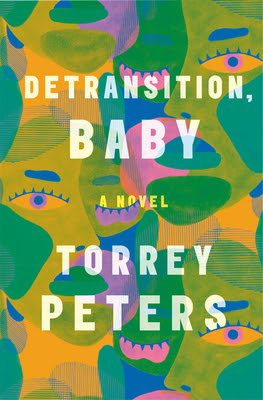
Detransition, Baby by Torrey Peters
Audiobook read by Renata Friedman


As with Klara and the Sun, this was initially a slow simmer. It took a little while before I warmed up beyond enjoying the writing and finding the characters interesting, to feeling emotionally invested. Once in, however, I was ALL in. These trans women feel so real, facing their desires, flaws and mistakes head-on. Written by a trans woman, this novel is a stunning exploration of queer white womanhood, friendship and chosen families. 

She had previously been under the impression that she had failed majorly for most of her life, but, in fact, she had simply confused failure with being a transsexual.

The car travels slowly, block by block through traffic. Tourists and a few groups of teenagers frogger their way across the streets.

Many people think a transwoman‘s deepest desire is to live in her true gender, but actually, it is to always stand in good lighting.

No One Is Talking About This by Patricia Lockwood
Audiobook read by Kristen Sieh


The wordplay in this stream-of-consciousness novel made my heart sing. It begins with our bonkers addiction to social media, accessed through the portal of handheld devices, then morphs into online social justice and political awareness, and eventually it's a wake-up call: a return to the importance of being physically present when our loved ones need us. Invigorating and poignant. 

But then, almost as a serious laugh, a strength entered her voice and she stood like a tree with a spirit in it. And she opened a portal where her mouth was and spoke better than she ever had before. And as she rushed like blood back and forth in the real artery, she saw that ancestors weren‘t just behind, they were the ones who were to come.

The cursor blinked where her mind was. She put one true word after another and put the words in the portal. All at once they were not true, not as true as she could have made them.

Because when a dog runs to you and nudges against your hand for love, and you say automatically, “I know, I know,” what else are you talking about, except the world.

Beau‘s mother called his feeding tubes his cheeseburgers. It was important to do things like that. If you didn‘t call your baby‘s feeding tubes his cheeseburgers, then somehow the feeding tubes won.


Wednesday, April 29, 2015

Bitter Greens by Kate Forsyth

Historical fiction about real women, and fairytale retellings: two kinds of books that are in my wheelhouse. Bitter Greens by Australian author Kate Forsyth is both. Yay! It's a retelling of Rapunzel, set in 16th-century Italy, and a richly-detailed fictional account of the life of Charlotte-Rose de Caumont de la Force, set in the French court of Louis XIV. Charlotte-Rose was the king's cousin, she was banished to a nunnery, and she is the author of the original Rapunzel/ Petrosinella story.

There are three central characters: Charlotte-Rose, Margherita (Rapunzel/ Petrosinella), and Silena (the witch). I listened to the audiobook [Blackstone: 19 hrs 26 min] and can still hear narrator Kate Reading's voice as the witch saying: "Petrosinella, Petrosinella, let down your hair, so I may climb the golden stair." 

There are parts that dragged a bit; sometimes from the weight of historical detail, a little too much about sexual dalliances, or too much dithering when I would have have preferred action. In a paper book, I can skim through stuff that doesn't interest me, but with audio it isn't so easy. Fortunately, I really like listening to Kate Reading's voice and her narration helps pull me through when I start to feel mired in a long story. 

I also came up against something else: my personal resistance to surrender. Readers filter narrative through our own experiences, so I always take note when I can feel resistance happening. It's an opportunity to learn about myself. In this case, when characters chose a submissive path, I was unhappy. It made me check whether this reaction had to do with the characters being true to themselves or my own stuff.

Hops shoots taste like
asparagus. Just eat the
tender top part.
Aside from the small things that I've mentioned, I enjoyed this book a lot and recommend it. As an element of total serendipity, I encountered bitter greens in three books within three weeks of each other. Grace Mccleen's The Land of Decoration features a religious zealot who believes bitter greens are a necessary part of his family's diet. I also read a whole book on the topic: Bitter by Jennifer McLagan. Another bit of serendipity: the old nun who befriends Charlotte-Rose is named Seraphina, and I happen to be rereading Seraphina by Rachel Hartman at the moment.

It's early spring in Edmonton, so my garden is supplying me with dandelion greens, young chicory leaves and hops shoots. Bring on the bitter!

Readalikes: The Moon and the Sun by Vonda McIntyre (for the court of the Sun King with a touch of fantastical elements); Zel by Donna Jo Napoli (another successful retelling of Rapunzel); and Wicked by Gregory Maguire (for the viewpoint of a misunderstood witch). Other great historical fiction/fairytale combinations include Tinder (Sally Gardner) and The Snow Child (Eowyn Ivey).

Wednesday, July 30, 2014

Eyrie by Tim Winton

Set in the Western Australia port city of Fremantle, Tim Winton's Eyrie is a gritty and tender novel about betrayal's toll on an idealist's spirit. I was hooked from the start by the distinctive internal voice of Tom Keely, a former environmental spokesperson wrecking himself with booze and prescription drugs.

"Well, the upside was he hadn't died in the night. He was free and unencumbered. Which is to say alone and unemployed. And he was in urgent need of a healing breakfast. Soon as all his bits booted up. Just give it a mo."
[...]
"The lift was mercifully empty. He travelled unseen and uninterrupted to the ground floor. Let the lobby doors roll back. Took it full in the face. All that hideous light. Walked out like a halfwit into a bushfire. It was hot enough to kill an asbestos sparrow."

Tom has been holed up for a year in a dive-y tenth floor apartment. His self-centered anguish finally shifts when he meets two of his neighbours who live on the same floor. Tom knew Gemma when they were both kids living on the same block. She and her sister used to take refuge at Tom's house when their father got violent. Now, Gemma has a daughter in prison and she is caring for her 6-year-old grandson, Kai.

Gemma and Kai are facing deep trouble from some scary folk. The question is whether Tom can help himself, never mind anyone else.

It was smart of me to buy a gift copy of Eyrie for my friend Kathy, because this is a great book for discussion. Winton's storycrafting is impeccable and the ending is left open. There are all kinds of important issues like social justice, natural resources extraction, and class privilege. Kathy and I spent an hour on the phone talking about Eyrie last night. Winton will be at the Vancouver Writers Fest in October and we both look forward to hearing him there.

Readalikes: The Antagonist (Lynn Coady); The Painter (Peter Heller); and Carpentaria (Alexis Wright).

Friday, May 16, 2014

The Unusual Life of Tristan Smith by Peter Carey

Still looking back on books that I read 10 years ago. These are my notes from July 2004 about The Unusual Life of Tristan Smith.

A most unusual and inventive narrative. I was reminded of Ella Minnow Pea (the fabricated country, the footnotes) and of A Prayer for Owen Meany (the freakish protagonist and the bizarre humour). The tiny country of Efica had a relationship to Voorstand that reminded me of the relationship between Canada and the U.S.A. Loved it. Great ending!

It was my first introduction to the multitalented Peter Carey and I've since enjoyed several more of this Australian author's works. The only one that I've previously reviewed on my blog, however, is Parrot and Olivier in America. 

Saturday, January 4, 2014

The Silver Button by Bob Graham

The start of a new year is a great time to step back and take a longer look at things, so I've chosen to begin 2014 with a post about a picture book that does exactly that.

The entire drama in The Silver Button by Bob Graham (How to Heal a Broken Wing) takes place over the course of one single minute. While a baby takes his first step, Graham offers glimpses of simultaneous moments happening in a widening circle that begins in the child's house and gradually expands to include an aerial view of the entire city in which he lives. It's a beautiful exercise in gaining perspective and placing ourselves in the context of our larger world.

All ages, from babies to adults.

More picture books that shift the focal point to longer and wider views can be found on my Zoom Out list here.

Thursday, December 26, 2013

A Corner of White by Jaclyn Moriarty

Jaclyn Moriarty, author of Feeling Sorry for Celia and The Year of Secret Assignments, incorporates letter-writing into her delightful new fantasy series, The Colors of Madeleine. In book 1, A Corner of White, Madeleine and Elliot are teens in two different worlds who discover a crack just big enough to pass notes through to each other.

Madeleine is being home-schooled in Cambridge, England, where she lives with her mother, possibly in hiding from their former lives. Elliot is in the Kingdom of Cello, determined to find his father who has disappeared, possibly kidnapped by violet.

"A Note on Colors. While Cello is a wonderfully 'colorful' place, in the traditional sense of that word, it is also home to a large population of 'Colors.' These are living organisms: a kind of rogue subclass of the colors that we see when we look at a red apple or blue sky."

That's an excerpt from The Kingdom of Cello: An Illustrated Travel Guide. There are hilarious newspaper columns penned by two giddy princesses on tour ("Dearest, Sweetest, Most Arduously Marvelous Subjects of this! our Fine and Salutary Kingdom of Cello! Hello!"), the writings of Isaac Newton, a long-awaited Butterfly Child, and lots more.

I listened to the wonderful audiobook [Scholastic: 11.5 hr] narrated by Fiona Hardingham (Madeleine); Andrew Eiden (Elliot); Kate Reinders (ditzy princess sisters); and Peter McGowan (newspaper corrections editor). Inventive, fresh and fun.

Readalikes: The Golden Compass (Philip Pullman); and The Girl Who Circumnavigated Fairyland in a Ship of Her Own Making (Catherynne Valente).

Sunday, December 8, 2013

The Rosie Project by Graeme Simsion

There's a lid for every pot, as one of my friends used to say. The Rosie Project by Graeme Simsion follows an Australian scientist's efforts to find a wife using logical methods. Don Tillman is a geneticist who probably falls somewhere on the autism spectrum. People find his blunt honesty bewildering and sometimes hurtful, but Don is just as confused by everyone else's irrational behaviour. I was immediately beguiled by Don's first-person voice.

When Don cycles to a fancy dinner reservation on a rainy night, he is stopped at the entrance.
"You need to wear a jacket." 
"I'm wearing a jacket." 
"I'm afraid we require something a little more formal, sir." 
The hotel employee indicated his own jacket as an example. In defence of what followed, I submit the Oxford English Dictionary (Compact, 2nd Edition) definition of 'jacket': 1 (a) An outer garment for the upper part of the body. 
I also note that the word 'jacket' appears on the care instructions for my relatively new and perfectly clean Gore-Tex jacket. But it seemed his definition of jacket was limited to 'conventional suit jacket'. 
"We would be happy to lend you one, sir. In this style." 
"You have a supply of jackets? In every possible size?" 
I did not add that the need to maintain such an inventory was surely evidence of their failure to communicate the rule clearly, and that it would be more efficient to improve their wording or abandon the rule altogether. Nor did I mention that the cost of jacket purchase and cleaning must add to the price of their meals. Did their customers know that they were subsidising a jacket warehouse? 
"I wouldn't know about that, sir," he said. "Let me organise a jacket." 
Needless to say I was uncomfortable at the idea of being re-dressed in an item of public clothing of dubious cleanliness. For a few moments, I was overwhelmed by the sheer unreasonableness of the situation. I was already under stress, preparing for the second encounter with a woman who might become my life partner. And now the institution that I was paying to supply us with a meal -- the service provider who should surely be doing everything possible to make me comfortable -- was putting arbitrary obstacles in my way. 
My Gore-Tex jacket, the high-technology garment that had protected me in rain and snowstorms, was being irrationally, unfairly and obstructively contrasted with the official's essentially decorative woollen equivalent. I had paid $1015 for it, including $120 extra for the customised reflective yellow. I outlined my argument. 
"My jacket is superior to yours by all reasonable criteria: impermeability to water, visibility in low light, storage capacity." I unzipped the jacket to display the internal pockets and continued, "Speed of drying, resistance to food stains, hood..." 
The official was still showing no interpretable reaction, although I had almost certainly raised my voice. 
"Vastly superior tensile strength..." 
To illustrate this last point, I took the lapel of the employee's jacket in my hands. I obviously had no intention of tearing it but I was suddenly grabbed from behind by an unknown person who attempted to throw me to the ground. I automatically responded with a safe, low-impact throw to disable him without dislodging my glasses. The term 'low impact' applies to a martial arts practitioner who knows how to fall. This person did not, and landed heavily. 
I turned to see him -- he was large and angry. In order to prevent further violence, I was forced to sit on him. 
"Get the fuck off me. I'll fucking kill you," he said. 
On that basis, it seemed illogical to grant his request.
I was routing for Don every farcical step of the way. At its core, this story is about an important issue: everyone needs human love and companionship. Funny, touching and sweet. Highly recommended.

Monday, November 4, 2013

Burial Rites by Hannah Kent

My garden today, Nov 4 2013.
(Photo by Laurie MacFayden)
We've just had our first big snow in Edmonton, so the atmosphere here is right for a historical mystery set in Iceland. Australian author Hannah Kent based her debut novel, Burial Rites, on historical fact. In 1830, Agnes Magnusdottir was the last person to be executed in Iceland.

After being convicted of murder and sentenced to have her head chopped off, Agnes spends more than a year waiting for her execution. A farm family is assigned the responsibility of keeping her while she waits. Agnes shares their tiny croft for many months, working side by side with uneasy family members. She is frequently visited by a young priest whose task is to bring her to God before she dies.

The narrative shifts comfortably between different points of view, but Agnes is the only character given first-person voice. According to the author's note, "many of the letters, documents and extracts presented at the beginning of each chapter have been translated and adapted from original sources." I was struck by one in particular, in which the district commissioner protests the unforeseen cost of the executioner's axe -- nearly six times higher than expected -- and the resulting strain on his budget.

The events leading up to the night of the double murder and arson, and what role Agnes played in it, are slowly revealed. Along the way, we get to know some fascinating people and their way of life. (A glass of whey, anyone? How about some pickled whale? Don't mind all that dirt on the bed; it's just that our sod walls are crumbling.)

I really enjoyed Burial Rites. It also made me thankful for central heating.

Readalikes: The Colour of Milk (Nell Leyshon); The Tenderness of Wolves (Stef Penney); Alias Grace (Margaret Atwood).

Sunday, August 25, 2013

The Husband's Secret by Liane Moriarty

This audiobook cover image in
Hoopla looks too saccharine for me.
I was quite taken aback by the cover image of the e-audiobook The Husband's Secret by Liane Moriarty in the Hoopla database [Dreamscape: 13 h 46 m] at the library. If I hadn't already been convinced to read it based on a review, I would have dismissed it as not to my taste, strictly based on the cover art. Despite appearances, it is not a frothy romance. Australian actor and voice artist Caroline Lee performs the story with lively wit and warmth.

This audiobook edition is
a little more appealing, with the
 shattering flower, but still not
something I'd pick up cold.
In Kirkus Reviews, Liane Moriarty is described as an "edgier, more provocative and bolder successor to Maeve Binchy." I agree. The Husband's Secret is perfect for readers who enjoy contemporary stories about interesting women. It opens with Pandora's version of events regarding a jar that was not to be opened, and then follows the interconnected lives of three women in Sydney, Australia.

Cecilia, mother of three, has found a letter addressed to her from her husband John-Paul, with instructions not to open it until after his death. He is still alive, but he acts so out of character when he learns that she has found the envelope that Cecilia eventually breaks her promise not to read it. Secrets from the past have far-reaching effects.

 The thought-provoking moral issues in this novel make it perfect for book group discussion. I wasn't crazy about the tidy way things get wrapped up at the end, but I still liked it very much.