Showing posts with label England/Scotland/Wales/Ireland. Show all posts

Saturday, May 8, 2021

A Mischief of Mongooses

Either a 'business' or a 'rush' can be used as a collective noun for mongooses. 'Mischief' is used for mice or rats, but literary mongooses are sneaky enough to merit that term too. Mongooses made unexpected appearances in five books that I read over the past week. For that reason, I decided to listen to a mongoose story on purpose: Rudyard Kipling's 'Rikki-Tikki-Tavi' ... bringing my number up to six. I hope you enjoy this half-dozen collection of passages, a literary mischief of mongooses.

I'll start with Rudyard Kipling's description of Rikki-tikki:

    He was a mongoose, rather like a little cat in his fur and his tail, but quite like a weasel in his head and his habits.

(By the way, I don't recommend listening to the rest of the Naxos audiobook Rikki-Tikki-Tavi and Other Stories because Kipling's imperialism and racism are in full evidence, such as calling the Aleut unclean people in 'The White Seal.')

The book that started my mongoose streak is Helen Oyeyemi's surrealist novel, Peaces. In it, Otto and Xavier Shin are a gay couple on a non-honeymoon honeymoon train journey with their pet mongoose, Arpad. (Another passenger happens to also have a pet mongoose.)

    I didn't meet Honza's friends, and I didn't get to introduce him to mine; the plans kept falling through at the last minute. Arpad didn't like him, but then Xavier Shin is the only boyfriend of mine Arpad has ever shown enthusiasm for. I could tell from the first night Xavier stayed over at my place that we were in a new era of acceptance; in the morning there Xavier's shoes were, exactly where he'd left them by the door... unchewed and unshat in.
    Honza didn't like Arpad either... I remember he never referred to Arpad by name; it was always "your friend the stoat," "that marten that aspires to mongoosehood," or "the vicious ferret." 

Next up is a despised mongoose in Trinidad, in Ingrid Persaud's memorable novel Love After Love:

    --And you used to have chickens. You still have any?
    --Nah, man. Long time now I stop minding fowl. Too much trouble. Mongoose thiefing the egg and all kind of thing. Take something to drink, nah. You must be thirsty after that long drive.

Then a desire for a mongoose in Thailand, from Brian Brett's vibrant memoir Tuco: The Parrot, the Others, and a Scattershot World:

    Thom called us outside out room and informed us the staff had spotted a king cobra swimming to the raft house, and they'd spent the last day searching for it it no avail. He also said they were worried because they had important guests arriving, and the last thing they needed was a king cobra arising out of the reeds of the raft house. I told him they needed a mongoose or a peacock to deal with the problem. We laughed and left ourselves to our fate.

A mongoose comparison was made by the bedevilled writer enduring his two-month residency at a Canadian shopping mall in Pasha Malla's nightmarish Kill the Mall:

    No, my goal was not personal revelation but to lull the mall into complacency while I marshalled my forces and wits and prepared to strike -- like the mongoose as it seized the ponytail-shaped cobra by the throat and chomped right through to its bitter, snaky bones.

A side mention was made of the etymology of 'mongoose' during a lesson on Dravidian languages in John McWhorter's Languages Families of the World:

    Telugu is barely known beyond India, you may never have heard of it, but actually it is one of the 20 largest languages in the world. And, the word 'mongoose' is from Telugu. I knew somebody who went to India once, one of those people who, you know, goes places just so he can say that he goes places, and picks up women. He went to India and came back and he was talking about having seen the mongeese. And after a while I realized that he meant that straight. He really thought the plural of mongoose was mongeese. (Is it?)
(my transcription from The Great Courses audiobook, read by the author)

And one final quote from Kipling's 'Rikki-Tikki-Tavi':

    It is the hardest thing in the world to frighten a mongoose, because he is eaten up from nose to tail with curiosity. The motto of all the mongoose family is "Run and find out," and Rikki-tikki was a true mongoose.

Wednesday, March 17, 2021

Witty Novels by Irish Authors

Are you looking for unusual voice and language that thrills your word-loving soul? Here are four delightfully quirky novels by Irish authors that I've enjoyed recently:

The Liar's Dictionary by Eley Williams


Winceworth and Mallory both work at Swansby‘s New Encyclopaedic Dictionary, but in different eras. In alternating timelines, 1899 and the present, they each experience an eventful (wacky!) day which changes their lives for the better. This novel is playful, witty, warm and wise. Also, it's an ode to vocabulary. Also, it's a lesbian novel. 

Whether a dictionary should register or fix the language is often quoted as a qualifier. Register, as if words are like so many delinquent children herded together and counted in a room; fixed, as if only a certain number of children are allowed access to the room, and then the room is filled with cement.

‘Ah, but here‘s a nice one: “widge-wodge (v.) Informal — the alternating kneading of a cat‘s paws upon wool, blankets, laps etc.” A sappy so-and-so, then.‘

‘That‘s incredibly illegal!‘
‘It can‘t be incredibly one or the other,‘ David said. He couldn‘t help himself. ‘Something‘s either illegal or not illegal.‘
Mansplain (v.) was unlikely to enter any version of the Swansby‘s Encyclopaedic Dictionary.

Winceworth had returned to vexing over why no word had been coined for the specific type of headache he was suffering. The bitter meanness of its fillip, the sludgy electric sense of guilt coupled with its existence as physical retribution for time spent in one‘s cups. A certain lack of memory, as if pain was crowding it out.

Like my handwriting, I was aware that I often looked as though I needed to be tidied away, or ironed, possibly autoclaved. By the time afternoon tugged itself around the clock, both handwriting and I degrade into a big rumpled bundle.

Winceworth blushed, coughed, but words were tumbling out faster than the rhythm of normal speech, almost a splutter, the uncorrected proofs of sentences.

Pip was out at the café where she worked. Of course she was—she was out to her family, she was out at work, out and about, out-and-out out. I suspected she emerged from the womb with little badges on her lapel reading Lavender Menace and 10% is not Enough! Recruit! Recruit! Recruit!

A few minutes later, when calm was restored, the cat Sphinxed on the armrest of a chair with its eyes closed. I gave its spine a nudge with my knuckles. Its body rumbled something about solidarity against my hand.

Leonard and Hungry Paul by Ronan Hession


I feel so much love for this funny, understated novel about gentle people. People who are quiet, kind, and almost invisible to their work colleagues. Gentle people who are not in the least bit ordinary. People who give me hope that perhaps the world will be okay, after all, because there are people like this in it.

She met Peter after he had stopped one day to give her directions to an art exhibition and then invited himself along. They fell in love effortlessly. Their initial chemistry broadened into physics and then biology, until they were blessed with Hungry Paul‘s older sister Grace as their first child.

“How do you make sure you get enough protein?” asked Leonard.
“Ah, protein. I know how you meat eaters stay awake at night worrying about how much protein vegetarians get. Margaret, who works with me, lives on a diet of cigarettes, popcorn and Diet Coke, and the other week she starts giving me the whole protein speech. I just told her not to worry, that silverback gorillas are vegetarian and they get by okay.

There was a section at the back of the shop full of books about history and other deadly serious subjects. It seemed to be some sort of crèche for older men who had been left there while their wives had gone off shopping elsewhere.

Big Girl Small Town by Michelle Gallen
Audiobook read by Nicola Coughlan


Majella O‘Neill is a large young woman in a small town in Northern Ireland. Look no further if you want matter-of-fact sex-positivity (the opposite of romantic) and an unapologetically fat heroine. Majella seems to be on the autism spectrum, which gives her a unique perspective. Each chapter opens with an entry from Majella's long list of things she doesn't like, or her short list of things she likes.

Thanks go to author Ronan Hession for recommending this book in a booktube conversation with Shawn Mooney. (Hession and Cauvery Madhavan made a whole whack of enticing Irish lit suggestions. Watch it here: Shawn the Book Maniac.) 

I adore novels like this, written in the kind of original voice that I won‘t forget. Hearing that voice, peppered with Irish colloquialisms, is even better in audio format. 

9.1: Makeup – Nail Polish: is too heavy–weighing fingers down–looks utterly unnatural when coloured e.g. red, orange, black giving the people the appearance of wearing beetle carapaces on their fingers.

Sometimes Majella thought that she should condense her whole list of things she wasn‘t keen on into a single item: Other People.

Aghybogey was a town in which there was nowhere to hide, so people hid stuff in plain sight.

Exciting Times by Naoishe Dolan
Audiobook read by Aoife McMahon


The author, Naoishe Dolan, is queer and has autism. Reading her debut novel has given me a sense of what it's like to be inside the head of someone who is neurologically different from me.

The three toothbrushes on the cover  gave me pause. A love triangle plot, even a bisexual one, doesn't usually appeal. However, as with the other three novels in this post, I was bewitched by the wit and the central character's unique voice. Ava is 22, teaching English in Hong Kong. She didn't fit in when she was growing up in Dublin, but leaving Ireland hasn't alleviated her insecurities. Sharp-tongued Ava is socially awkward, but her life begins to shift when she falls in love. 

So, you‘re saying it‘s like London?
I dunno. I‘ve never been.
You‘ve never been to London?
No.
Ever?
Never, I said, pausing long enough to satisfy him that I‘d tried to change this fact about my personal history upon his second query and was very sorry I‘d failed.

He often said he didn‘t meet many people like me, but I didn‘t know if that meant there was necessarily a vacancy for them.

I wondered if Victoria was a real person or three Mitford sisters in a long coat.

With my college brain on, I knew more people lost their jobs when banks like Julian‘s played subprime roulette, but the college brain came with a dial. I turned it up for people I hated and down for people I liked.

Monday, August 3, 2020

The Pull of the Stars by Emma Donoghue


The Pull of the Stars by Emma Donoghue
Audiobook [9 hours] read by Emma Lowe
HarperCollins, July 2020

Set over three intense days in a short-staffed maternity/fever ward in Dublin during the deadly 1918 flu epidemic: this novel's content resonates strongly in our contemporary time of pandemic.

About a third of the world's population died of flu in 1918, which puts COVID-19 into perspective. The title, The Pull of the Stars, refers to the Italian origins of the word influenza. 

        [...] influenza delle stelle, the influence of the stars. Medieval Italians thought the illness proved that the heavens were governing their fates, that people were, quite literally, star crossed.

And, speaking of star crossed, there are two women who fall in love over the course of the story. Feminist and social justice issues are central, particularly women's suffrage; Irish independence; and the criminal treatment of unwed mothers and their children in church-run institutions. Parallels are drawn between soldiers paying a blood tax in the Great War, which is happening concurrently, and the price women pay as child-bearers. 

        It happens every day the world over. Women have babies, and they die. No, I corrected myself. They die of having babies. It's hardly news, so I don't know why it still fills me with such rage.

The language of war is applied to the flu itself.

        This weird malady. It took months for the flu to defeat some patients, sneaking up on them by way of pneumonic complications, battling for every inch of territory. Others succumbed to it in a matter of hours.

The tone is surprisingly upbeat. The three main protagonists are idealistic women, full of energy and enthusiasm for their work. Secondary characters and absurd government decrees add dashes of humour.

        Nailed up under a street lamp, a new notice, longer than usual.
        THE PUBLIC IS URGED TO STAY OUT OF PUBLIC PLACES SUCH AS CAFES, THEATRES, CINEMAS AND PUBLIC HOUSES. SEE ONLY THOSE PERSONS ONE NEEDS TO SEE. REFRAIN FROM SHAKING HANDS, LAUGHING OR CHATTING CLOSELY TOGETHER. IF ONE MUST KISS, DO SO THROUGH A HANDKERCHIEF. SPRINKLE SULPHUR IN THE SHOES. IF IN DOUBT, DON'T STIR OUT. 

Since it's set in a maternity ward -- albeit one temporarily set up in a cramped former storage room, because the hospital is beyond capacity -- there are births as well as deaths. There is much medical detail and I have come away knowing way more than I ever wanted to about midwifery. There is a reassuring sense of hope, of a larger perspective.

        And one of these days, even this flu will have run its course.
        Really? Mary O'Reilly asked. How can you be sure?
        The human race settles on terms with every plague in the end, the doctor told her. Or a stalemate, at the least. We somehow muddle along, sharing the earth with each new form of life.
        Bridie frowned. This grippe's a form of life?
        Dr Lynn nodded and covered a yawn with her hand. In a scientific sense, yes. A creature with no malign intention, only a craving to reproduce itself, much like our own.

Giller chances: MAYBE - While the characterization and setting are vivid, the messaging sometimes overtakes the story and the plot falls back on tired tropes. The Pull of the Stars is especially suited to readers who like to learn about history and other interesting things through fiction, which is not typically the kind of book that wins awards. On the other hand, the fact that it is so in tune with our current times may earn it a spot on the longlist.

NOTE: The quotes above are my own transcriptions from the audiobook and may differ in print. I am aware that Emma Donoghue chose to eliminate speech quotations in this novel, and so I have done that. Emma Lowe, as audiobook narrator, subtly changes Irish accents for the differing social status and backgrounds of the characters. It's an excellent, engaging performance. 

This post is part of a series. I'm on the Shadow Giller jury this year, so I'm reading as many qualifying Canadian titles as possible in order to come up with my own longlist prediction before the official one that will be announced on September 8, 2020. To see my other reviews that are a part of this project, click on the Shadow Giller tag. Also, please visit our Shadowing the Best of CanLit website to see what the rest of the Shadow Giller jury are up to. Thanks for visiting my blog.

Sunday, May 1, 2016

At Hawthorn Time by Melissa Harrison

Melissa Harrison's novel At Hawthorn Time has captured my heart. These are some of the reasons:

  • Storytelling that circles back to the original scene via multiple points of view.
  • A broad cast of characters whose lives intersect mostly tangentially. 
  • Internal lives that feel real, recognizable. 
  • People who pay close attention to the natural world. 
  • Documentation of changes to a rural area over time: human activity versus nature.
  • References to myth (the Green Man, Puck) within a contemporary setting. 
  • Lyric language. The kind that makes me want to reread and underline and hug the book for being so beautiful.

"As the sun rose slowly over Jack's head a hawthorn in the hedge behind him felt the light on its new green leaves and thought with its green mind about blossom."

"The ash was hung here and there with lilac and green frills [...] and a slate-blue nuthatch decanted itself like a shot cork from a hole."

At Hawthorn Time is both nature writing and fiction. The closest readalikes I can think of are nonfiction: H Is for Hawk (Helen Macdonald) and The Old Ways: A Journey on Foot (Robert MacFarlane) - for engaging, poetic prose that places humans firmly within our natural world. A novel with similar elements of aging, myth, cyclic history, and of humans connecting with landscape is Etta and Otto and Russell and James (Emma Hooper).

I hope this is enough to convince you to read it. You will not regret it.

Sunday, January 10, 2016

Mrs Engels by Gavin McCrea

Voice, voice, voice - and setting too. I'm always looking for an immersive reading experience and Gavin McCrea's Mrs Engels delivers big.

Checklist:

  • Includes real historical figures: Karl Marx and Frederick (Friedrich) Engels.
  • An unforgettable first-person female narrator: Lizzie Burns, the illiterate common-law wife of Frederick Engels. She's an Irish woman who grew up working in the mills of Manchester.
  • All the small details that bring nineteenth-century England alive.
  • Expands my view of women's lives in other places and other times.

Following are a couple of excerpts to give you an idea of McCrea's flair.

   "Mary used to say my feet were like boats, that in the last detail God mixed me up with Moss, whose dainty little yokes keep him upright only with the help of the angels. I follow the girl's gander down to them - my boat-feet - and we stand together a minute, marvelling at their reach: several long inches over the threshold, and solid as blocks, hobnails like rods, no hope of closing a door against them.
   Defeated, she lets me in."

At a communist party meeting in London after the fall of the Paris Commune in 1871:

   "Karl lumbers off and Frederick gets back up to take questions. They come in the guise of insults, most of them. But Frederick is quick with the right responses, just enough honour and sincerity to take the sting out of the attacks. He doesn't get riled, nor does he resort to insults himself, and this--when he has the public to himself--is when he's at his most seducing. He can handle his words like no one else, and even if you don't catch their meaning first time, you hold on to them, somewhere, they've been said with so much believing."

Complex lives in a rich historical setting. It's fabulous.


Monday, July 20, 2015

The Wolf Border by Sarah Hall

Rachel Caine, a foremost wolf biologist, has agreed to leave her post in Idaho in order to lead the reintroduction of wolves into England. This means returning to Cumbria, where she grew up and has long been estranged from her mother and brother. The wolf project encounters resistance, unsurprisingly. Meanwhile, the political background feels very contemporary: across the border 40 miles to the north, a referendum for Scotland's independence is taking place.

Sarah Hall's The Wolf Border is a character-based novel that progresses at a measured pace. I happened to be reading a book with similar themes concurrently: The True Deceiver by Tove Jansson. Both are about wildness, power, truth and lies, and feature people who have difficulty forging human connections. Both stories use weather to reflect the protagonists' emotional states. Here is a sample of Hall's lyrical prose:

"All week, rain. Big splashing drops on every surface, like a child's illustration of rain. Blue vanishing light and winds from nowhere, bringing slant, destructive showers, or fine drizzle. At night there is rain that exists only as sound on the cottage roof, leaving doused grass in the morning and pools in the rutted lane. The streams and rivers on the estate swell. Spawn clings to submerged rocks and reeds as the current tugs. The lake accepts the extra volume indifferently. And then, when it seems the rain will never end, there's an explosion of sunshine, the startling heat of it through the cool spring air. Within days a green wildness takes over Annerdale."

I first encountered Sarah Hall's writing in her feminist dystopia Daughters of the North (The Carhullan Army is the UK title) some seven years ago. I also enjoyed How to Paint a Dead Man, a stimulating and astonishing novel. Hall has received the Commonwealth Writers' Prize, the BBC National Short Story Award, the Portico Prize for Fiction, the John Llewellyn Rhys Prize and the E M Forster Award. The Wolf Border was also shortlisted for the Man Booker Prize.

Readalikes: Wild Dogs or The Evening Chorus (Helen Humphreys); Adult Onset (Ann-Marie MacDonald); All the Birds Singing (Evie Wyld); and Fauna (Alissa York). For a much shorter readalike, try The True Deceiver by Tove Jansson, which is only 181 pages compared to The Wolf Border's 435. I'm not saying shorter is better, by the way. It is all about style, and both authors have used what seems the correct number of words to tell their respective stories.

Saturday, July 4, 2015

Book Bingo Blackout!

All done! My first book bingo challenge is complete and it feels great.

These are the books in the final three categories:

PUBLISHED THE YEAR YOU WERE BORN [1960]: The Country Girls by Edna O'Brien

To Kill a Mockingbird was the only 1960 title I could think of off the top of my head, and with the upcoming release of Go Set a Watchman, I considered re-reading it. When I searched online for other books published in 1960, I spotted one that has been on my radar. It's on lists with titles like 1001 Books to Read Before You Die and the author is said to have influenced some of my Irish favourites, like Anne Enright and Colm Toibin.
The Country Girls is the first in a trilogy about two friends who want their lives to be different from those of their parents. The 1950s time period and the complicated relationship between Baba and Caithleen reminded me very much of Elena Ferrante's My Brilliant Friend and The Story of a New Name from her Neapolitan trilogy. I finished Edna O'Brien's novel a couple of days ago and I feel like I'm still processing it. Her characters are vivid and still there in my brain, not easily forgotten.

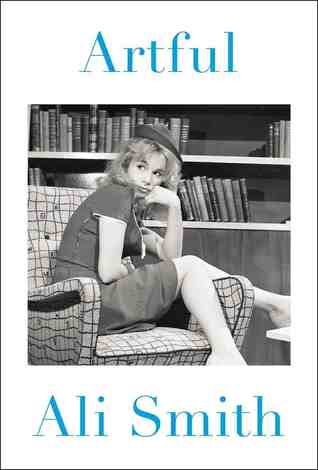
A COLLECTION OF ESSAYS: Artful by Ali Smith

I've been a fan ever since Ali Smith's debut novel, Like, and this is the only one of her books that I hadn't yet read. (See my reviews of How to be both and There but for the.) It was my turn to choose a book for our feminist book club and I'm so glad that I remembered Artful. It's an innovative hybrid: four essays about art, linked with a fictional narrative about someone haunted by the ghost of her/his partner, and it's bristling with flagged passages, ready for our upcoming discussion. The book made my brain stretch in the best possible way. It has also lodged in my brain a Doris Day song from my childhood: "Let the Little Girl Limbo."


NONFICTION ABOUT YOUR HOMETOWN OR STATE: Weird Edmonton: The Odd, Quirky and Wonderful People, Places, History and Hauntings by Mark Kozub

Trivia is perfect for browsing, which is what I've previously done with Weird Edmonton. For bingo, however, I read it straight through, picking it up in between other books. I love that the cover photo is of our stunning Art Gallery of Alberta. For conversation starters, it'll come in handy to know stuff like:
  • More than 30 species of mosquito are found in Edmonton.
  • Edmonton's river valley features North America's largest expanse of urban parkland and it includes 150 km of walking trails.
  • The term BYOV, "Bring Your Own Venue," was first coined at the Edmonton International Fringe Festival, which is the second largest in the world (after Edinburgh).
  • Edmontosaurus is a duck-billed dinosaur first discovered in the late 1800s southwest of here.
  • Edmonton has the largest population of Dutch elm disease-free trees in the world: more than 60,000.
  • In the 1950s, a horse trapped in an abandoned coal mine shaft was rescued when people could hear it whinnying through the wall of their basement.
  • The first mosque in North America was the Al-Rashid, built in Edmonton in 1938.
  • Daryl Katz, owner of the Edmonton Oilers, bought the multi-million-dollar home next to his and demolished it to build an ice rink for his kids. After reading about it, I walked over with my dog to have a look, since it's only about a mile from my house.
    The Katz mansion (background, 2400 sq m) and rink at 4 Valleyview Point.

Previous posts on this project are here (2 lines), here (4 lines), and here (6 lines). Overall thoughts and stats:
  • I've read more widely than I would have otherwise and I feel enriched for having done so. 
  • 9 out of the 25 were chosen especially for this bingo card: The Country Girls; Law of the Desert Born; Soccer; The Wife, The Maid and the Mistress; Artful; If I Ever Get Out of Here; Phenomenal; My Guardian Angel; and Weird Edmonton.
  • One of my categories was "Borrowed from the Library," but every single one of these books came from the public library (including one on interlibrary loan).
  • 20 out of 25 are written by women.
  • 10 out of 25 are in audiobook format.
  • 5 out of 25 are in graphic novel format.
  • 6 out of 25 are by Canadian authors, 10 are by Americans and the remaining 9 are from Ireland, Uruguay, Italy, Australia, France, England, Scotland and Spain.
  • 7 out of 25 are by PoC/Aboriginal authors
What's next? A new card! It was so much fun that I'm doing it again.

Friday, May 29, 2015

The Pursuit of Love by Nancy Mitford

Front cover illustration
by Roland Pym.
I picked up Nancy Mitford's The Pursuit of Love because of Simon's enthusiasm over at Savidge Reads, where he calls himself a Mitford maniac, and also because it pops up on lists with names like 1001 Books to Read Before You Die.

Verdict: enjoyable.

An upper-class family of siblings come of age in England in the 1930s. It's sort of like a shorter, fluffier version of George Eliott's Middlemarch. It also brought to mind aspects of Dodie Smith's I Capture the Castle - especially the setting and the romance; and (in the early part) Jeanne Birdsall's The Penderwicks, for the pleasant sense of nostalgia and the relationships between siblings while they were still quite young. The Pursuit of Love has been compared to Jane Austen's Pride and Prejudice, but I'm somewhat abashed to admit I've only read a graphic novel adaptation of that classic, so I can only say that sounds about right: young women, skilled in the art of conversation, have romantic notions and run off with unsuitable men.

First published in 1945, the edition that I read - The Folio Society, London 1991 - has a dozen whimsical, stylish illustrations by Roland Pym. I do love to see pictures in books for adults.

The humour is what I liked best about The Pursuit of Love. Here's a bit where the sheltered eldest daughter Louisa, raised on a country estate, meets foppish men for the first time.

Back cover illustration
by Roland Pym.
   "The house party, when they finally appeared (some of them shockingly late) from their bedrooms, smelt even more delicious that the flowers, and looked even more exotic than the birds of paradise. Everybody had been very nice, very kind to Louisa. She sat between two beautiful young men at dinner, and turned upon them the usual gambit:
    'Where do you hunt?'
    'We don't,' they said.
    'Oh, then why do you wear pink coats?'
    'Because we think they are so pretty.'

Even though I enjoyed the book, I doubt that I'll read the companion novel, Love In a Cold Climate. I feel like I've been there, done that. There are at least 1000 more books to read before I die.

Wednesday, May 20, 2015

H is for Hawk by Helen Macdonald

When her father dies, Helen Macdonald retreats from the world into her childhood passion for falconry. She gets a young goshawk and her grief is subsumed in the long hours spent training it. H is for Hawk is a masterpiece of nature writing and literary memoir. It's a book I want to hug. It also makes me want to feel the weight of a raptor on my fist, something I'd never imagined would interest me.

Some of the reasons I loved this book:

  • Macdonald, who doesn't like to kill, showed me something new: an appreciation for hunting, seen from a hawk's perspective.  
  • Macdonald's thoughtful re-examination of a book she had found infuriating when she was a child: T.H. White's The Goshawk
  • The specialized vocabulary of falconry, which Macdonald describes as one of the aspects that attracted her to this sport from the start. 
  • Macdonald's struggle through grief and mental illness into healing.
  • Beautiful, beautiful prose.

Not a falcon, but still.
Photo taken at Bojnice
Castle in Slovakia.
"Hunting with the hawk took me to the very edge of being a human. Then it took me past that place to somewhere I wasn't human at all. The hawk in flight, me running after her, the land and the air a pattern of deep and curving detail, sufficient to block out anything like the past or the future, so that the only thing that mattered were the next thirty seconds. [...] I looked. I saw more than I'd ever the seen. The world gathered about me. It made absolute sense. But the only things I knew were hawkish things, and the lines that drew me across the landscape were the lines that drew the hawk: hunger, desire, fascination, the need to find and fly and kill."

Macdonald writes that the "ability of hawks to cross borders that humans cannot is a thing far older than Celtic myth, older than Orpheus - for in ancient shamanic traditions right across Eurasia, hawks and falcons were seen as messengers between this world and the next."

There's a time when Macdonald was writing her father's eulogy and wanted to check a fact and so she reached for the phone to call him... "and for a moment the world went very black."

Siobhan, one of the other
wwoofers I worked with,
 whitewashing in Spain.
My own father had been dead for 10 years when I had a similar experience. After a disorienting couple of weeks spent uprooting brambles from a mountain slope while wwoofing* on a rustic farm in Spain, I was given an easy job: whitewashing a plaster wall. My father would do things like spend an afternoon while on a Hawaiian holiday helping a crew install tile on a roof simply because he had never done that before. I planned to write to him, describing the fat round brush and the paint mixed from a powder... and then came a sudden remembering that I would never write to him again. A sorrow that I thought was long finished. If only a falcon could have carried a message on my behalf.

Falconry is described as "a balancing act between wild and tame - not just in the hawk, but inside the heart and mind of the falconer." In time, Macdonald finds her equilibrium.

H is for Hawk is one of my favourite books so far this year.

Readalikes (with links to my reviews): The best I can do for comparison is to combine the meditative nature writing and memoir in Robert MacFarlane's The Old Ways with Cheryl Strayed's grief process in Wild and the intimacy of living with a wild bird in Stacey O'Brien's Wesley the Owl, (mouse carcasses and all).

*Wwoofing is a verb formed from WWOOF = World Wide Opportunities on Organic Farms, an organization that links volunteers with organic growers.

NOTE added May 24, 2015: Today I listened to Mary Oliver in conversation with Krista Tippett on the On Being podcast episode "Mary Oliver - Listening to the World" from February 5, 2015. I was struck by a similarity in one aspect of Macdonald's and Oliver's experiences. Both had found themselves too much captivated by the natural world and eventually had to learn to fully embrace the human world. It's a great interview, by the way.

Saturday, May 16, 2015

The Table of Less Valued Knights by Marie Phillips

I adored Gods Behaving Badly, Marie Phillips' playful novel of Greek gods living in contemporary London, so it was with much anticipation that I began reading her latest, The Table of Less Valued Knights. And yes, it is funny. After a few chapters, however, I found myself reluctant to pick it up again. Humour is appealing, but I need substance, too. I decided to give it one more chance before returning it to the library. And then everything fell into place.

It's a brilliant social satire. Misogyny, gender inequality and sexual violence are all included; plenty of substance there! Gay and transgender issues are also integral to the story.

The action begins at King Arthur's court in Camelot, with a bunch of knights chomping at the bit for quests. Sir Dorian was the fastest one to leap at the chance to search for Queen Martha, kidnapped on her wedding night. Sir Humphrey, who had been demoted from the prestigious Round Table to the Table of Less Valued Knights, is the only one left in the room late in the evening when another quest opportunity presents itself. Lady Elaine needs help to find her abducted fiance.

Later, Humphrey has second thoughts about having volunteered for the job. "I'm not even supposed to leave Camelot, let alone be gazumping [Sir Dorian's] quest." Gazumping! I love the way Phillips threw that word in there. It's fitting, because the knights treat the quests like hot properties, and a good example of the novel's style, incorporating contemporary sensibilities and terminology into Arthurian fantasy.

More examples of style:

"He waited. Time passed. In another man doubts would have set in. In Edwin, doubts presented themselves, decided that this was not a hospitable environment, and left again."

"Elaine's home village, close to the tuft border, had seen better days, although even in those better days it probably still looked as if it had been put together using an avalanche and some string."

"The next hamlet they came to [...] was a tiny place, even more deprived than Elaine's village had been. Humphrey had seen houses of cards more robust."

Sometimes the farce stretches a bit too far:

Martha "headed for the nearest village, a rather bleak place where the houses were still black with soot from the last time marauders had tried to burn it down, which, had they succeeded, would probably have been an improvement. The inn was called the Dipsomaniac Camel, and she supposed that the sign might have been of a camel, but she had never seen a camel, and neither, she was fairly certain, had the sign painter."

Comedy is tricky, and Phillips manages to be lavish with it while controlling multiple story threads that come together in a satisfying conclusion.

The sexism inherent in Arthurian tales - damsels are the ones in distress; gallant knights come to their rescue - is turned on its head in The Table of Less Valued Knights. Women prove very much capable of looking out for themselves. Laurie Penny, in Unspeakable Things, writes, "Men have sex; women are sex." This attitude is strongly embodied in a couple of characters who receive their comeuppance (it is a fantasy novel, after all). It's presented with such a light touch that it took me a while to appreciate the feminist strength of this novel.

The Table of Less Valued Knights was longlisted for the 2015 Bailey's Women's Prize for Fiction.

Monday, May 4, 2015

The Buried Giant by Kazuo Ishiguro

There are so many reasons that I loved Kazuo Ishiguro's The Buried Giant.

  • Legend of King Arthur viewed from a fresh angle
  • World building: early Britain complete with ogres, pixies and dragons
  • Death as a narrator
  • A journey on foot
  • Distinctive language
  • Love story about two elderly people - I've enjoyed others lately: Etta and Otto and Russell and James (Emma Hooper), and And the Birds Rained Down (Jocelyne Saucier).

During a long period of peace brought about by King Arthur, the people of Britain have been bewitched by a mist of forgetfulness. Axl and Beatrice are an elderly couple who struggle to remember details of their shared lives, yet their love for each other remains strong. They embark on a journey to visit their son in another village and encounter many surprises along the way.

The language cast its own spell on me. There's a meditative rhythm to the prose, with lots of dialogue that moves the story along at a steady pace. The dialogue has a distinctly archaic feel, even while using only common words. Everyone is politely formal with each other, including husband and wife:

   "Who knows what goes on with Saxons," said Axl. "We may be better seeking shelter elsewhere tonight."
   "The dark will be soon on us, Axl, and those spears are not intended for us. Besides, there's a woman in this village I was wanting to visit, one who knows her medicines beyond anyone in our own."
   Axl waited for her to say something further, and when she went on peering into the distance, he asked: "And why would you be after medicines, princess?"
   "A small discomfort I feel from time to time. This woman might know of something to soothe it."
   "What sort of discomfort, princess? Where does it trouble you?"
   "It's nothing. It's only because we're needing to shelter here I'm thinking of it at all."
   "But where does it lie, princess? This pain?"
   "Oh..." Without turning to him, she pressed a hand to her side, just below the ribcage, then laughed. "It's nothing to speak of. You can see, it hasn't slowed me walking here today."
   "It hasn't slowed you one bit, princess, and I've been the one having to beg we stop and rest."
   "That's what I'm saying, Axl. So it's nothing to worry about."
   "It hasn't slowed you down at all. In fact princess, you must be as strong as any woman half your age. Still, if there's someone here to help with your pain, what's the harm in going to her?"
   "That's all I was saying Axl. I've brought a little tin to trade for medicines."
   "Who wants these little pains? We all have them, and we'd all be rid of them if we could. By all means, let's go to this woman if she's here, and those guards let us pass."

The relationship between Axl and Beatrice is characterized by their steadfast loyalty and gentleness, yet complexities remain. If the mist of forgetfulness is lifted, will that bode well or ill for them? And what about mortality, must it be faced alone?

The Buried Giant is an atmospheric and immersive reading experience.

Readalikes set in historical early Britain: 7th-century - Hild (Nicola Griffith); 9th-century - The Edge on the Sword (Rebecca Tingle); 5th-century - The Skystone (Jack Whyte) and The Lantern Bearers (Rosemary Sutcliff). I'm not sure of the exact time period of Harvest (Jim Crace) - maybe 16th-century - but it has a similar clear and meditative style of prose. See also Sir Gawain and the Green Knight: A New Verse Translation by W.S. Merwin, and/or an amusing retelling of Sir Gawain's legend that is suitable for all ages - The Adventures of Sir Gawain the True (Gerald Morris).

Thursday, April 2, 2015

The Evening Chorus by Helen Humphreys

A true story inspired Helen Humphreys to write The Evening Chorus. British officer John Buxton studied the birds he could see while imprisoned in a German camp during the second world war and then published a book about them. Humphreys spoke about Buxton when she was touring her previous book, Nocturne, and that is how I came to read his monograph The Redstart.

I always look forward to a new work by Humphreys, who is one of my very favourite writers. The Evening Chorus is exactly as I expected: quiet, thoughtful, poetic and powerful. Perfect. I wept. I don't want to start another book yet, so that I can spend time thinking about this one. Just as Buxton observed the redstarts, Humphreys has made a study of the human heart.

The Evening Chorus begins in 1940. While James is in prison in Germany, his younger wife Rose falls in love with another man. Then James' sister Enid is bombed out of her home in London and comes to stay with Rose.

It is much later that Enid discovers words of wisdom she might have shared with Rose:

   "You can love different people over the course of a lifetime, but you won't love any two of them the same way, and quite frankly, you will love some of them more than others. A great deal more."

James and Enid observe seabirds on a cliff in Wales in 1950:
Gannets in New Zealand

  "It's so hard to get life right, she thinks, pulling the blanket tight around her shoulders. All the small balances are impossible to strike most of the time. And then there are the larger choices. It's hopeless. She might as well be one of those shearwaters, tossed about by the gusts of wind that drive up from the Atlantic.
   [...]
   Two shearwaters circle their heads and then slide sideways on a current of air, disappearing over the edge of the cliff.
   'Look,' James says. 'The shearwaters that fly on course and the ones that get thrown about by the wind mostly end up in the same place, so perhaps effort doesn't matter, isn't what ensures survival.'"

Within the bleak paucity of post-war Britain, Humphreys treats her broken characters with careful tenderness. Each has their own path to healing. There is that greatest of emotions, love, and there are also the small things. The things that build resilience and sustain us are often small. Simple acts of human kindness. Companionship. The natural world. Sometimes hope is quite literally the thing with wings.

Humphreys' 2008 novel Coventry is an excellent companion to The Evening Chorus. 

Wednesday, February 25, 2015

Cat Out of Hell by Lynne Truss

Talking immortal cats, a satanic librarian with glowing red eyes, bumbling amateur detectives, and comedy--so much comedy!--are the ingredients in Cat Out of Hell. Lynne Truss, author of Eats, Shoots and Leaves, had me hooked from the title alone.

And stayed hooked, because I listened to the audiobook [Recorded Books: 5 hr 14 min] all in one day. British audiobook narrator Mike Grady has a soothing voice, a counterpoint for the outlandishness of the tale and the moments of horror encountered therein.

The story is set in contemporary England and the narrator is Alec Charlesworth, a retired bookish man with a terrier named Watson. Alec and his wife chose this name especially for the opportunities to quote lines from Sherlock Holmes:

"Come Watson, come. The game's afoot."
"You have a grand gift for silence, Watson. It makes you invaluable as a companion."
"Watson, come at once if convenient. If inconvenient, com all the same."

Cat Out of Hell mixes nineteenth-century occultism with modern culture. Think of the Bunnicula children's stories by James and Deborah Howe which feature a vampire rabbit. At one point in the story, a cat recites lines from Tennyson's "Ulysses" which Alec says "I needn't dwell on because everyone in the world knows them quite well by now because of Judy Dench doing them in Skyfall.

If you are in the mood for a cozy cat mystery with a spike of Beelzebub, or need a devilish touch to convince you to tackle a talking animal tale, this will hit the spot!

Readalikes: Good Omens (Terry Pratchett & Neil Gaiman); Hold Me Closer, Necromancer (Lish McBride); and Something Rotten (Jasper Fforde)

Wednesday, January 7, 2015

How to Build a Girl by Caitlin Moran

A 14-year-old misfit from the backwaters of England re-invents herself as a bitchy critic in the pages of a national music magazine: Johanna Morrigan, AKA Dolly Wilde, won me over completely. I listened to the Harper audio production of Caitlin Moran's How to Build a Girl, and now I'm sad. Because I miss Johanna. She is smart and funny and I miss her very much.

Voice narrator Louise Brealey perfectly conveys Johanna's sassy bravado, her lady sex adventurer exterior... and her interior qualms. This is a poignant, wonderful, coming of age tale.

Readalikes: The Girl Who Was Saturday Night (Heather O'Neill); A Complicated Kindness (Miriam Toews); and This Song Will Save Your Life (Leila Sales).

Monday, December 8, 2014

The Paying Guests by Sarah Waters

The Paying Guests surprised me because I expected to adore it, which I did at first, and then I nearly gave up on it when I was three-quarters of the way through. I despaired for the protagonists in their situation that seemed hopeless. In his recommendation of The Paying Guests, Slate columnist Simon Doonan wrote: "How can one book be so dismal and so utterly unputdownable?" Well, I was ready to put it down, so I asked a friend who knows my tastes if I should continue. I'm glad I asked, because I'm glad I finished it.

Sarah Waters is a fabulous author and I've read every one of her books. (Affinity is my favourite, but they are all delicious in their own ways.) The atmospheric 1920s London setting and vivid characters drew me immediately into The Paying Guests. Frances Wray and her mother rent rooms in their house to a married couple in order to make ends meet, then Frances begins an affair with the wife.

"The door was open, and she and Lilian were inching towards it. More smiles, more handshakes, more apologies ... And then they were free, going out of the house like swimmers. Or so, anyhow, it seemed to Frances, for directly the door was closed again and the clamour of the party was behind them she lifted her arms, put back her head, feeling unmoored, suspended, lapped about by the liquid blue night."

Waters is a master at getting me into the skin of her people. That moment of leaving the party feels so real - the undercurrent of attraction between the two women, and that open feeling of possibilities.

The pace in the early part is measured, with the feeling of being drawn inexorably toward some fateful event:

"But the end, Frances wanted to say, was impossible to imagine. It was like the idea that one would grow old, when one was thrumming with youth; like the knowledge that one would die, when one felt full to one's fingertips with life."

Sarah Waters signing at
Vancouver Writers Fest 2014.
The ending of the book is not what I had imagined and it is very well done. No spoilers. I will, however, mention something that came up in the New York Times. In their 100 notable books of 2014, The Paying Guests is described as: "Hard times, forbidden love, murder and justice are the themes of this nevertheless comic novel, set in London after World War 1." Comedy is different for everyone, but I didn't notice any of it in this particular book.

Another note: I read up to page 282 (out of 566 pages) in my friend Kathy's copy of The Paying Guests (while I was visiting Vancouver in October), and then I started again from the beginning with the audiobook [Books on Tape: 21.5 hours] narrated by Juliet Stevenson. Either way is good.

Readalikes: Alias Grace (Margaret Atwood); Apple Tree Yard (Louise Doughty); The Little Stranger (Sarah Waters); and Slammerkin (Emma Donoghue).

Saturday, November 22, 2014

The Encyclopedia of Early Earth by Isabel Greenberg

British artist Isabel Greenberg has made a fresh, witty and charming tale out of ancient mythology and her own imagination: The Encyclopedia of Early Earth.

"Readers! This book is not a real encyclopedia!" -from the back cover.

It's about a storyteller from the land of Nord and his series of adventures as he travels the globe in search of a missing part of himself. Meanwhile, BirdMan and his two children - the Ravens - look on from their perch in the heavens. It's told in graphic novel format with striking linocut-style images.

First panel in the book. How could I not immediately fall in love with a book that starts with mitten love?
The story of historical events depends on who is doing the storytelling. (Note the high five in background.)
The Master Bootlicker made me laugh...
Another panel that made me laugh. (God's reaction to prayer: "What the bloody hell is that noise?")
This panel is from Wonder Woman Vol. 1: Blood (Brian Azzarello, Cliff Chiang, Tony Akins). It was pure serendipity that I read this immediately following The Encyclopedia of Early Earth, and found this reference to Bird Man / Bird God. The thing that prompted me to re-read the New 52 Wonder Woman series is the news that a new creative team is taking over the writing: Meredith and David Finch. Looking forward to what they'll do!

To see more of Isabel Greenberg's delightful art, check out her website: http://isabelnecessary.com/

Readalikes: Mouse Bird Snake Wolf (David Almond & Dave McKean); The Odyssey (Gareth Hinds).