Showing posts with label NYC. Show all posts

Tuesday, March 8, 2016

After Delores by Sarah Schulman

I've been going through old copies of Womonspace News for a Canadian lesbian history project. That's where I found this review that I wrote 23 years ago. It brought up a lot of memories: a previous romantic relationship, my younger self, my early attempts at book reviewing, and lesbian life in Alberta a quarter-century ago.
____________________

After Delores, Sarah Schulman. Dutton, NY, 1988. (The following review first appeared in the May/June 1993 edition of Womonspace News in Edmonton.)

I thought this book was great. My partner hated it. 

If you get depressed reading about people who are down in their luck, stay away. On the other hand, if you enjoy reading about emotion, you'll find heaps of it among the working class poor of Lower East Side New York City. This is a side of lesbian life I've not often seen in fiction. It is written with warmth and acute perception.

Delores abruptly leaves the central character for another woman, and this story tells the aftermath. We feel her intense grief, her longing for revenge and her undying obsession for Delores. We never learn the name of the woman who suffers and tells this tale, but we're intimate with her bewilderment, her pain, and her struggle to regain balance in her life. She gets caught up in thrilling events which carry the plot quickly along to a satisfactory end.

I'm looking forward to reading Sarah Schulman's newest book, Empathy.

_____________________

I reread After Delores when Arsenal Pulp Press released a new edition of it in 2013. It's a fantastic novel - dark and funny. I'm a huge fan of Sarah Schulman and I think I've read all of her books, including Empathy, which I've read at least twice since mentioning it at the end of this review. Originally published in 1992, Empathy was rereleased in 2006 as a Little Sisters Classic by Arsenal Pulp. Hooray for Arsenal Pulp!

Friday, January 22, 2016

Drawing Blood by Molly Crabapple

"Without art, you're dead!"

The opening line in Molly Crabapple's memoir, Drawing Blood, is a quote from her great-grandfather. Crabapple loved to draw from the time she could hold a crayon, but she hated being a child and describes that feeling of powerlessness very well.

Crabapple supported herself through art school and beyond as a model. She performed burlesque. She regularly attended an exclusive nightclub, where she sat in near-darkness, sketching the louche goings-on. She slept with men and women.

The point in Crabapple's narrative where I felt my interest kick into high gear was when she began using her art as a vehicle for activism. Her New York City apartment was right next to the site of Occupy Wall Street. In London, Crabapple bonded with feminist writer Laurie Penny. (I love Penny's work. If you haven't read her essays, go check out Unspeakable Things: Sex, Lies and Revolution.)

   "Unhealthily, we pored over conservative British message boards, where trolls talked about garroting Laurie to death, or tying me to a post and smothering me with shit. White men never seemed to provoke this sort of rage."
Poster by Molly Crabapple
Full colour artwork, like the teargas poster above, accompanies the text in Drawing Blood. If you want to see more of Crabapple's work, I recommend her scenes from the Syrian War, viewable on her website.

   "Art is hope against cynicism, creation against entropy. To make art is an act of both love and defiance. Though I'm a cynic, I believe these things are all we have."

Drawing Blood is fiercely feminist and compelling.

Friday, January 8, 2016

The Mare by Mary Gaitskill

The Mare is not what I was expecting from its ingredients: a woman, a girl and a horse. Mary Gaitskill is a master storyteller and that is what makes all the difference. The woman is Ginger, an Anglo artist and alcoholic, living in rural upstate New York. The girl is 11-year-old Velveteen, whose Dominican mother struggles to support her two children in Brooklyn. The horse is Fugly Girl--abused, untrustworthy, and boarded in a second-rate stable.

The narrative alternates between Ginger and Velvet, with occasional chapters in the voice of Ginger's husband Paul or Velvet's mother Silvia. Each voice is distinctive and each chapter is short, sometimes just half a page, so the pace is quick.

Ginger and Paul host Velvet for a couple of weeks one summer as part of a charity program to get inner-city kids into the countryside. At a nearby stable, Velvet discovers her affinity for horses. Ginger and Velvet develop a bond that extends past the length of the program and so Velvet continues to visit.

I was never certain where this novel was headed. Explosive scenarios are real possibilities because these characters are all negotiating emotional minefields. I'm not giving away any spoilers, so I'll just say that this book is fantastic. Don't worry if horses aren't your thing, because that is only nominally what this is about. Don't miss it!

Monday, January 4, 2016

Marcus Off Duty: The Food I Cook at Home by Marcus Samuelsson

I picked up Marcus Off Duty at the library because I had enjoyed Marcus Samuelsson's memoir, Yes, Chef. Samuelsson was born in Ethiopia and grew up in an adoptive Swedish family. He now lives (and cooks!) in New York City. The following notes were jotted down when I read Marcus Off Duty last year.

Captures vibrant multi-ethnic urban environment. Photos show people of all ages cooking and eating together; street and market scenes; also paintings. Very appealing book design. Introductions to each recipe are personable and interesting. The whole experience is a lot like reading a food magazine. I also like the "music to cook by" playlists for each chapter, i.e. Street Food includes selections by Santana, Lou Reed, Red Hot Chili Peppers, Marvin Gaye, Paul Simon and Grandmaster Flash.

"Add 2 teaspoons of garam masala to a batch of oatmeal cookies." Note: I did try this and it was great!

Recipes I'd like to try:

Mac & cheese & greens - p. 66
Sweet potato gnocchi - p. 74
Potato-spinach pie - p. 78
K-town noodles - p. 170
Green pea soup - p. 254
I love carrots soup - p. 259
Shiro - p. 284
Platanos mash - p. 288
Swedish potato dumplings - p. 292
Addis dip (awaze) - p. 303
My Swedish Princess Cake - p. 330

Sunday, October 4, 2015

A Little Life by Hanya Yanagihara

On the book jacket of A Little Life is the face a man who looks like he is suffering. So many people have recommended it that I overrode my reluctance to tackle a 720-page novel that looks like it might be full of pain. Now I'll add my praise to that already heaped upon Hanya Yanagihara for this sad story that I love so very, very much.

I found Yanagihara's first novel, The People in the Trees, intellectually compelling. A Little Life is better. It's emotionally compelling. Unlike the repulsive characters in The People in the Trees, A Little Life is full of people that I would be honoured to spend time with in real life. (There are also a few who are true villains, whom I'd never want to meet.)

Jude St. Francis and three other guys meet in college and remain close for the rest of their lives. They come from mixed ethnic backgrounds and have diverse sexual identities and career paths. The focus on their remarkable bonds of friendship that last over decades is one of the reasons that this book so wonderful. There are mysterious, heartbreaking circumstances in Jude's past that are slowly revealed, propelling the plot forward. The main story, however, is that of people's ordinary lives and the importance of human connections.

"And yet he sometimes wondered if he could ever love anyone as much as he loved ___. It was the fact of him, of course, but also the utter comfort of life with him, of having someone who had known him for so long and who could be relied upon to always take him as exactly who he was on that particular day."

There was a part that reminded me of the excellent essay collection Selfish, Shallow and Self-absorbed (Meaghan Daum, ed.):

"But he and his friends have no children, and in their absence, the world sprawls before them, almost stifling in its possibilities. Without them, one's status as an adult is never secure; a childless adult creates adulthood for himself, and as exhilarating as it often is, it is also a state of perpetual insecurity, of perpetual doubt."

Here's another example of Yanagihara's introspective style:

"He found himself doubting therapy - its promises, its premises - for the first time. He had never before questioned that therapy was, at worst, a benign treatment: when he was younger, he had even considered it a form of luxury, this right to speak about his life, essentially uninterrupted, for fifty minutes proof that he had somehow become someone whose life deserved such lengthy consideration, such an indulgent listener. But now, he was conscious of his own impatience with what he had begun to see as the sinister pedantry of therapy, its suggestion that life was somehow reparable, that there existed a societal norm and that the patient was being guided toward conforming to it."

Details about food preparation are always a hook for me. In the following passage, Harold has asked Jude to teach him to cook.

"And so he did. [...] My main problem, it emerged, was a lack of patience, my inability to accept tedium. I'd wander away to look for something to read and forget that I was leaving the risotto to glue itself into a sticky glop, or I'd forget to turn the carrots in their puddle of olive oil and come back to find them seared to the bottom of the pan. (So much of cooking, it seemed, was petting and bathing and monitoring and flipping and turning and soothing: demands I associated with human infancy.)"

A Little Life is currently on the Man Booker shortlist. The only other title on the list that I've read so far is Marlon James' A Brief History of Seven Killings. I'm glad I'm not a judge choosing between these two because they are both outstanding. The winner will be announced on October 13.

Wednesday, May 27, 2015

Single, Carefree, Mellow by Katherine Heiny

When Katherine Heiny's short story collection, Single, Carefree, Mellow, came in on hold for me at the library, I couldn't remember where I had heard about it. There's a blurb from Lena Dunham right on the front cover that would have made me pick it up in any case: "Gives women's interior lives the gravity they so richly deserve - and makes you laugh along the way."

The women in these stories are sort of hapless, and they share a tendency towards extramarital affairs. They have little self-control. Yet, somehow, they are endearing. Heiny treats her characters with warmth and so I can't help feeling sympathy, no matter how unwise their actions.

Female friendships are important to these women. In "The Dive Bar," Sasha has a (married) lover but her housemate Monique is single.

    "Sasha and Monique show up at the brownstone for the singles volunteer day, along with about thirty other people. The renovation is being run by a short and short-tempered redheaded man named Willie, who seems ready to shout at any of them with the slightest provocation. Sasha can understand why he's so grouchy, though: he has to oversee a bunch of volunteers who are all busy checking one another out instead of doing home repair. She almost feels a little sorry for the needy family who is going to move in, picturing the very low standard to which their new home will be refurbished." 

Heiny's style is fresh and witty. In "Andorra," Sadie is a mother of two young children, and having a long-distance affair with Marcus, which means a lot of phone sex.

   "'Anyway,' Marcus said, his voice deepening, 'What are you wearing?'
    'What are you wearing?' Sadie said later to Rufus when he ran through the kitchen in his underpants, and she said, 'Good... good... ' to Leo when he helped her mix the cake batter, and 'I'm coming,' to Nelda when she said that the UPS man was there, and 'I wish you were here,' to her mother on the phone and 'Oh, fuck me,' when the dog threw up on the carpet. She didn't say 'I want you in my mouth right now,' to anyone, but it occurred to her that she could get through most days with only a limited number of phrases, that it was how you said them and who you were at that moment that mattered."

   "This was how Sadie's life ticked along, not like a finely tuned engine, but like some other thing that ticks: noisy pipes, or a bomb."

Single, Carefree, Mellow is Heiny's entertaining debut. I look forward to more.

Readalikes: Anything by Alice Munro; Bobcat and Other Stories (Rebecca Lee); Sleeping Funny (Miranda Hill); and And Also Sharks (Jessica Westhead).

Sunday, May 3, 2015

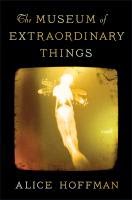
The Museum of Extraordinary Things by Alice Hoffman

Outsiders finding their place in society: that's a theme I love. There are misfits of all kinds in Alice Hoffman's The Museum of Extraordinary Things.

The two central characters are Ezekiel, who was a child when he and his father escaped a pogrom in Russia and made their way to New York City, and Coralie, who has webbed fingers. Coralie's father has made her a part of his freak show exhibit on Coney Island. The main story takes place in 1911.

The narrative alternates between Coralie and Ezekiel, who sheds his Jewish identity and goes by the name Eddie when he becomes a photographer. Each time the narrative shifts, it begins with 15-20 pages in first person, like a journal entry, then switches to third person. In the US edition that I read (Scribner 2014), all of the journal entry text is in italics. Dense pages and pages of it. So hard on the eyes. I sighed every time I got to another section like that.

Fortunately, the plot is compelling. Other hooks for me include the Triangle Shirtwaist Factory fire, the struggles of early labour organizers, mention of Alfred Stieglitz, and details about early photographic techniques.

The following passage intrigued me because I agree with the first part, but not the part about the ability of a camera to capture truth. A photo cannot provide context, and a photographer chooses what to include in the frame.

   "Eddie had come to understand that what a man saw and what actually existed in the natural world often were contradictory. The human eye was not capable of true sight, for it was constrained by its own humanness, clouded by regret, and opinion, and faith. Whatever was witnessed in the real world was unknowable in real time. It was the eye of the camera that captured the world as it truly was. For this reason photography was not only Eddie's profession, it was his calling."

Coralie was already a sympathetic character, and then I loved her more when I discovered that she and I had similar reactions to Jane Eyre:

   "If the wolfman had not disappeared from my life I would have made certain to question him further about Jane Eyre, the book he held so dear to his heart. I suppose I was studying love, and in my studies of this subject I could never understand the brutal love of Rochester. I did grasp why Rochester revealed his humanity only after he had been blinded and disfigured; like the beasts around us who reveal their natures because they have no access to artifice, he at last had no choice but to be truly himself. I wondered why he didn't then realize how cruelly he'd treated the first Mrs. Rochester. Surely if he comprehended all he'd done to her, he would have locked himself in a tower to repent for the rest of his days rather than taking the sweet Jane as his wife.
    As for Jane, I considered her to be a fool, but what young woman has not been a fool under certain circumstances?"

Another bookish connection comes in the form of a garment factory worker named Hannah, who kept a spool of blue thread in her pocket for luck. It made me wonder if there is a particular backstory or symbolism related to this object, because Anne Tyler's latest novel (which I have yet to read) is called A Spool of Blue Thread.

The Museum of Extraordinary Things stretches credibility too often, especially in the resolution. I was annoyed by inconsistencies like when Bonavita, an animal trainer with only one arm, clapped his hands to direct a lion. Still, its good qualities outweigh its faults. It prompted a wide-ranging discussion at my book club.

A perfect companion read is a haunting historical graphic novel featuring a mermaid in the Hudson River: Sailor Twain (Mark Siegel).

Tuesday, March 24, 2015

Nobody Is Ever Missing by Catherine Lacey

A woman hitchhikes solo through New Zealand in Catherine Lacey's compelling novel Nobody Is Ever Missing. 

Elyria is missing. She left her husband and her job as a daytime television scriptwriter in New York without saying anything about her plans to anyone. In fact, she had little in the way of plans when she landed in New Zealand. She just needed to get away. Finding out why kept me turning pages, and so did Elyria's busy internal voice.

"He turned the music up, lit another cigarette, and opened a beer as we drove up a mountain, making hairpin turns at unadvisable speeds. My organs let me know how much they disapproved of where I was sitting--I couldn't remember why I had ever wanted to go anywhere at all."

Elyria saw many odd things on her road trip in New Zealand. I did too.
Many of the people who give Elyria a ride warn her about the dangers of hitchhiking. She, however, has more lofty things on her shattered mind.

"Let me say that whoever invented wanting, whoever came up with desire, whoever had the first one and let us all catch it like a hot-pink plague, I would like to tell that person that it wasn't fair of him or her to unleash such a thing upon the world without leaving us a warranty or at the very least an instruction manual about how to manage, how to live with, how to understand this thing that can happen in a person against her will, by which I mean desire and the need it gnaws in us and the shadow it leaves when it's gone."

New Zealand road ornament.
The world through Elyria's filter is mesmerizing and often surreal. I appreciated the grounding I felt during her moments of clarity.

"I walked into the library and the library smelled like every library I'd ever been in and Dewey decimals were on all the spines, same tiny font, tiny numbers, and I thought, for a moment, that there actually were things you could count on in this world until I realized that the most dependable things in the world are not of any significant use to any substantial problems."

There isn't a resolution for Elyria in the end--her problems are substantial--and yet I had seen enough shreds of resourcefulness to have hope for her. Nobody Is Ever Missing is a thought-provoking novel written in a fresh, wry style.

Readalikes with similar humour and themes: The Dept. of Speculation (Jenny Offill) for its exploration of marriage; The First Bad Man (Miranda July) for the mentally troubled main character; and Save Your Own (Elizabeth Brink) for a woman floundering to make sense of her life.

Saturday, March 21, 2015

My Favorite Things by Maira Kalman

Maira Kalman's books lift my heart. Her art is bright and whimsical. Her words celebrate the pleasures around us: sunshine, the taste of a lemon tart, the extravagant swoop of a large hat, a dog's devotion. I'm attracted to her passionate nature. She writes: "I love crazy things, crazily."

In 2011, Kalman was invited to curate an exhibit based on the collection of the Cooper-Hewitt National Design Museum in New York City. My Favorite Things is divided into three parts. The central part consists of Kalman's paintings of these museum objects, along with her reasons for selecting each one, written in her distinctive hand lettering.

"The pieces that I chose were based on one thing only--a gasp of DELIGHT." Doesn't that sound a lot like clutter expert Marie Kondo in The Life-changing Magic of Tidying Up?

It's an eclectic assortment of everyday objects--textiles, clothing, dishes, furniture, etc. Some of them are humble, some are fancy. There is Abraham Lincoln's pocket watch and the black pall that covered his coffin. "Adding fringes was a decision someone had to make." Lincoln is a favourite subject, obviously, since Kalman has a whole book about him: Looking at Lincoln.

Small photos of each item from the exhibit, along with descriptive detail, are in an appendix at the back of My Favorite Things. While I would have enjoyed seeing the museum's show, I don't feel like I have missed out. Kalman's charming interpretations are enough to make this catalogue stand on its own.

In the first part of My Favorite Things, Kalman uses objects to share stories of her family's history. The third part is devoted to items from her own collection of memorabilia, like packages tied up with string... bringing to mind Maria von Trapp's favorite things in The Sound of Music. I get the feeling that Kalman is the kind of person who isn't afraid to break out in song.

A prolific children's picture book artist and columnist for the New Yorker, Kalman has also illustrated Strunk and White's classic The Elements of Style, Michael Pollan's Food Rules, and Daniel Handler's novel Why We Broke Up. I wonder what she will surprise us with next?

Friday, October 3, 2014

Adam by Ariel Schrag

17-year-old Adam gets mistaken for a trans guy when he spends a summer with his lesbian sister Casey in New York City. Adam is Ariel Schrag's first novel, a romantic comedy of errors.

In her earlier works -- Awkward; Definition; Potential; and Likewise -- Schrag chronicles her high school years in comics. The autobiographical series is about her queer coming of age. In Adam, we are fully immersed in 21st-century twenty-something queer community, from political activism to play parties.

Schrag's transparent prose style keeps the focus on plot, believable dialogue and strong characterization. I flagged a passage in which many book addicts will see themselves:

"'Uh-huh?' said Casey, still not looking up. Adam knew she wasn't listening. It was a surprise Casey heard June at all. When Casey was reading, nothing got through to her. She became dead to everything outside the book. It was an attribute their mom liked to brag about all the time."

Adam is a rewarding romp, wrapped around poignant issues like unrequited love, manipulation and self-construction. So much fun!

Readalikes: (you) set me on fire (Mariko Tamaki); 48 Shades of Brown (Nick Earls); and The Floundering Time (Katy Weselcouch).

Monday, September 8, 2014

Lucky Us by Amy Bloom

"My father's wife died. My mother said we should drive down to his place and see what might be in it for us."

From these opening lines, Amy Bloom sucked me right into Lucky Us, a novel about unconventional families. Stepsisters Iris and Eva are 16 and 12 when they first meet in 1939. Iris lives in a fancy mansion, while Eva and her mother have been barely scraping by. Eva's mother abandons her at her father's house.

"I was thirteen before I realized my mother wasn't coming back to get me."

Their father is a fickle man, so the sisters forge a life together. In Hollywood, Iris gets swept up in a racy, but very closeted, lesbian crowd. Later, they move to New York City, where Iris once again falls for a woman who will break her heart.

Sweet, loyal and resourceful, Eva is the most endearing character. Through good luck and bad, she is the steadfast heart of a family that grows over a period of ten years to include a motley, lovable crew.

I listened to the audiobook [Books on Tape: 7 hr. 18 min.] narrated with warmth and expert comedic timing by voice actress Alicyn Packard.

Readalike: Tell the Wolves I'm Home (Carol Rifka Brunt).

Wednesday, August 6, 2014

Can't We Talk about Something More Pleasant? A Memoir by Roz Chast

Can't We Talk about Something More Pleasant? is cartoonist Roz Chast's funny and emotionally honest memoir about dealing with aging parents.

Chast begins her story in 2001, at a point when her parents were in their nineties and still living in their home in Brooklyn. Elizabeth and George Chast had Russian Jewish heritage. They were completely loyal to each other, but that didn't stop them from engaging in verbal altercations with each other.

Their obstinacy and contrariness drove their only child crazy. Most frustrating was their refusal to discuss anything about their wishes regarding their deaths. A lifetime of difficult family dynamics had left its scars, but Chast also cared deeply about her parents.

We all have family responsibilities, and death is unavoidable, so this personal account has universal appeal. Check out Chast's art, including her covers for the New Yorker, on her website.

Readalikes: Special Exits (Joyce Farmer); and You'll Never Know (Carol Tyler).

Monday, July 7, 2014

The Rise and Fall of Great Powers by Tom Rachman

Tom Rachman's The Rise and Fall of Great Powers begins in 2011 in a quaint bookshop in the Welsh village of Caergenog. Tooly isn't making enough to afford to pay her only employee, Fogg, but until her money runs out, she enjoys his company as much as she loves being surrounded by books.

  "Against the stacks rested a stepladder that Tooly was always moving to Mountaineering and that Fogg -- not recognizing her joke -- kept returning to French History."

The wit and warmth of Rachman's first novel, The Imperfectionistsis delightfully in evidence. In both books, pieces come together like a jigsaw puzzle.

Tooly lived a peripatetic life, moving around the globe from a young age with an assortment of mysterious adults in charge. Even as an adult herself, Tooly isn't sure what relationship she bears to any of them. It's time for her to find answers. Like the process of memory, the narrative juggles back and forth in time.

Here's Tooly at age 9 in 1988, on a flight to Bangkok with Paul:

  "When the print issued from the Polaroid, the young woman flapped it till the image appeared, holding it out for them to see. Paul took the photo, thanking her for the gift, which it hadn't been, and slid the snapshot into his book.
[...]
  A sniffle alerted them to Paul's return. He stepped back to the middle seat and frowned at Tooly's ponytail. He viewed fashion with bemusement. The purpose of clothing, as best he could tell, was to keep one unembarrassed and at the right temperature. If an outfit served that purpose for a respectable period -- twenty years, say -- and at the lowest price available, then it was successful. He dressed identically every day: a polo shirt tucked into khakis, Velcro-fastened black shoes. 'Your hair looks like a pineapple that fell over,' he told Tooly. The woman in the aisle, with the identical style, blushed and turned away, ignoring them for the rest of the flight."

Paul is a computer systems analyst who reminds me of Don Tillman in Graeme Simsion's The Rosie Project. It's in Bangkok that the child Tooly meets Humphrey for the first time. He is the one who instills in her a love for books.

  "He yanked at the jammed door. On the third pull, it burst apart in an explosion of hardcovers and paperbacks.
  'Are you okay?" she asked, stepping through the mess to help him.
  'Books,' he said, 'are like mushrooms. They grow when you are not looking. Books increase by rule of compound interest: one interest leads to another interest, and this compounds into third. Next, you have so much interest there is no space in closet.'
  'At my house, we put clothes in closets.'
  He sneered at this misapplication of furniture. 'But where you keep literature?'"

Tooly's belated search for people who disappeared from her life begins in New York City in 2011.

  "In her absence, New York had been invaded by cupcakes. Joggers ran barefoot now. Hipsters wore nerd glasses and beards. And walking had become an obstacle course, pedestrians inebriated on handheld devices, jostling one another as they passed, glancing up dimly at the shared world, then back into the bottomless depths projected form shining glass."

It isn't Tooly's fault that she knows so little. Eleven years earlier, her questions about the past had been sidestepped like this:

  "...my dearest darling thing. Memories are so boring. They're always wrong, and only cause trouble. Remembering is the most overrated thing. Forgetting is far superior."

Trouble or not, this time Tooly is determined get to the bottom of things.

Saturday, June 28, 2014

The House of Mirth by Edith Wharton

In 19th century New York, a young woman lets one suitor after another slip away as she dithers over whom to marry in Edith Wharton's The House of Mirth. Will Lily Bart choose wealth and a boring circumscribed life, or else follow her heart and wed Selden... but then be unhappy when he cannot support her extravagant tastes?

My summary doesn't do justice to this novel that was first published in 1905, nor does it capture what I love about it. I responded to the immersion in a particular place and time, the fascinating characters (even though we are kept rather at a distance from them), the stylish prose, the moral issues, and the examination of women's roles in society.

My Two Bichons book club decided to read The House of Mirth partly so that we could compare it to one we had discussed previously: Meg Wolitzer's The Interestings. It was a good pairing. I found Lily Bart as irritating as Julie Jacobson, then gradually came around to appreciate them. The choices they made held my interest from the start.

Not having read anything by Wharton previously, I was surprised to come across a familiar passage. It was used as an example in a book (I can't remember which) on how to write well. The excerpt included this exchange between 19-year-old Lily and her mother, who has shielded her daughter from the realities of household economy:
  'I really think, mother,' she said reproachfully, 'we might afford a few fresh flowers for luncheon. Just some jonquils or lilies-of-the-valley-- '
  Mrs. Bart stared. Her own fastidiousness had its eye fixed on the world, and she did not care how the luncheon-table looked when there was no one present but the family. But she smiled at her daughter's innocence.
  'Lilies-of-the-valley,' she said calmly, 'cost two dollars a dozen at this season.'
  Lily was not impressed. She knew very little of the value of money.
  'It would not take more than six dozen to fill that bowl.' she argued.
Maureen is the only one in our group who had previously read The House of Mirth. While she still loved the book thirty years later, Maureen got completely different things from it this time around. She saw the characters in a new light and noticed far more humour than she had remembered.

Wharton's prose is often witty or satirical. In a restaurant scene amid high society in the French Riviera, journalist Dabham is "wedged in modest watchfulness between two brilliant neighbours" where he can witness wardrobe malfunction.
"Mr Dabham had "leisure to note the elegance of the ladies' gowns. Mrs. Dorset's, in particular, challenged all the wealth of Mr. Dabham's vocabulary: it had surprises and subtleties worthy of what he would have called 'the literary style.' At first, as Selden had noticed, it had been almost too preoccupying to its wearer; but now she was in full command of it, and was even producing her effects with unwonted freedom. Was she not,
indeed, too free, too fluent, for perfect naturalness?"
EPL has hundreds of book club kits.  
While I enjoyed Wharton's style, my initial progress was slow. In the Penguin Classics edition -- which was in the Edmonton Public Library's book club kit -- the lines are tightly spaced, the font thickness is disconcertingly uneven, and the footnotes distracting. I switched to the Blackstone audiobook* (narrated by Anna Fields) and the story took flight. As someone in my book group commented, the ups and downs of Lily's fortunes are reminiscent of something by Charles Dickens.

I will definitely read more by Wharton, although I'm not sure whether that will be The Age of Innocence or Ethan Frome or both. Before that, however, I'll be tackling a different classic. I just finished listening to Rebecca Mead's My Life in Middlemarch and then (coincidently) read Zadie's Smith's essay about Middlemarch in Changing My Mind. When I'm ready for another classic, the first one that I'll pick up is George Eliot's Middlemarch.

*eAudiobook downloaded from the Edmonton Public Library's Overdrive collection.

Monday, April 14, 2014

Just Kids by Patti Smith

I kept wanting to do something special to mark the milestone of my one-thousandth blog post. Instead, I've written nothing for two weeks. So this is just another review.

The Harper Audio edition of Patti Smith's Just Kids [10 hr] is great. With memoirs, I like hearing the author narrate their own work, and this production is no exception. Hearing the way Smith pronounces certain words makes it feel even more personal. Examples: window, piano (windah, pianah); entered, filtered (en'ered, fillered); shelter (shelder); and drawing (drawling).

There's a part where Smith recites five lines from "Fire of Unknown Origin," which was the first of her poems that she turned into songs. I replayed it three times because I loved it so much. Then I searched for it in YouTube and listened to versions by Blue Oyster Cult (dimly familiar from my teen years) and sung by Smith herself. I like it best spoken.

Patti Smith's self portrait, Brooklyn, 1968
Since I listened to the audiobook some time ago, I had to use the print book to refresh my memory. Bonus! A lot of artwork is included there; drawings and photos.

Robert Mapplethorpe was Smith's close companion for years. They were lovers before he started sleeping with men. They created art in their shared living spaces when they were young and poor, in the 1960s and 70s. Their social circles included people like Janis Joplin, Allen Ginsberg, and filmmaker Sandy Daley. Daley lived in the room next door to Smith and Mapplethorpe at the Hotel Chelsea. Mapplethorpe started out taking photos with a camera he had borrowed from Daley.

In "Fire of Unknown Origin," the line Death comes sweeping down the hallway in a lady's dress was inspired by Daley's dresses. "Sandy didn't have a diverse wardrobe but was meticulous in her appearance. She had a few identical black dresses designed by Ossie Clark, the king of King's Road. They were like elegant floor-length T-shirts, unconstructed yet lightly clinging, with long sleeves and a scooped neck." This passage had me googling fashion designer Clark as well as Daley. Books that send me off on tangents are the best!

I was friends with kd lang when we were in our 20s. She used to cut her own hair, and that inspired me to do the same. I thought of kd when Smith described this:

"I realized that I hadn't cut my hair any different since I was a teenager. I sat on the floor and spread out the few rock magazines I had. I usually bought them to get any new pictures of Bob Dylan, but it wasn't Bob I was looking for. I cut out all the pictures I could find of Keith Richards. I studied them for a while and took up the scissors, machete-ing my way out of the folk era. I washed my hair in the hallway bathroom and shook it dry. It was a liberating experience."

From a young age, Smith was a bookworm with literary tastes. It's a pleasure to read (or listen) to her prose. She has lots of interesting anecdotes, many of them featuring interactions with cultural icons. What I liked most about Just Kids is gaining a greater appreciation and understanding of the artistic works of Patti Smith and Robert Mapplethorpe.

Tuesday, February 25, 2014

She Is Not Invisible by Marcus Sedgwick

This cover gives the
impression of a historical
ghost story. It is not
either of those things.
Marcus Sedgwick's writing is kind of hit and miss for me. It's not easy to say why, just a bad fit for my tastes. Usually, I like some aspects and dislike others within the same book. I've read five so far (mostly because they were chosen by my YA book group), and Revolver was the one I liked best, with some reservations. (See my review here.)

She Is Not Invisible is different. I loved everything about it: the two main protagonists, 16-year-old Laureth and her 7-year-old brother Benjamin; their clandestine departure from England to New York in search of their missing father, a writer; the vividly detailed setting; the power of obsession; the clues; the stylistic recurrence of number 354; and the subject of coincidence.

"Coincidences in fiction just do not work. And even in real life, they tend to fall into two sorts. The ones that are so pathetic that they don't excite anyone but you, and the ones that are so incredible that they are literally just that; unbelievable."

I learned a new word (always a plus): "Apophenia is a fancy word, but all it means is that thing we all have inside us, a desire, a tendency, a need in fact, to spot patterns. The human mind is very good at spotting patterns. It's an evolutionary development."

The human mind is also very good at creating connections where none exist. What is real? What is pure coincidence? She Is Not Invisible is a quick and intriguing read. The questions it leaves are the very best part.

Readalike: Picture Me Gone (Meg Rosoff).

Saturday, February 22, 2014

Nevada by Imogen Binnie

Nevada is Imogen Binnie's funny, gritty novel about a trans woman named Maria. Armistead Maupin's Anna Madrigal, one of the grand dames of trans women in fiction, grew up in small town Nevada. I wonder if this inspired Binnie to set the pivotal point of her novel in a similar location? Whatever the reason, it works.

Maria is just as wonderful as Anna Madrigal, even though they're opposites in many ways. Maria is more into books than sex. Mary Gaitskill, William Gibson, Michelle Tea and Rebecca Solnit are some of the authors she name-drops. She prefers punk clothing layers to silk and chiffon. Also, Maria tends to alienate people rather than mother them. She even picks fights with herself. Drugs are not really her thing either.

"Piranha's always got pills. She's always got something going on, some kind of illegal Robin Hood self-care. But obviously it's kind of a big deal. Heroin's the cul-de-sac at the end of Drug Street."

After several years together, Steph and Maria are breaking up. Maria hates her job at a bookstore in New York, so that's another part of her life that's broken. She has trouble sleeping and is overdue for a hormone shot. Alcohol might be the solution, except:

"She can't really drink forties any more. Her twenty-nine year old sad old lady belly can't handle it. But sneaking a beer into the movie is the point, not the actual drinking.
[...] That stereotype about transsexuals being all wild and criminal and bold and outside the norm and, like, engendering in the townsfolk the courage to break free from the smothering constraints of conformity? That stereotype is about drag queens. Maria is transsexual and she is so meek she might disappear. She does sneak a forty into the movies, though."

(Does this remind anyone else of Drinking at the Movies by Julia Wertz?)

One night, Maria is so exhausted that she falls into a long, sound sleep.

"She wakes up around four thirty and feels rested. Do other people feel like this all the time? It's fucked up. Her head feels all clear and she thinks for a second about pouring herself a glass of breakfast wine, but then she thinks, no this is perfect! I have four hours until I have to be at work, which means I can shave, put on makeup, then go to Kellogg's and write for two and a half hours."

(I like the way Binnie played breakfast wine for a laugh, but it turns out that early-morning alcohol is going to be a thing here in Alberta. Premier Alison Redford announced that bars can serve alcohol at 5 a.m. tomorrow morning. Canada is in the Olympic men's gold-medal hockey game. Must. Drink. Beer.)

"No big deal but Maria is kind of popular and famous on the Internet, but so is everybody, so it's not very interesting. She's been blogging since she was a tiny little baby, like eighteen or nineteen years old, when being online was just starting to be demystified into something Rupert Murdoch could make money from. She figured out that she was trans by blogging. Awkward."

Maria still has a lot to figure out. She sets off on a road trip to the West Coast, which is why she is in Nevada, as advertised in the title.

"Kate Bornstein was right when she said none of this gender stuff is real, but she didn't go far enough. All of this gender stuff is stupid and it's so complicated that it's impossible to make sense of."

Actually, Maria does a pretty good job of making it less complicated. It is about being yourself. It is about being human. And it's about the meaningful connections we make with others.

Readalikes: Valencia and Rose of No Man's Land (Michelle Tea); Godspeed (Lynn Breedlove); and The Beautifully Worthless (Ali Liebegott).

Sunday, November 10, 2013

Fools by Joan Silber

The six finely-crafted stories in Joan Silber's Fools are about anarchists, our better natures and our worst. New York Marxists in the 1920s, conscientious objectors imprisoned during WWII, the Occupy Wall Street movement -- I love the way they are all loosely interconnected, with characters and places from one story popping up tangentially in another.

The stories are around 40 pages long, enough time to really get into the characters, their lives, and the many possibilities there are for learning from one's folly.

The title story opens with these lines:

" A lot of people thought anarchists were fools. I finished high school in 1924, and even during my girlhood, when the fiercest wing of anarchists still believed in "propaganda by deed" and threw bombs and shot at world leaders, people thought they did it out of a bloody kind of sappiness, a laughable naivete. All this laughing, I came to think, ignored the number of things a person could be a fool for in this life -- a fool for love, a fool for Christ, a fool for admiration. I had friends who were all of these, as it turned out. But I took my own route."

What struggles we have in making our actions congruent with our ideals. Fools is an enthralling collection.

Readalikes: Runaway (Alice Munro); Bobcat (Rebecca Lee); The Imperfectionists (Tom Rachman).

Monday, October 21, 2013

The Golem and the Jinni by Helene Wecker

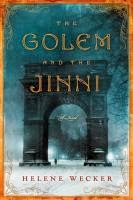
Two mythological creatures meet in 19th-century New York City. Knowing that much was enough to make me want to read The Golem and the Jinni by Helene Wecker. As a bonus, it has a beautiful dust jacket with gold filagree embellishments and an atmospheric photo of the Washington arch in New York, plus dark blue edging on three (unbound) sides of the pages. It has the look and feel of a precious manuscript.

The female golem wasn't entirely convincing as one of her kind, made of clay. She found "to lie still and silent in such an enclosed space was no easy task" and complained (about reading): "It's hard to sit still for so long." I understand that she was created to be a thing of action, but her immobility should be equally effortless, don't you think? Am I being unreasonable in my desire for a believable fantasy creature?


The golem and the jinni discuss philosophical questions like: are we good at heart? is there a god? and independence vs. mutual interdependence.

The Golem said, "I read about angels, once. In one of the Rabbi's books." She glanced at him. "You don't believe in them, I suppose."
"No, I don't," he said. He thought she might be waiting for him to return the question; but he didn't want to talk about angels, or gods, or whatever else the humans had invented that week."
----- [...] -----
"God is a human invention. My kind have no such belief. And nothing I've experienced suggests there's an all-powerful ghost in the sky, answering wishes. [...] So perhaps this God of the humans is just a jinni like myself, stuck in the heavens, forced to answer wishes. Or maybe he freed himself long ago, only no one told them."
[Golem]: "So, it's just stories now. And perhaps the humans did create their God. But does that make him less real? Take this arch. They created it. Now it exists."
"Yes, but it doesn't grant wishes, he said. "It doesn't do anything."
"True," she said. "But I look at it, and I feel a certain way. Maybe that's its purpose."
The plot kept me turning pages but conversations like the example above made me wince a little. The book wasn't entirely disappointing, but I had hoped to enjoy it more.

Readalikes: Sailor Twain (Mark Siegel); Cairo (G. Willow Wilson); The Snow Child (Eowyn Ivey); The Enchanted Life of Adam Hope (Rhonda Riley); and the Bartimaeus books (Jonathan Stroud).

Thursday, September 19, 2013

Great House by Nicole Krauss

Last night my Two Bichons book group discussed Great House by Nicole Krauss. It's a National Book award-winning novel constructed with four narratives that are only loosely tied to each other. The main connection is a desk with a history that includes the Holocaust, Pinochet's Chile and too many family secrets.

We compared Great House to The History of Love, another of Krauss' novels we discussed earlier in the year. Both books have themes of memory, identity and coming to terms with loss. Although both books are composed of multiple storylines about Jewish families, The History of Love is more linear and is more about the characters. In Great House, there was only one character that allowed us to get close: Aaron.

Like Leo in The History of Love, Aaron is estranged from his son. Dov and Aaron have always been like oil and water, complete opposites in temperament. Aaron envied his wife's easy understanding of their son. When Dov returns injured in body and mind from the Yom Kippur war, the father of one of Dov's dead comrades crushes his spirit further with a letter blaming him for the death, writing, "It should have been you." Years later, Aaron looks back on that difficult time, carrying on a conversation with his son in his head. "Your mother wanted to call the father in Haifa, to shout at him, to defend you. But I wouldn't let her. I grabbed her hand and pried the phone loose. It's enough, Eve, I said. His son is dead. His parents were murdered [by the Nazis] and now he has lost his only son. And you expect him to be fair? To be reasonable? Her eyes turned hard. You have more sympathy for him than you have for your own son, she spat, and walked away." Doesn't that break your heart?

I was intrigued by a university student who was obsessed with travelling light, who didn't want to be weighed down by possessions. "The only exception was books, which I acquired freely, because I never really felt they belonged to me. Because of this, I never felt compelled to finish those I didn't like, or even a pressure to like them at all. But a certain lack of responsibility also left me free to be affected. When at last I came across the right book the feeling was violent: it blew open a hole in me that made life more dangerous because I couldn't control what came through it."

Great House didn't have that kind of violent effect on me, but it was definitely invigourating. I was grateful to have other readers helping me to appreciate the impressive structure and parallels. Great House is a perfect book for discussion: challenging, beautiful, and rewarding of close examination.