Showing posts with label art/music/photography. Show all posts

Wednesday, September 9, 2020

The Baudelaire Fractal by Lisa Robertson


The Baudelaire Fractal
by Lisa Robertson
Coach House Books, January 2020

A feminist, philosophical novel about gender and creativity.

Poet Lisa Robertson's first novel is a tour-de-force that's hard to describe. It's semi-autobiographical and reads like a memoir, looking back on the travels of her stand-in, Hazel Brown, as a young Canadian in France, right through into present-day middle age. It also takes the form of an academic essay in the fields of cultural and gender studies. Sometimes I understand exactly what is meant, other times I feel on the edge of understanding, rereading passages to grasp their meaning. Robertson's prose is arresting, both for her tantalizing ideas and her vivid descriptions.

        This morning I'm at the round table under the linden tree, in a sweet green helmet of buzzing. Each of its pendulous flowers seems to be inhabited by a bee. They don't mind me -- they're rapturously sucking nectar. I'm at the core of a breezy chandelier of honey.

The central premise is that Hazel Brown wakes up one morning with the realization that she has become the author of the writings of Charles Baudelaire, slipping into them "as one slips into a jacket."

        I simply discovered within myself late one morning in middle age the authorship of all of Baudelaire's work. I can scarcely communicate the shock of the realization. 

The male perspective of Baudelaire and other creatives is troubling to Hazel. Women as individuals are erased and objectified. Baudelaire did this with his longtime companion, a black woman named Jeanne Duval.

        Baudelaire scorned Jeanne Duval and every female he dallied with, or at least did so on paper, Ted Hughes scorned Sylvia Plath, Ezra Pound scorned Djuna Barnes, George Baker scorned Elizabeth Smart, everybody scorned Jean Rhys. Proust did not scorn Albertine because Albertine was a man. The she-poets perished beneath the burden of beauty and scorn. This is what I observed.

Hazel's observations include the potentiality of fashion for its role in self-reinvention or the expression of personas.

        I found a tailored black mid-nineteenth-century gentleman's jacket at a flea market at Bastille. I suppose it would be called a frock coat, or perhaps a morning jacket. Its fitted sleeves were mounted quite high on the torso, its shoulders were softly rounded in an unfamiliar manner, and slipping it on I felt a freshened awareness of the articulations and expressions of my arms. I longed for a decorative walking stick. From a slightly accented waist its longish skirt flared a bit behind, encouraging a brisk, decorative enunciation of my step; this jacket added a grain of wit to its wearer's walk, like a mild sartorial drug.

Tangential musings develop subtle notions about the creative process and being a writer who is also a woman. Perhaps creation is more an aspect of becoming, rather than being. Meanwhile, I found it easy to identify with the concrete storyline, that of Hazel's travels and self-education through experience, through following her own desires, and learning to ignore the disregard of men.

I predicted The Baudelaire Fractal would be on the official Giller longlist, but it wasn't. It's not a book that will appeal to everyone, but for readers like me, it's intellectual dynamite.

-----------

This post is part of a series. I'm on the Shadow Giller jury this year, so I have been reading as many qualifying Canadian titles as possible. To see my other reviews that are a part of this project, click on the Shadow Giller tag. Also, please visit our Shadowing the Best of CanLit website to see what the rest of the Shadow Giller jury are up to. Thanks for visiting my blog.

Thursday, May 4, 2017

Books and a Busy April


Another month, another 30 books. Even though I read the same number of books in April as in March, this time I only rated 7 of them with five stars in Goodreads, while March had an amazing 15 of them. Before I tell you about some of the bookish highlights, I want to mention a couple of other April things.
Our house is still cheerful with art, a few days after the show.
We hosted an open house art show and sale of Laurie's art, and so our place still looks like a gallery. I love it. We forgot to put out clean towels and so our guests had to wipe their hands on their clothing (I guess) but other than that everything went well on the big day. Earlier in April, we went to a lot of Edmonton Poetry Festival events and I'm impressed with how the festival keeps getting better. Laurie performed her work at a couple of places and she keeps getting better too. (Ha!)

I also saw a wonderful theatre adaptation of Peter and the Starcatchers at the Citadel Theatre, and a whacked-out dance theatre adaptation of Romeo and Juliet, performed by Toy Guns Dance students. Both of those were a lot of fun.

Now, on to highlight some of the books, starting with stats:

Lincoln in the Bardo by George Saunders 
[audiobook with multiple narrators: 7 hr 30 mn]
I expected this would make me cry. It didn't. I expected to love this audiobook. I did. So much so that I started again from the beginning after finishing it. Saunders has immense compassion for human frailties, while encouraging us to see the humour in those shortcomings. Lovely. The text loops and circles and dazzles. I wouldn't have guessed that a book about Abraham Lincoln's grief over the death of his child would be my favourite book of April, and quite possibly of the year so far.

Memoirs of a Polar Bear by Yoko Tawada, 
translated from German by Susan Bernofsky.
Revolutionary. Funny. Surprising. Surreal. Three generations of polar bears - interacting closely with humans - provide poetic, emotionally powerful viewpoints on personal relationships, culture, immigration, and politics.

The male members of the species Homo sapiens appealed to me a great deal. They were soft and small and had fragile but adorable teeth. Their fingers were delicately constructed, the fingernails all but nonexistent. Sometimes they reminded me of stuffed animals, lovely to hold in one's arms.

I wanted to wrap myself in the black woollen blanket of grief and brood over my clutch of sorrows until they hatched and flew away.

All of them were referred to as birds, even though the only thing they had in common was wings. the sparrow, a brown mixture of modesty and agitation, the blackbird with her unassuming humour, the magpie's painted mask, and the pigeon, who lost no opportunity to repeat her favourite motto: 'Really? How interesting. I had no idea!'

Exit West by Mohsin Hamid 
[audiobook narrated by the author: 4 hr 44 mn].
This love story about refugees was even better than I had hoped. Ethical, believable characters. Excellent usage of the terms 'natives' and 'migrants,' emphasizing the common experiences of shifting world populations. The magic doors you may have heard about that are in this book are an unobtrusive plot device used in a similar way to the trains in Colson Whitehead's The Underground Railroad. Straightforward storytelling. Short and bittersweet.

Every time a couple moves they begin, if their attentions still drawn to one another, to see each other differently, for personalities are not a single immutable colour, like white or blue, but rather illuminated screens, and the shades we reflect depend much on what is around us. So it was with Saeed and Nadia, who found themselves changed each other's eyes in this new place.

Du Iz Tak? by Carson Ellis.
An adorable picture book with anthropomorphic insects and an invented language. I loved it so much I bought a copy to bring as a gift to Geneva next month, for twins who will soon be four years old. They live in a quadrilingual household, so this should be perfect!

A Face Like Glass by Frances Hardinge
An amnesiac child, a bizarre underground world, cheeses with killer attitude, wines that alter memories, a populace with faces blank of expression... this dazzling standalone fantasy has a twisty plot full of lies and deception. Ages 10-adult.

Days of the Bagnold Summer by Joff Winterhart
It's been five years since I first read this and it's every bit as good on rereading. Posy Simmonds says there's "no truer portrait of teenage and parental angst." I picked it up when I saw news that a film version is coming out.

Son of a Trickster by Eden Robinson
High school is hard enough for Jared without parents who deal drugs and party for days. Then there's the raven who talks to him, and the annoying patter of the fireflies over his girlfriend's head - no one else sees or hears them. If Jared really is the son of a supernatural being, why isn't his life better? Gritty, witty and full of heart.

They had a four-bedroom house, but when they were alone it felt like a one-room shack. She'd talk to him through the door when he was on the can. The red glow of her cigarette was his night light as she sat beside his bed in the darkness. He smelled her Craven Ms in his dreams. A trail of her texts followed him through his day.

Richie disappeared into the cabin and came back carrying an AK-47. [Jared's] mom squealed and clapped her hands. they took turns firing into the trunk of one of the target trees, which quivered until it creaked, cracked, then fell over.
"Tim-ber!" they yelled together.
"Normal people buy their trees from the Boy Scouts," Jared said. "Normal people don't hunt their Christmas trees down and kill them."

"I know all the change in Georgie's piggy bank." Crashpad's mom made a V of her fingers, pointing to her eyes and then to Jared.
What did you say to that? On the one hand, it was hilarious. On the other, how craptastic was your life when old ladies felt the need to threaten you with movie gangsterisms?

In for a Pound by SG Wong
An entertaining hard-boiled female detective mystery, set in an alternate 1930s Los Angeles in which North America's west coast was colonized by the Chinese, and where it's perfectly normal to be haunted by ghosts... except not against your will. Second in a series; it's not necessary to read them in order. Wong is an Edmonton author and my Two Bichons book club was graced with her presence at our meeting in April. What a treat!


And speaking of treats, how about some Coconut Macaroons (from Flapper Pie and a Blue Prairie Sky cookbook) topped with Candied Kalamata Olives (from Crossroads cookbook)? Trust me. It's a surprisingly good taste combination! I had fun playing with recipes in these two:  

Flapper Pie and a Blue Prairie Sky by Karlynn Johnson 
(from the Kitchen Magpie blog).
Contemporary takes on desserts from the mid-20th century. Signature ingredients: saskatoon berries; chocolate; brown sugar; salted butter. All the good stuff. Photos feature author's vintage Pyrex. 

Crossroads by Tal Ronnen
Mediterranean first, vegan second. Lots of steps, but all six of the recipes I tried turned out great. Signature ingredients: nutritional yeast flakes; Kite Hill almond milk cheeses (I don't think these are available in Canada); and milk made from soaked cashews.

Tuesday, February 9, 2016

Thunder and Lightning by Lauren Redniss

When art and science get married, I am first in line with the confetti. That's why I want to shower Lauren Redniss' work with rose petals. Thunder and Lightning: Weather Past, Present, Future is full of fascinating information about weather, the font and unusual page layout are all part of the author's design and it's illustrated with hand-coloured photogravure and photopolymer prints. So gorgeous!

"I hoped to [...] capture a certain feeling - a sensation of strangeness, wonder, terror - that we experience in the presence of nature, most powerfully perhaps when encountering the forces of the elements: a howling wind, a thunderstorm, the beating sun."

Yes, Redniss captures that feeling very well. She also steps up to the challenge "to embrace the whole sky with the mind." (This is from a Latin inscription 'Totum animo comprendere caelum" on the wall at the National Weather Center on the University of Oklahoma's Norman campus.)

From Arctic explorations to desert ecology to classic Greek literature to meteorological warfare to interviews with folks at the Old Farmer's Almanac, Redniss covers a whole lot of ground. With such range, it should not have surprised me to encounter mention of the Humboldt current while I concurrently was listening to the audiobook about Alexander von Humboldt, The Invention of Nature (by Andrea Wulf). Redniss also writes about endurance swimmer Diana Nyad, whom I've recently encountered in other books: The Thing About Jellyfish (Ali Benjamin) and The Argonauts (Margo Nelson).

Thunder and Lightning is a book that can be revisited with much pleasure and enjoyed by curious minds age 12 and up.

Readalikes: Maps (Aleksandra Mizielinska & Daniel Mizielinski); Animalium (Jenny Broom & Katie Scott); The Where, The Why and the How: 75 Artists Illustrate Wondrous Mysteries of Science (Jenny Volvovski et al) and Unflattening (Nick Sousanis).

See also my review of Lauren Redniss' book about Marie Curie, Radioactive.

Friday, January 22, 2016

Drawing Blood by Molly Crabapple

"Without art, you're dead!"

The opening line in Molly Crabapple's memoir, Drawing Blood, is a quote from her great-grandfather. Crabapple loved to draw from the time she could hold a crayon, but she hated being a child and describes that feeling of powerlessness very well.

Crabapple supported herself through art school and beyond as a model. She performed burlesque. She regularly attended an exclusive nightclub, where she sat in near-darkness, sketching the louche goings-on. She slept with men and women.

The point in Crabapple's narrative where I felt my interest kick into high gear was when she began using her art as a vehicle for activism. Her New York City apartment was right next to the site of Occupy Wall Street. In London, Crabapple bonded with feminist writer Laurie Penny. (I love Penny's work. If you haven't read her essays, go check out Unspeakable Things: Sex, Lies and Revolution.)

   "Unhealthily, we pored over conservative British message boards, where trolls talked about garroting Laurie to death, or tying me to a post and smothering me with shit. White men never seemed to provoke this sort of rage."
Poster by Molly Crabapple
Full colour artwork, like the teargas poster above, accompanies the text in Drawing Blood. If you want to see more of Crabapple's work, I recommend her scenes from the Syrian War, viewable on her website.

   "Art is hope against cynicism, creation against entropy. To make art is an act of both love and defiance. Though I'm a cynic, I believe these things are all we have."

Drawing Blood is fiercely feminist and compelling.

Monday, August 10, 2015

If the Tabloids Are True What Are You? by Matthea Harvey

Poetry and images are combined with startling effect in Matthea Harvey's lively collection If the Tabloids Are True What Are You?

Harvey's work is fresh and compelling. Many of the poems are self-contained narratives, and these have the flavour of short stories by authors like George Saunders, Karin Tidbeck and Karen Russell, the kind of tales that are funny, dark and weird.

Some of the poems' titles herald the fun within, like "Michelin Man Possessed by William Shakespeare" and "Using a Hula Hoop Can Get You Abducted by Aliens." One series of poems has images instead of titles. Another series is all images without text: a sort of visual poem consisting of photographs of ice cubes. Each ice block contains something frozen within it.

Each in an entertaining series of mermaid stories is accompanied by a silhouette of a half-woman, half-household object. "The Deadbeat Mermaid," for example, has a grandfather clock in place of a tail/legs. She is flanked by two fish, one with an alarm clock for a head, and one with a pocket watch head. "Between meals, the Deadbeat Mermaid floats on her back and watches the giant sky, stuck on the same stupid cloud channel all day long."

If the Tabloids Are True What Are You? is a fantastic mix of words and art. Harvey is also the author of a quirky children's picture book about a child with a pet glacier. Cecil the Pet Glacier is illustrated by Giselle Potter. Find out more about Harvey on her website here.

I experienced connections between many of Harvey's poems and works by other writers, so I'm going to record some of them here. It may seem contradictory, because If the Tabloids Are True What Are You? is unquestionably unique, but the sheer variety of literary connections also indicates why I found it so appealing.

"The Backyard Mermaid": "The Semplica-Girl Diaries" (in Tenth of December) by George Saunders.

"Cheap Cloning Process Lets You Have Your Own Elvis": "Cloudberry Jam" AND "Miss Nyberg and I" (in Jagannath) by Karin Tidbeck.

"Prom King and Queen Seek U.N. Recognition of Their Own Country... Promvania!": 99% Invisible's podcast episode #174 about micronations.

"Inside the Glass Factory": "Reeling for the Empire" (in Vampires in the Lemon Grove) by Karen Russell.

"There Is a String Attached to Everything": Ronnie Burkett's style of marionette theatre, in which the puppeteer plays an occasional role.

"In the Hell Between Heavens of Nothingness": "Torching the Dusties" (in Stone Mattress) by Margaret Atwood.

"This Is What the Last Ones Left Us": Motel of the Mysteries by David Macaulay

Thursday, June 25, 2015

The Social Life of Ink by Ted Bishop

I sure do love sweeping social histories of a single thing and Ted Bishop's The Social Life of Ink: Culture, Wonder, and Our Relationship with the Written Word is exactly that. Learning new stuff through this sort of book is my idea of bliss.

Some random notes and quotes:

A calamophile is a "pen lover."

"Ink as solidified smoke." Carbon particles from soot provide the black in Chinese ink; the quality of the colour depends on the size and uniformity of the grains, and the particular shade nuance of black (violet/blue-tinged vs brown/red-tinged) depends on the source of the smoke.

When making your own ink from scratch, an initial step involves spontaneous combustion. I won't be trying this at home!

The correct ink formulation was as great a stumbling block as the mechanics involved in the invention of ball point pens.

Tattooing was popular among 19th-century aristocrats. "Lady Randolph Churchill (mother of Winston) had a snake tattooed on her wrist."

Bishop writes about owning three different shades of blue ink. "When the time came to refill my pen I would, I won't say 'agonize,' but certainly 'consider' which ink to use. I knew no one who did this. And it didn't stop there. I wanted to buy more ink. I was hiding bottles from my family. Ink was becoming a secret vice." I can relate. I avoid going to Delta Art because I can't resist their abundant selection of soft pastels, sold individually. I've only got about a hundred different colours already.

"Around 1025 Al-muizz ibn Badis, an eighteen-year-old prince in what is present-day Tunisia, produced The Staff of the Scribes: a treatise on inks and writing implements." Ibn Badis included recipes for inks, including coloured inks with names like 'yellow apricot,' 'pomegranate blossoms,' 'blood of the gazelle,' and 'colour of dates beginning to ripen.'"

"The work you're reading is simply black marks on a page. The text that derives from it takes shape in the mind. Thus all texts are shaped by experience and context, and are always different, even for the same reader." This reminds me of something said by Duncan Smith, creator of the readers' advisory online database NoveList: "There's no such thing as a good book." He meant that what makes a book good is specific to each individual reader's experience with it.

My experience with The Social Life of Ink was excellent. Part micro-history, part memoir, part travel writing: it's a finalist for the 2015 Alberta Readers' Choice Award. Online voting starts July 6.

Readalikes. These are some other micro-histories I've reviewed: Bitter (Jennifer McLagan); Consider the Fork (Bee Wilson); Indigo (Jenny Belfour-Paul); Just My Type (Simon Gardield); Rin Tin Tin (Susan Orlean); and The Story of Salt (Mark Kurlansky).

Thursday, May 7, 2015

The Secret Life of Squirrels by Nancy Rose

Jessica Olin wrote a fun post about squirrels on her Letters to a Young Librarian blog, prompting me to share my own love for these little beasts with a photo taken at Abkhazi garden in Victoria, BC:
...and a link to my archives for a review of Squirrels of North America nature guide by Tamara Eder.
...and give a preview of my next review, which will be of Sita's Ramayana by Samhita Arni and Moyna Chitrakar, a tale with some scary fierce squirrels that join other animals and Rama in a battle against a demon king with ten heads.
Detail from Sita's Ramayana. Art by Moyna Chitrakar, Text by Samhita Arni.
...and to write about a wonderful children's picture book: The Secret Life of Squirrels by Nancy Rose.

Through the window at her home in Nova Scotia, Nancy Rose photographs squirrels exploring dioramas that she has created. I cannot tell you how adorable these images are. You must see for yourself at The Secret Life of Squirrels website.

The photos have been assembled together with text into a charming narrative about Mr. Peanuts, an atypical squirrel. Instead of gathering nuts and climbing trees, Mr. Peanuts cooks on a tiny grill, plays piano, and reads. "He especially likes to read aloud. (You may have heard him chattering in your backyard.)"

Mr. Peanuts invites his cousin to visit. His preparations include vacuuming, laundry and baking. When Cousin Squirrel arrives, they play games, go out for ice cream, and "scare each other with ghost stories, including 'The Old Haunted Tree' and 'The One-Eyed Owl.' You can't tell yourself a ghost story, thinks Mr. Peanuts. You need a friend."

The Secret Life of Squirrels is great for all ages. The simple story has a familiar scenario - preparing the house for a visitor, having fun with a friend - and it's easy for very young children to follow. The photographs are as cute as they are fascinating. Examining them for the details of how they were created is part of their attraction. Children who like crafting things will enjoy figuring out how they might make similar scenes. Lots of adults like miniature worlds too, and will appreciate the hours of patience necessary for Rose to get the perfect shot with live squirrel models.

Readalikes: Here Comes the Garbage Barge (Jonah Winter); Meerkat Mail (Emily Gravett); Town Mouse, Country Mouse (Jan Brett).

Sunday, May 3, 2015

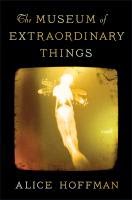
The Museum of Extraordinary Things by Alice Hoffman

Outsiders finding their place in society: that's a theme I love. There are misfits of all kinds in Alice Hoffman's The Museum of Extraordinary Things.

The two central characters are Ezekiel, who was a child when he and his father escaped a pogrom in Russia and made their way to New York City, and Coralie, who has webbed fingers. Coralie's father has made her a part of his freak show exhibit on Coney Island. The main story takes place in 1911.

The narrative alternates between Coralie and Ezekiel, who sheds his Jewish identity and goes by the name Eddie when he becomes a photographer. Each time the narrative shifts, it begins with 15-20 pages in first person, like a journal entry, then switches to third person. In the US edition that I read (Scribner 2014), all of the journal entry text is in italics. Dense pages and pages of it. So hard on the eyes. I sighed every time I got to another section like that.

Fortunately, the plot is compelling. Other hooks for me include the Triangle Shirtwaist Factory fire, the struggles of early labour organizers, mention of Alfred Stieglitz, and details about early photographic techniques.

The following passage intrigued me because I agree with the first part, but not the part about the ability of a camera to capture truth. A photo cannot provide context, and a photographer chooses what to include in the frame.

   "Eddie had come to understand that what a man saw and what actually existed in the natural world often were contradictory. The human eye was not capable of true sight, for it was constrained by its own humanness, clouded by regret, and opinion, and faith. Whatever was witnessed in the real world was unknowable in real time. It was the eye of the camera that captured the world as it truly was. For this reason photography was not only Eddie's profession, it was his calling."

Coralie was already a sympathetic character, and then I loved her more when I discovered that she and I had similar reactions to Jane Eyre:

   "If the wolfman had not disappeared from my life I would have made certain to question him further about Jane Eyre, the book he held so dear to his heart. I suppose I was studying love, and in my studies of this subject I could never understand the brutal love of Rochester. I did grasp why Rochester revealed his humanity only after he had been blinded and disfigured; like the beasts around us who reveal their natures because they have no access to artifice, he at last had no choice but to be truly himself. I wondered why he didn't then realize how cruelly he'd treated the first Mrs. Rochester. Surely if he comprehended all he'd done to her, he would have locked himself in a tower to repent for the rest of his days rather than taking the sweet Jane as his wife.
    As for Jane, I considered her to be a fool, but what young woman has not been a fool under certain circumstances?"

Another bookish connection comes in the form of a garment factory worker named Hannah, who kept a spool of blue thread in her pocket for luck. It made me wonder if there is a particular backstory or symbolism related to this object, because Anne Tyler's latest novel (which I have yet to read) is called A Spool of Blue Thread.

The Museum of Extraordinary Things stretches credibility too often, especially in the resolution. I was annoyed by inconsistencies like when Bonavita, an animal trainer with only one arm, clapped his hands to direct a lion. Still, its good qualities outweigh its faults. It prompted a wide-ranging discussion at my book club.

A perfect companion read is a haunting historical graphic novel featuring a mermaid in the Hudson River: Sailor Twain (Mark Siegel).

Saturday, March 21, 2015

My Favorite Things by Maira Kalman

Maira Kalman's books lift my heart. Her art is bright and whimsical. Her words celebrate the pleasures around us: sunshine, the taste of a lemon tart, the extravagant swoop of a large hat, a dog's devotion. I'm attracted to her passionate nature. She writes: "I love crazy things, crazily."

In 2011, Kalman was invited to curate an exhibit based on the collection of the Cooper-Hewitt National Design Museum in New York City. My Favorite Things is divided into three parts. The central part consists of Kalman's paintings of these museum objects, along with her reasons for selecting each one, written in her distinctive hand lettering.

"The pieces that I chose were based on one thing only--a gasp of DELIGHT." Doesn't that sound a lot like clutter expert Marie Kondo in The Life-changing Magic of Tidying Up?

It's an eclectic assortment of everyday objects--textiles, clothing, dishes, furniture, etc. Some of them are humble, some are fancy. There is Abraham Lincoln's pocket watch and the black pall that covered his coffin. "Adding fringes was a decision someone had to make." Lincoln is a favourite subject, obviously, since Kalman has a whole book about him: Looking at Lincoln.

Small photos of each item from the exhibit, along with descriptive detail, are in an appendix at the back of My Favorite Things. While I would have enjoyed seeing the museum's show, I don't feel like I have missed out. Kalman's charming interpretations are enough to make this catalogue stand on its own.

In the first part of My Favorite Things, Kalman uses objects to share stories of her family's history. The third part is devoted to items from her own collection of memorabilia, like packages tied up with string... bringing to mind Maria von Trapp's favorite things in The Sound of Music. I get the feeling that Kalman is the kind of person who isn't afraid to break out in song.

A prolific children's picture book artist and columnist for the New Yorker, Kalman has also illustrated Strunk and White's classic The Elements of Style, Michael Pollan's Food Rules, and Daniel Handler's novel Why We Broke Up. I wonder what she will surprise us with next?

Wednesday, February 11, 2015

Bellweather Rhapsody by Kate Racculia

Bellweather Rhapsody is a whimsical romp that takes place amidst a conference of high school music students at a formerly-grand hotel in backwoods New York state, snowed in by a storm and haunted by a murder/suicide from the past.

Author Kate Racculia has a light touch, even while tackling serious topics like grief, post traumatic stress, and suicide. She portrays an assortment of unbalanced power dynamics: between teachers and students, parents and their offspring, and between siblings. A gay teen's struggle to come out to his twin sister is done very well.

Racculia's exuberant style, twisty plot and larger-than-life characters kept me entertained and turning pages. It was a bit like a cross between The Grand Budapest Hotel movie crossed with a YA novel. Last week, the American Library Association announced Bellweather Rhapsody has been chosen as one of the 10 best adult books that appeal to teens, a list called the Alex Award.

Readalikes: Chopsticks (Jessica Anthony) - for the pressured musical prodigy/mystery aspects; and The Revised Fundamentals of Caregiving (Jonathan Evison) or Come, Thou Tortoise (Jessica Grant) for the mix of quirky/adventure/pathos.

Tuesday, December 30, 2014

Baby's in Black: Astrid Kirchherr, Stuart Sutcliffe, and The Beatles by Arne Bellstorf

Baby's in Black is set in 1960-62, when The Beatles were honing their musical skills by playing long sets every night in a dive bar in the red light district of Hamburg, Germany. It's a slice of pop culture history, created in graphic novel format by German artist Arne Bellstorf.

At that time, The Beatles were comprised of John, Paul, George, Pete Best (on drums) and Stu Sucliffe (on bass). A couple of young German friends, Klaus Voortman and Astrid Kirchherr, started going almost nightly to hear them. They eventually got to know the band members very well. Astrid took photos of them (and would go on to be one of The Beatles premier photographers). Astrid and Stu fell in love; this is mostly a story about them.

I love the energy and immediacy of this biography. There's plenty of Beatles trivia too, like George being sent home to England by the German authorities because he was underage (17). And the reason why the band is called the Beat Brothers on their very first recording (backing Tony Sheridan on "My Bonnie").

Here's a bit of dialogue from when the band is first invited to sit with Astrid and Klaus during a break in the music:

John Lennon - "Where did you get them black turtlenecks?"
Klaus - "I bought this one at the flea market in Paris."
John - "And did you get your hair cut there?"
Klaus - "No. Astrid cut my hair."

Later, Astrid cuts Stu's hair too. Apparently, the rest of The Beatles copied the hairstyle afterwards, although that's not told in Baby's in Black. Black, by the way, is Astrid's favourite colour.

Bellstorf's art is in velvety blacks with scribbled graphite shadings. Sometimes the marks go outside the panel borders--an appropriate touch for this free-spirited group of young people who are metaphorically colouring outside the lines. Deep black clothes and accented eyes capture the mod vibe, and smudgy graphite is perfect for the pervasive cigarette smoke.

Listen to some early Beatles, let your hips shake, and your experience of stepping back in time will be complete.

Tuesday, November 4, 2014

How to be both by Ali Smith

How to be both a girl and a boy.
How to be both sad and happy.
How to be both the surface image and the underpainting.
How to be both dead and alive.

Ali Smith's fresh and beautiful novel, How to be both, embraces contradictions.

It's one year after her mother's death and 16-year-old George is still grieving. She skips school to haunt London's National Gallery, to stand in front of one particular painting. It's by Francesco del Cossa, a 15th-century Italian artist whose fresco work captivated George's mother. The disembodied spirit of Francesco begins following George.
"Also, this girl is good at dance : I am enjoying some of the ways of this purgatorium now : one of its strangest is how its people dance by themselves in empty and music-less rooms and they do it by filling their ears with little blocks and swaying about to a silence, or to a noise smaller than the squee of a mosquito that comes through the little confessional grille in each of the blocks : the girl was doing a curving and jerking thing both, with the middle of her body, she went up then down then up again, sometimes so low down that it was a marvel to see her come back up again so quick, sometimes pivoting on one foot and sometimes on the other and sometimes on both with her knees bent then straightening into a sinuous undulate like a caterpillar getting the wings out of the caul, the new imago emerging from the random circumbendibus."
It was from her mother that George learned how to dance the twist. It is through her own inner resources and creative drive, with support from family and friends, that George learns to emerge from grief.

Smith is a master wordsmith. She knows "how to tell a story, but tell it more than one way at once, and tell another underneath it / up-rising through the skin of it."

How to be both is divided into two parts, both called "one." They are intended to be read interchangeably: some editions start with George, some with Francesco. That aspect alone would make for a good book discussion. There are so many other, deeper things to ponder, like art, perception, and the intangible gifts we get from people we love. This book is a masterpiece.

Readalike: Fabrizio's Return (Mark Frutkin)

Saturday, August 16, 2014

Inside a Pearl by Edmund White

Inside a Pearl is preeminent gay author Edmund White's gossipy memoir of his years as a writer in Paris. He moved there in 1983, when he was 43, and ended up staying for about seven years. White rambles down many conversational pathways; anecdotes about famous people and his commentary about art, culture, sex, and the differences between European and American society kept me fascinated.

I flagged over 50 passages. The difficulty now is to just set down a taste of them here. In the following example, White gives some insight into a writer's choice between autobiographical fiction versus memoir.

   "When French friends read in translation A Boy's Own Story, bizarrely what struck them most was how little supervision I'd had as a teenager. I'd never thought about that. Both the British and the French praised me for my honesty and courage in relating my sexual 'secrets' in that book. A fellow American would never have singled out those qualities, since we Americans all like to bray our secrets to complete strangers on a plane or at the next table.
   To be sure, A Boy's Own Story was presented to the world as a novel rather than as a memoir, but not out of a sense of discretion or modesty. It was just that back then only people who were already famous wrote their memoirs. The victor of Iwo Jima had the right to sign a memoir, but not a battered housewife. The man who invented the rubber band could give us his success story, but not a child who'd been locked in the basement for a decade. All this would change by the end of the 1980s, when suddenly youngsters would ask me with a hint of superiority why I hadn't dared to call my book an autobiography."

Marie-Claude de Brunhoff, two decades senior to White, was a close friend and helped him to integrate into French society. She was the wife of Laurent de Brunhoff, son of the creator of the Babar stories. MC crafted fantasy tableaus in diorama boxes, work that I imagine to be like a blended combination of the two women artists in Claire Messud's novel, The Woman Upstairs.

White worked hard to become fluent in French. The following passage was one of many that had me adding books to my TBR.

   "The best description of what it's like to speculate about what other people are saying in a language you're trying to learn comes from Ben Lerner's hilarious recent novel Leaving the Atocha Station (in which the narrator moved to Madrid): 'Then she might have described swimming in the lake as a child, or said that lakes reminded her of being a child, or asked me if I'd enjoyed swimming as a child, or said that what she'd said about the moon was childish." Neophytes in a new language live from one hypothesis to another."

In New York, White had been president of Gay Men's Health Crisis, the biggest and oldest AIDS organization in the world.

   "Paris was meant to be an AIDS holiday. After all, I was of the Stonewall generation, equating sexual freedom with freedom itself. But by 1984 many gay guys I knew were dying in Paris as well -- there was no escaping the disease. Michel Foucault, for one, had welcomed me warmly during a brief visit in 1981, but he and Gilles Barbedette, a mutual friend and one of my first translators, had both laughed when I'd told them about this mysterious new disease that was killing gay men and blacks and addicts. 'Oh no,' they said, 'you're so gullible. A disease that only kills gays and blacks and drug addicts? Why not child molesters, too? That's too perfect.'"

After Foucault and Barbedette died of AIDS, White helped start up the French AIDS organization AIDES:

   "But I only went to a few meetings. Everything in France was different and beyond my competence. Whereas we in America could only think of having a disco benefit to raise money for research and treatment and prevention, in France AIDES had the cooperation of Mitterrand's minister of health, Edith Cresson. We brought our very sense of marginality and pessimism to the disease, whereas the French made everyone recognize it was a national disaster."

When we are in Paris, my sweetie and I stay at a B&B run by an elderly couple, Christian and Cynthia de Monbrison.
Christian de Monbrison, our B&B host in Paris 
Christian has very strong feelings about art and nearly became incensed when he heard we planned to see the big Miro exhibit at the Pompidou. ("That is not art!")

 When White told James Lord he was writing an article on Cy Twombly, "James looked livid and half levered himself out of his chair.
   'You what? But, my dear, he's a fraud! Are you going to treat seriously those wretched daubs he's managed to fob off on the public?'
   I told him that a Twombly recently went for a million dollars and James said wearily, 'He gave me one, but I put it out in the trash.'"

White encountered so many interesting people.

   "I was skeptical about [Christian Lacroix's] reputation as a heterosexual (at last, a couturier who loved women -- as if the others didn't), and I was curious to meet him. As it turned out he was a soft-spoken art historian born in Arles who'd married his wife, Francoise, in 1974. In the walled garden of their villa they were attended by two young brothers from Champagne who were kept in the nude."

And speaking of champagne:

   "And for some reason the French didn't think of champagne as a 'real drink.' Friends who knew I was a reformed alcoholic still offered it to me. 'What? Not even a little glass of champagne?' The French, otherwise, were more polite than Americans about not pushing alcohol, maybe thinking I was on a 'cure' for my liver -- a common occasional privation for the highly disciplined French."

   "Slowly I was learning that Paris had invented le luxe. Europeans, unlike Americans, were not content to hang valuable paintings over store-bought furniture or leave the interior of a closet unfinished: few Americans would spend forty thousand dollars on the detailing of a closet, which no one would ever see and within a decade would be condemned as demode and replaced."

One of White's boyfriends was an interior designer. He calls him "Brice" and says he's currently alive and well in Paris with a career in furniture-making. "Beside his flower-petal couches were side tables of glass posed on metal daisies." This gave me a little shock of recognition because I might have seen some of those pieces in a shop in Paris.
Furniture spotted in a Paris shop.

 "My little Brice was an antic soul, so funny and cute. He liked to give theme parties. When he repainted the toilet he gave a soiree chiottes (a 'crapper evening') where we ate chocolate pudding and used toilet paper for napkins."

About another of White's boyfriends: "No matter how wifely his fantasies, every man is brought up to be the first violin."

   "Older gay men called their companions their 'nephews.' One time I was with Bernard when he ran into a tante (queen) who said, 'Do you know my nephew?'
   'Yes,' Bernard replied, 'he was my nephew last year.'"

Stories from the inside of literary prize judging panels always intrigue me:

   "When I was a Booker judge the year of London Fields, I tried to get this masterpiece of Martin's [Amis] on the short list because I was sure it was the one recently published novel that people would be talking about fifty years later. The two women on the jury, while admitting the book's superiority, threatened to resign if the novel was nominated because of its supposedly politically incorrect view of women. David Lodge, our chairman, caved. I tried to no avail to argue that the violently misused heroine was an allegory for Mother Earth, who was being ravaged -- and that it was an ecological parable."

   "Certainly my style became simpler and more direct because of living in two languages. As a reader I became more and more impatient with empty locutions and action-free descriptions, not to mention nuanced interior monologues. French -- with the notable exceptions of Proust and Saint-Simon -- doesn't tolerate long sentences and sinuous syntax. Le style blanc (the white, or transparent style), which is the French ideal, sounds a bit like translated Hemingway minus the hypnotic repetitions, which Hemingway picked up from Gertrude Stein."

   "MC and I met Ed Hemingway, the writer's grandson, who resembled the grand old man except that he was without a beard and was twenty-one. In Paris he was arrested for drunk and disorderly behaviour but was let off when the gendarmes looked at his passport and saw his historic last name. They saluted him and let him go. Only in France... just as Cocteau had argued at Genet's trial for theft that Genet was a modern-day Rimbaud, and you didn't put Rimbaud in jail."
Sacre Coeur in Paris

"Paris was full of things an older person likes -- books, food, museums. Years later when an American complained of Paris I said, 'I like it. To me it seems so calm after New York, as if I'd already died and gone to heaven. It's like living inside a pearl.'"

I guess that's why I like Paris too. And I like Edmund White's memoir because he talks about books, food and museums, in addition to a whole bunch of rather odd people. Inside a Pearl makes me feel like I've been given the opportunity to listen to him during a leisurely afternoon in his living room.

Monday, August 11, 2014

Musical Interlude: Edmonton Folk Music Festival 2014

Four days of fantastic music on a hill that forms a natural amphitheatre: that's the Edmonton Folk Fest and I love it! Didn't do much reading, but I heard many stories in song. There were other book lovers in evidence; some of them using the live music as background for their reading.
Strangers sitting nearby, reading while Mokoomba was onstage. Since they weren't watching,
they missed out on the Zimbabwe band's great dance moves.
Folk fest tradition is to mark one's tarp with something distinctive. In addition to the Dr Who police box seen in the photo above, I spotted characters like Winnie the Pooh, the Grinch and Harry Potter.
Some celebrities disguise themselves with glasses. Harry
only needs to remove his to make me uncertain of his identity.
This is me, not in disguise, just protected from the sun.
The story tent is another long-standing tradition at the festival.
Apprentice storytellers occasionally step in, having learned their craft by coming
to this tent every year, and listening to Merle Harris and Gail de Vos.
Dancers add another layer of storytelling to the Masters of Hawaiian Music.
I heard a talented young ukulele musician, Jake Shimabukuro, at another stage. It was thrilling to hear his solo rendition of Bohemian Rhapsody. It ranks right up there with the Muppets version in my estimation! (Compare Shimabukuro to the Muppets on YouTube.)
Mortal Coil stilt troupe add their special magic to the weekend.
Another highlight was DakhaBrakha from Ukraine. I didn't get a photo but check out their great hats here.
This woman's tattoo proclaims her passion.
("Life without books is death")
Bless the Privy People for making the porta potty experience fun!
The Police Box-themed unit included an episode of Dr Who
playing on an iPad screen inside. 
One last photo: the early evening view from the top of the hill.


Monday, April 14, 2014

Just Kids by Patti Smith

I kept wanting to do something special to mark the milestone of my one-thousandth blog post. Instead, I've written nothing for two weeks. So this is just another review.

The Harper Audio edition of Patti Smith's Just Kids [10 hr] is great. With memoirs, I like hearing the author narrate their own work, and this production is no exception. Hearing the way Smith pronounces certain words makes it feel even more personal. Examples: window, piano (windah, pianah); entered, filtered (en'ered, fillered); shelter (shelder); and drawing (drawling).

There's a part where Smith recites five lines from "Fire of Unknown Origin," which was the first of her poems that she turned into songs. I replayed it three times because I loved it so much. Then I searched for it in YouTube and listened to versions by Blue Oyster Cult (dimly familiar from my teen years) and sung by Smith herself. I like it best spoken.

Patti Smith's self portrait, Brooklyn, 1968
Since I listened to the audiobook some time ago, I had to use the print book to refresh my memory. Bonus! A lot of artwork is included there; drawings and photos.

Robert Mapplethorpe was Smith's close companion for years. They were lovers before he started sleeping with men. They created art in their shared living spaces when they were young and poor, in the 1960s and 70s. Their social circles included people like Janis Joplin, Allen Ginsberg, and filmmaker Sandy Daley. Daley lived in the room next door to Smith and Mapplethorpe at the Hotel Chelsea. Mapplethorpe started out taking photos with a camera he had borrowed from Daley.

In "Fire of Unknown Origin," the line Death comes sweeping down the hallway in a lady's dress was inspired by Daley's dresses. "Sandy didn't have a diverse wardrobe but was meticulous in her appearance. She had a few identical black dresses designed by Ossie Clark, the king of King's Road. They were like elegant floor-length T-shirts, unconstructed yet lightly clinging, with long sleeves and a scooped neck." This passage had me googling fashion designer Clark as well as Daley. Books that send me off on tangents are the best!

I was friends with kd lang when we were in our 20s. She used to cut her own hair, and that inspired me to do the same. I thought of kd when Smith described this:

"I realized that I hadn't cut my hair any different since I was a teenager. I sat on the floor and spread out the few rock magazines I had. I usually bought them to get any new pictures of Bob Dylan, but it wasn't Bob I was looking for. I cut out all the pictures I could find of Keith Richards. I studied them for a while and took up the scissors, machete-ing my way out of the folk era. I washed my hair in the hallway bathroom and shook it dry. It was a liberating experience."

From a young age, Smith was a bookworm with literary tastes. It's a pleasure to read (or listen) to her prose. She has lots of interesting anecdotes, many of them featuring interactions with cultural icons. What I liked most about Just Kids is gaining a greater appreciation and understanding of the artistic works of Patti Smith and Robert Mapplethorpe.

Friday, February 7, 2014

Dance, Gladys, Dance by Cassie Stocks

Cassie Stocks' Dance, Gladys, Dance is a funny and moving novel that reminded me of Where'd You Go, Bernadette by Maria Semple.

When she was six, Frieda Zweig couldn't wait to start music lessons. Her elderly piano teacher hit Frieda's fingers with a ruler if she looked down at them while playing. "Thwack. I tried to learn, but fear froze my mind."

At 27, Frieda is still stuck. She quit art college and has no idea what to do with her life. All she knows is that she wants to be normal... if she could only figure out what that means.

When Frieda moves into shared accommodation in an old house in Winnipeg, she meets a ghost named Gladys. Normal must be just around the corner...

Stocks has a wonderfully slapstick sense of humour:

The third week into her job at The Wanton Warehouse porno shop, Frieda was given this "smidgen" of advice: "Your bustier is on backwards."
"She pointed at the ridiculous red satin top I'd chosen to wear.
'Oh, the top. I wondered how to get all those laces done up in the back. I had to get the bus driver to help me this morning.'"

When Frieda's landlord, Mr. H, is told of a legendary plant in the South Pacific islands whose scent is "supposed to create overwhelming sensations of serenity," he calls it "The flower of positive stinking."


I also enjoyed encountering pop culture references dating back to my childhood, like 'el kabong,' 'pining for the fjords,' and Winnie the Pooh.

"I felt more like Eeyore than Winnie the Pooh. Eeyore's slow grey voice sounded in the back of my head: 'We can't all and some of us don't. That's all there is.'
'Penny for your thoughts,' said Norman coming out the front door.
I turned. 'Inflation,' I said. 'Thoughts are two thousand bucks now.'"

Frieda's friend Norman tells her that Leonard Cohen and Eeyore sound a lot alike. "That same mournful tone; it's uncanny."

What's uncanny is how a ghost story dealing with mental illness and self-fulfillment can be so sweet, funny and uplifting. Dance, Gladys, Dance has a whole lot of soul.

Sunday, February 2, 2014

Life by Keith Richards

In his autobiography, Life, guitarist Keith Richards' tone is wryly informal, coarse language and all. This intimacy works very well in the audiobook format [Hachette: 22.5 hr]. Three main narrators perform: Johnny Depp (a few chapters at the beginning and then two again near the end), Joe Hurley (the middle section), and Richards himself (the final chapter). Depp was surprisingly bland and Richards speaks in a half slur, half mumble. Hurley stole the show with his laid-back growl, Cockney swallowed 't's, and obvious delight in the material.

Richards rambles back and forth across time, from drug charges to confessions of marital infidelity to his recipe for shepherd's pie to Rolling Stones tour madness in the 1970s.

"It's very hard to explain all that excessive partying."

Yet Richards seems able to explain, charm or luck his way out of every tight spot. One of my favourite anecdotes is how he got through airport security in New York with a .38 special and five hundred rounds of ammunition:

"I used to carry a lot of heat. None of my guns were legal. [...] In the hold it would have been cool as part of the general baggage. And Bobby got it fucking wrong, and I saw the bag with the shooter in it going through the X-ray. Fuck! No! I yelled out, 'BOB!' and everybody that's looking at the machinery turned round and looked at me and took their eyes off the screen. They didn't see it go through."

Music has always been central to Richards and of course he has much to say about it. Like this:

"When you're making records, you're looking to distort things, basically. That's the freedom recording gives you, to fuck around with the sound. And it's not a matter of sheer force; it's always a matter of experiment and playing around. Hey, this is a nice mike, but if we put it a little closer to the amp, and then take a smaller amp instead of the big one and shove the mike right in front of it, cover the mike with a towel, let's see what we get. What you're looking for is where the sounds just melt into one another and you've got that beat behind it, and the rest of it just has to squirm and roll its way through. If you have it all separated, it's insipid. What you're looking for is power and force, without volume -- an inner power. A way to bring together what everybody in that room is doing and make one sound. So it's not two guitars, piano, bass and drums, it's one thing, it's not five. You're there to create one thing."

"Very soon after Exile, so much technology came in that even the smartest engineer in the world didn't know what was really going on. How come I could get a great drum sound back in Denmark Street with one microphone, and now with fifteen microphones I get a drum sound that's like someone shitting on a tin roof?"

Richards describes himself as a voracious reader. "I'll read anything. And if I don't like it, I'll toss it. When it comes to fiction, it's George MacDonald Fraser, the Flashmans, and Patrick O'Brian. I fell in love with his writing straightaway, at first with Master and Commander. It wasn't primarily the Nelson and Napoleonic period, more the human relationships. He just happened to have that backdrop. [...] It's about friendship, camaraderie. Jack Aubrey and Stephen Maturin always remind me a bit of Mick and me."

Richards has good and bad things to say about Mick Jagger. "Well, Mick got very big ideas. All lead singers do. It's a known affliction called LVS, lead vocalist syndrome." [...] Mick is quite competitive, and he started to get competitive about other bands. He watched what David Bowie was doing and wanted to do it. Bowie was a major, major attraction. Somebody had taken Mick on in the costume and bizarreness department. But the fact is, Mick could deliver ten times more than Bowie in just a T-shirt and a pair of jeans, singing 'I'm a Man.' Why would you want to be anything else if you're Mick Jagger? Is being the greatest entertainer in show business not enough?"

Jagger had "a spongelike mentality when it came to music. He'd hear something in a club and a week later he'd think he wrote it. [...] The writers' credits under 'Anybody Seen My Baby?' include kd lang and a cowriter. My daughter Angela and her friend were at Redlands and I was playing the record and they start singing this totally different song over it. They were hearing kd lang's 'Constant Craving.' It was Angela and her friend that copped it. And the record was about to come out in a week. Oh shit, he's lifted another one. I don't think he's ever done it deliberately; he's just a sponge."

"I once had a mynah bird, and it wasn't a pleasant experience. When I put music on, it would start yelling at me. It was like living with an ancient, fractious aunt. The fucker was never grateful for anything. Only animal I ever gave away. Maybe it got too stoned; there were a lot of guys smoking weed. To me it was like living with Mick in the room in a cage, always pursing its beak." (I laughed out loud when I got to that part in the audiobook.)

One of the photos in the book shows Richards performing with Chuck Berry for the film Hail! Hail! Rock 'n' Roll. You can see a clip from the 1986 concert at Fox Theatre on YouTube here. Richards writes it's "the best Chuck Berry live you'll ever get." He also explains why he was disappointed with Berry. Find more on YouTube by searching their two names. A clip showing them arguing about an amp is priceless.

Partway through listening to the audiobook last month, I felt a need to hear some Rolling Stones music. I was on holiday in Waikiki, and the only sound files on my iPod were audiobooks and podcasts, but all I needed was internet access. An hour flew by while I watched YouTube clips of Stones concerts that transported me back to my teens.

Partway through writing this review today, I heard the sad news that actor Philip Seymour Hoffman has died, apparently of a heroin overdose. Richards is candid about his past addictions and knows he is fortunate to still be alive. He says he hasn't had a bump since 2006. "Actually, I've done so much bloody blow in my life, I don't miss it an inch. I think it gave me up."

Hooray for that and may you continue to thrive, Mr Richards. I was surprised to find so much pleasure in listening to your Life.